The Danube River's water is dropping so low that World War II ships are emerging
In the middle of the river separating Serbia and Romania near the Serbian port of Prahovo, a rusty hull is now visible along with a broken mast where the Nazi flag used to fly.
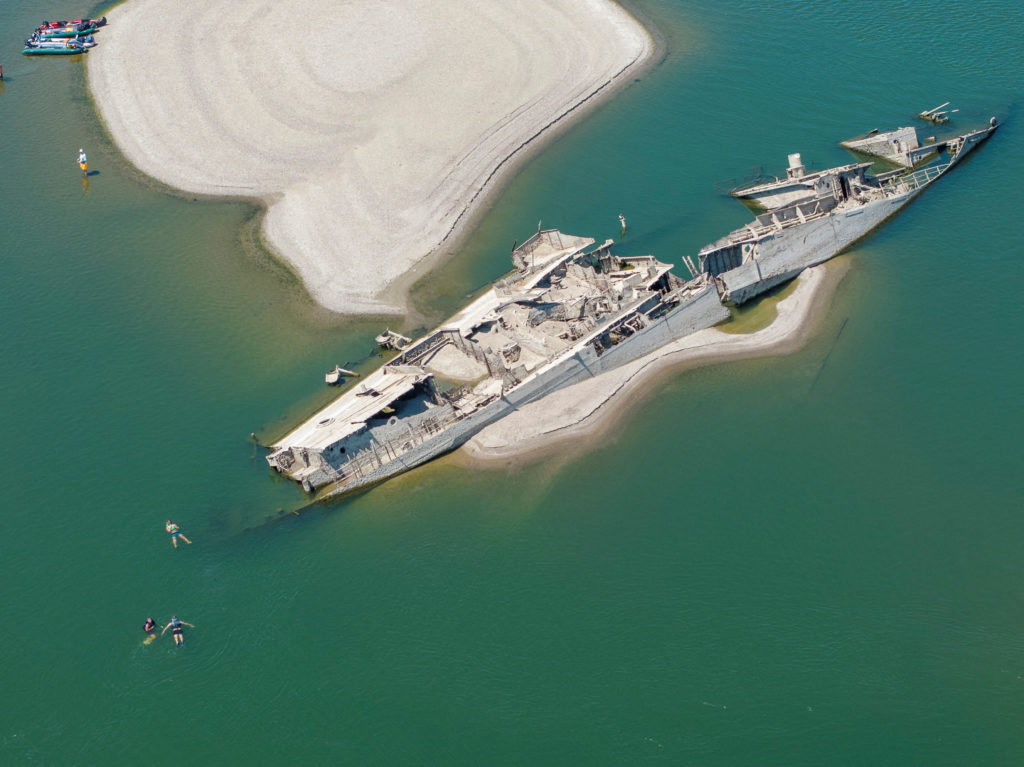
Water levels on the Danube River, Europe's second longest, have dropped so precipitously due to drought that the skeletal remains of numerous World War II German battleships are now visible. This striking sight provides a stark contrast to the sweltering summer heat plaguing the region. The record low water levels have also put power plants on the brink of shutdown, prompting governments across Central and Eastern Europe to take measures to conserve electricity.
In the middle of the river where Serbia and Romania meet at the Serbian port of Prahovo, a decommissioned hull and a broken mast, once bearing the Nazi flag, are now clearly discernible. Some of these ships were still loaded with armaments when the Germans purposefully scuttled them as they retreated from Romania and Soviet forces advanced into Europe towards the war's end.
Historians estimate that up to 200 German warships were deliberately sunk near Prahovo in the Danube gorge in September 1944, with the intention of hindering the Soviet advance in the Balkans. However, this plan was rendered moot with Germany's surrender in May 1945. The discovery of these ancient warships serves as a poignant reminder of the past, as the Serbian government, aided by European Union funds, has been striving to address the issue for years.
Some of the ships were previously removed by Communist Yugoslav authorities, but most remain due to the explosives they once carried. Authorities are now focusing on maintaining the flow of traffic on the Danube, a river that traverses ten nations, as the dwindling water levels create hazardous conditions. Experts have traced the unusually high temperatures to global warming and other contributing factors.
Krsta Brandic, a resident of Prahovo, laments the reduced ship traffic: "As you can see, the (large) ships can no longer pass." This account, provided by the Associated Press, offers a comprehensive view of the situation.
Written by urgent.news from Hellenic Shipping News's reporting — not their text. Machine-written — may contain errors; check the original before relying on it.
This story
This is one outlet's version. Read the fullest account.
- The Danube River’s water is dropping so low that World War II ships are emerging hellenicshippingnews.com
- Low water levels in the Danube revealing Nazi shipwrecks dw.com
- Danube River’s shrinking water levels expose dozens of World War II ships fortune.com
- Hungary's only nuclear plant on brink of shutdown as Danube River dries up cbsnews.com
- World War II Nazi ships appear as Danube river dries up abc.net.au