Supreme Court cracks down on illegal constructions, warns civic authorities of contempt
The court also restrained municipal authorities from issuing directions contrary to its orders, warning that any interference could invite contempt proceedings
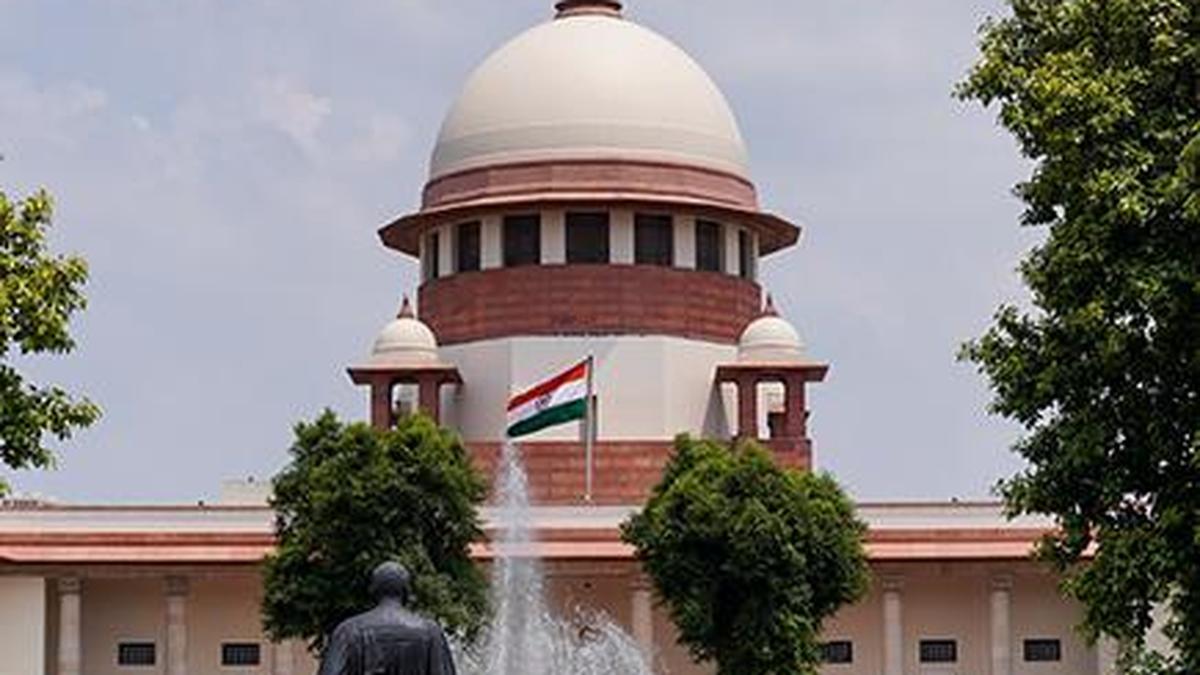
The Supreme Court reprimanded civic authorities in state capitals for failing to address illegal constructions and unauthorized residential premises being used for non-residential purposes despite previous court directives. The court cautioned municipal authorities against issuing orders contradicting its orders, warning that such interference could result in contempt proceedings.
A Bench of Justices Ahsanuddin Amanullah and R. Mahadevan emphasized that the court's directions were to be fully complied with by the relevant authorities across India. The court instructed civic authorities to identify and take immediate action against illegal constructions, clear public spaces of stray cattle, and file compliance affidavits within three weeks.
The ruling came in a case from Tamil Nadu concerning a construction violation of land use norms and building bye-laws. In March, the court broadened its scope, issuing notices to civic bodies in cities like Delhi, Lucknow, Jaipur, Chennai, and Kolkata, seeking details of actions taken against similar violations. The intervention follows a series of fatal incidents involving buildings that violated building bye-laws, including a 2025 fire at a coaching center in Lucknow that killed 15 people and a 2025 collapse of a five-story building in Delhi that left six dead and eight injured.
On Wednesday, Additional Solicitor General K.M. Nataraj informed the court that the Bhopal Municipal Corporation had initially sealed around 100 premises for violations but later had to unseal them. Mr. Nataraj referred to an August 2, 2026 order by the Madhya Pradesh government's General Administration Department to form a 10-member committee to develop a policy framework for implementing the Supreme Court's directions concerning commercial establishments in residential areas.
Pending committee recommendations, the Bhopal Municipal Corporation had halted coercive actions against such establishments. The committee, headed by the Additional Chief Secretary of the Urban Development and Housing Department, included senior officials from various departments. Justice Amanullah questioned the state government's authority to establish the committee while the Supreme Court's directions were already in effect and threatened to issue contempt proceedings if interference continued.
The court stayed the August 2, 2026 order, expressing concern over the large number of show cause notices issued by the Patna Municipal Corporation for commercial or non-residential premises violations, indicating a "total abdication of responsibility" by municipal authorities during the Commissioner's tenure.
Written by urgent.news from The Hindu's reporting — not their text. Machine-written — may contain errors; check the original before relying on it.
This story
This is one outlet's version. Read the fullest account.
- Asiedu Nketia claims credit for Supreme Court ruling on political party primaries myjoyonline.com
- Sybiha hails Swedish Supreme Court decision to transfer Russian ship to Ukraine english.nv.ua
- US refunds $100bn in tariffs struck down by Supreme Court, filing shows dailymaverick.co.za
- Lakhimpur Kheri violence case: Supreme Court refuses to further relax bail conditions of accused Ashish Mishra thehindu.com
- UK Supreme Court to hear appeal over Palestine Action proscription in November jpost.com
- ‘Will approach Supreme Court’: Ex-Tehelka editor Tarun Tejpal after conviction in 2013 sexual assault case hindustantimes.com