SpaceX rocket piece 'crashes' into Moon: 4-tonne stage hurtles in at 8,700 kmph
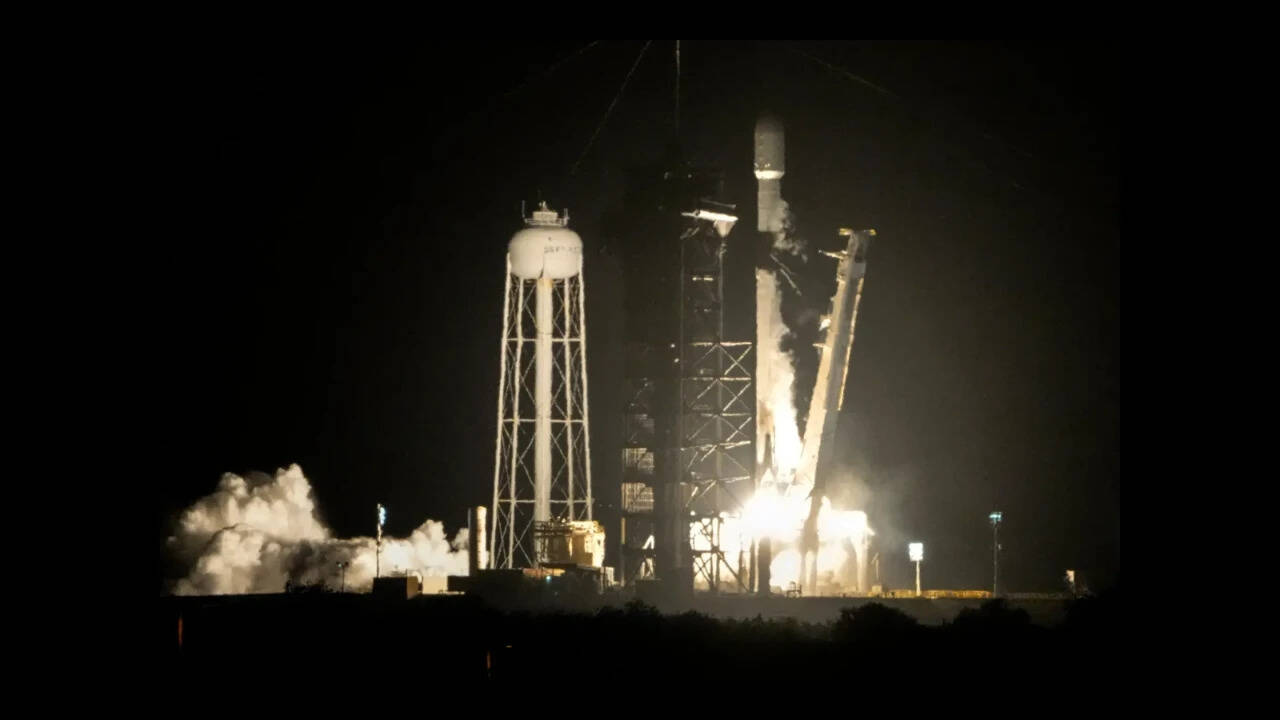
A four-tonne fragment of a SpaceX rocket is believed to have struck the Moon at a velocity of 8,700 kmph, after floating in space for over a year. This impact, which has yet to be confirmed by astronomers despite their efforts, occurred near the lunar surface's edge, complicating its observation from Earth. Confirmation of the event might take several hours, according to Reuters.
The collision is anticipated to create a crater approximately 18 meters wide and 4 meters deep, as well as disperse lunar dust and fragments of rock across the lunar terrain. This dust plume could potentially extend for miles and may be discernible in telescope images, although it would not be visible to the naked eye.
The incident poses no danger to our planet. NASA intends to examine images of the site and contrast the lunar surface before and after the collision to gain insights into how lunar objects alter its surface.
The object in question was the second stage of a Falcon 9 rocket utilized to launch a lunar lander intended for Firefly Aerospace in January 2025. Typically, after a rocket completes its mission, its discarded stage returns through Earth's atmosphere, burning up or landing in the ocean. However, this mission was unique because the rocket needed sufficient thrust to propel the lander towards the Moon. Consequently, the second stage remained in space post-completion of its task.
It had already depleted its fuel and could no longer be maneuvered. Astronomers later identified that modifications resulting from solar activity and gravitational forces had gradually altered its orbit, directing it towards an intersection with the Moon. This occurrence, while uncommon, is not unprecedented. In 2022, a Chinese rocket stage collided with the Moon, and NASA has intentionally crashed rocket stages onto the lunar surface to study the resulting effects on dust, rocks, and seismic activity.
Written by urgent.news from Times of India's reporting — not their text. Machine-written — may contain errors; check the original before relying on it.