SpaceX rocket crashes into moon at 8700 kilometres per hour
A rocket launched last year is thought to have smashed into the lunar surface this morning, creating the moon's newest crater
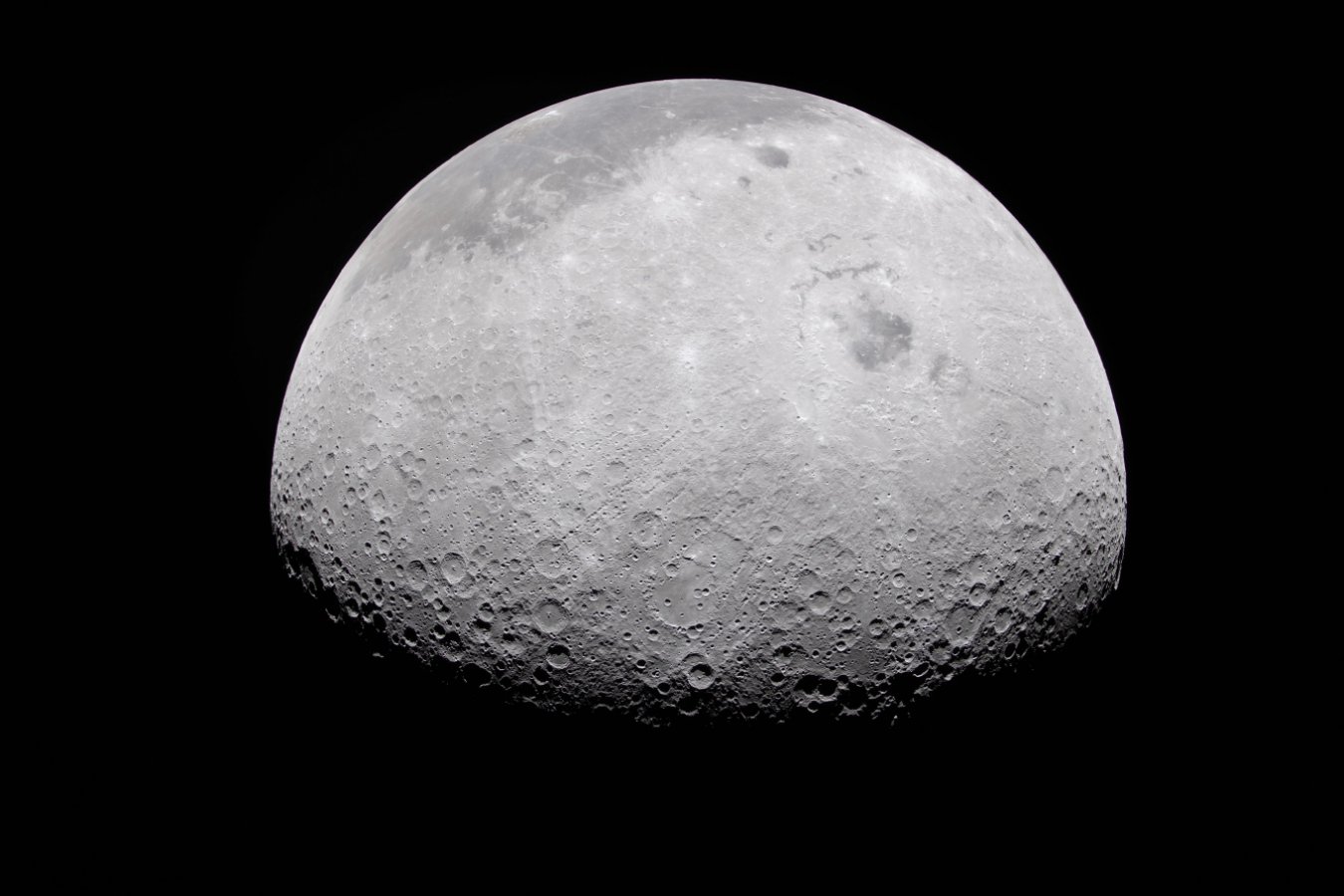
A discarded SpaceX Falcon 9 rocket upper stage impacted the moon at an astonishing 8700 kilometers per hour earlier today. The craft, which was part of a mission by commercial company ispace, was launched last January to carry the Hakuto-R spacecraft. Astronomers worldwide monitored the site of the impact, aiming to capture images and glean scientific insights from the accidental collision.
The upper stage, measuring almost 14 meters in length and weighing around 4000 kilograms, is believed to have struck the moon near Einstein crater, on the lunar edge visible from Earth.
Hannah Sargeant from the University of Leicester in the UK stated that telescopes were trained on the impact site, and images of the area before and after the crash will soon be available. Lunar orbiters from South Korea and the United States will also observe the site. NASA predicts the impact resulted in a crater approximately 18 meters wide and 4 meters deep.
Sargeant emphasized that sending debris randomly into the moon is undesirable, especially if it hits a site of scientific interest or damages historical Apollo landers.
The recent incident raises concerns about the end-of-life management of spacecraft. Both NASA and the European Space Agency are obligated to consider the consequences of a mission's conclusion, ensuring a plan and sufficient fuel for a safe deorbit. However, commercial companies are not subject to the same regulations, although efforts to establish guidelines are underway.
In the case of the SpaceX rocket, the heavy payload required excessive thrust, leading to an uncontrollable drift in space. Eventually, it entered an orbit that inadvertently placed it on a collision course with the moon.
Despite the potential damage, some scientific value can still be derived from the event, according to Roberto Bugiolacchi from Macau University of Science and Technology in China. Rare images of a new crater and lunar regolith plumes ejected during the impact could be captured by astronomers. Bugiolacchi argued that planetary surfaces should ideally remain as pristine as feasible, without impeding exploration.
However, the moon has already been impacted by decades of missions from various nations, including the US, Soviet, Russian, Chinese, Indian, Israeli, and others, as well as asteroid impacts over millions of years.
Bugiolacchi suggested that a controlled crash might even be welcomed by planetary scientists, as the primary agent shaping most planetary surfaces is high-velocity impacts. In such scenarios, knowing the projectile's mass, impact velocity, angle, and trajectory provides invaluable data on surface evolution. This information is typically acquired during random events, where the physical properties and dynamics are largely unpredictable.
Written by urgent.news from New Scientist's reporting — not their text. Machine-written — may contain errors; check the original before relying on it.