Scientists explain how surface chlorophyll reached 1,000 metres deep
Scientists have unlocked the secret behind mysteriously high levels of chlorophyll found over 1,000 meters beneath the ocean surface, a phenomenon that defied previous scientific understanding. This groundbreaking discovery, published in Science Advances, reveals how powerful winter ocean currents transport living microalgae and organic matter from the surface to the deep sea.
Led by researchers from the Institute of Marine Sciences and the Barcelona Supercomputing Center, the study took place in the subpolar North Atlantic during the harsh winter months of 2014 to 2017. Powerful winter ocean currents, triggered by cold air and high winds, cool surface waters to create dense water masses that rapidly sink in a process called deep convection.
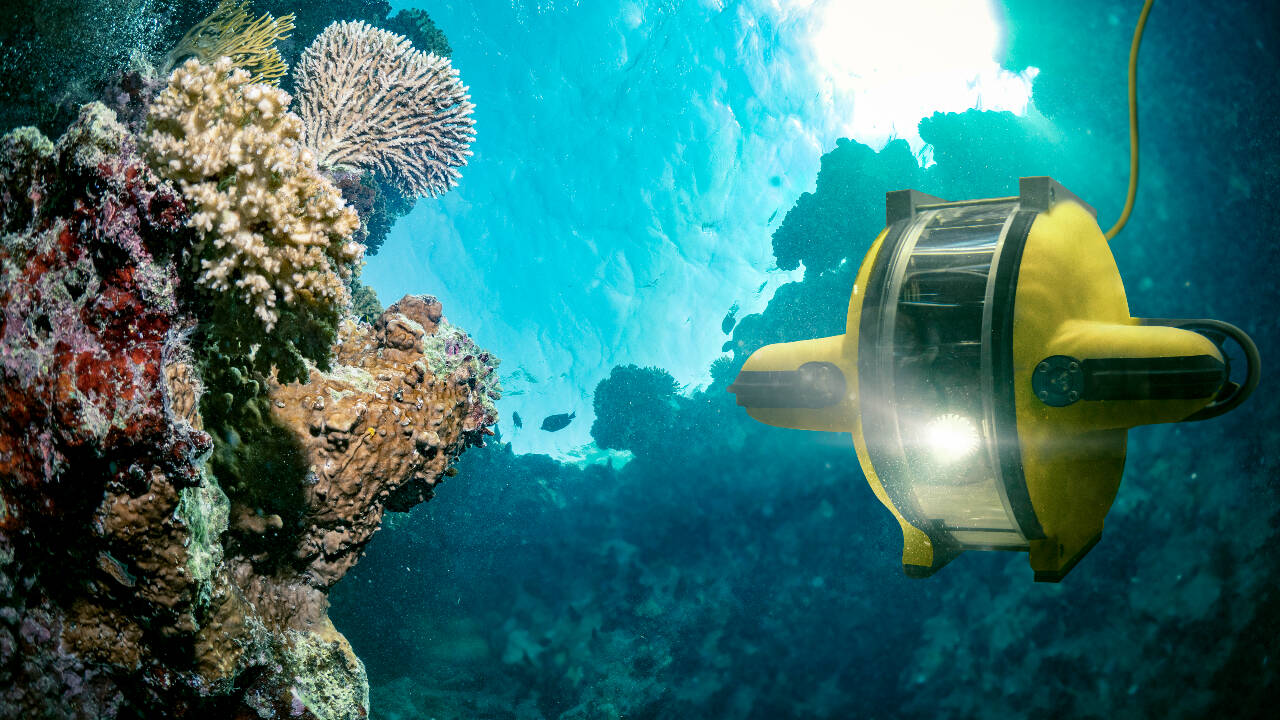
This underwater cascade rapidly carries particles, including microalgae and organic debris, from the surface to depths exceeding 1,000 meters, a process far more efficient than the slow settling of particles by gravity. The discovery was made possible by autonomous underwater robots called Biogeochemical-Argo floats, which detected surprising spikes of chlorophyll at great depths.
To understand this mysterious process, scientists employed high-performance supercomputers to simulate large-scale ocean circulation and biogeochemical processes. The simulations revealed that deep convection is significantly intensified during extreme winters, resulting in a dramatic increase in carbon-rich organic matter reaching the deep ocean.
This underwater transport pathway plays a crucial role in the global carbon cycle, accounting for 30 to 50 percent of all organic particles that descend between 500 and 2,000 meters during winters with strong ocean mixing. These particles, once absorbed by microscopic algae from the atmosphere during photosynthesis, effectively remove carbon dioxide from the atmosphere for extended periods.
The study sheds light on the significant role the deep ocean plays in climate regulation by storing carbon away from the surface, highlighting an effective natural link between surface waters, climate control, and life in the deep sea.
Written by urgent.news from Times of India's reporting — not their text. Machine-written — may contain errors; check the original before relying on it.