Samsung announces next-gen 3D memory when all we want is reasonably priced DDR5
Samsung's latest memory and storage tech is mostly designed for data centers, not consoles or PCs.
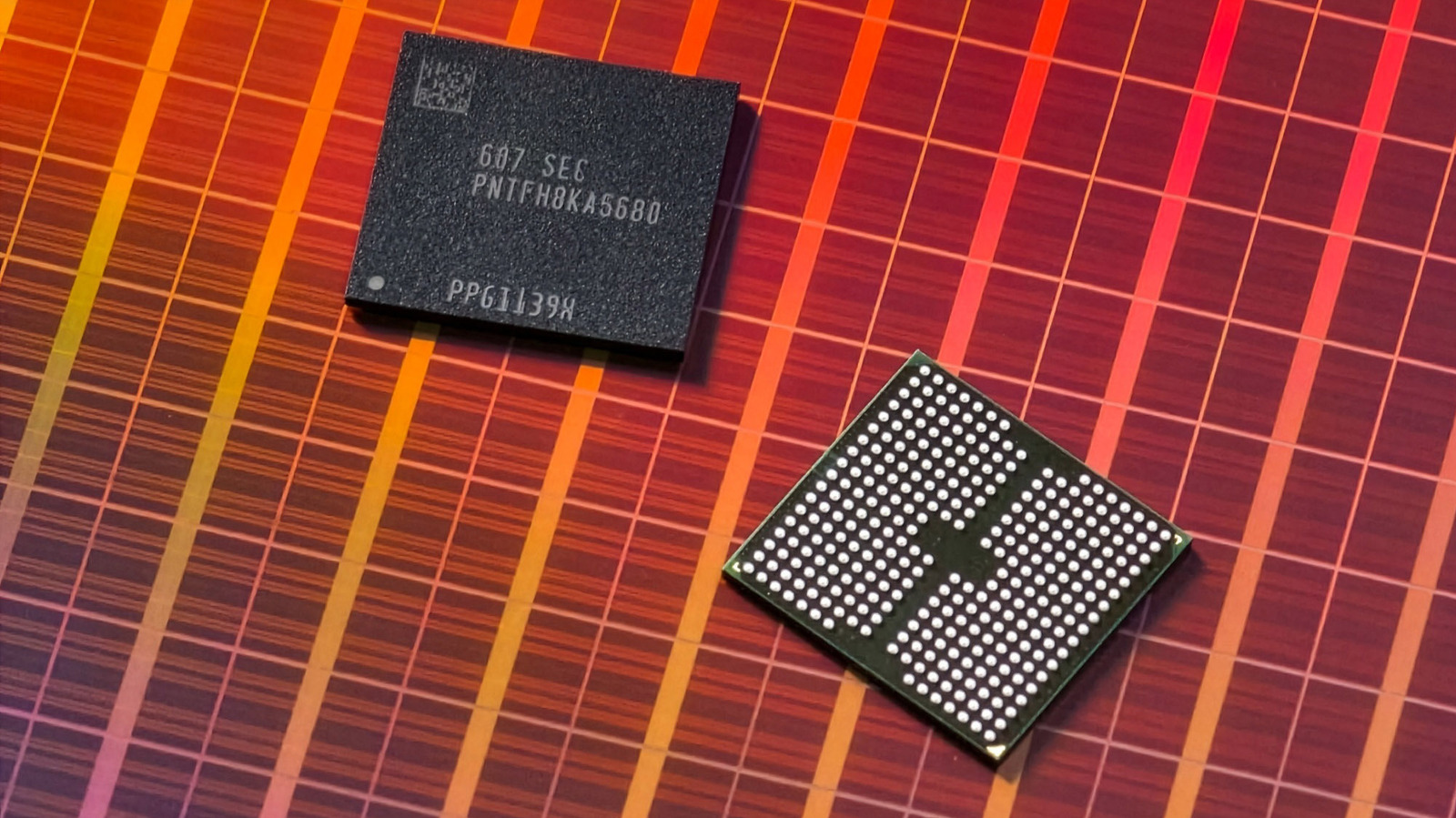
Samsung unveiled its next-generation memory and storage technologies at the Future of Memory and Storage (FMS) show in Santa Clara. While the new tech appears impressive, it's disappointing to learn that most of it will be consumed by AI data centers. At the event, Samsung introduced zHBM, a concept model based on HBM memory primarily used in data centers, AI accelerators, and high-end GPUs.
This new architecture vertically stacks HBM directly above AI accelerators, potentially boosting performance up to eight times. It also employs next-generation wafer bonding technology, enabling over 10 times the memory density of current HBM5 technology while tripling energy efficiency.
Additionally, Samsung showcased a new V-NAND memory type for SSDs, memory cards, and other storage devices called V10 BV-NAND. This technology utilizes Samsung's innovative bonding V-NAND architecture to stack more than 400 layers of memory cells, increasing memory density by approximately 58 percent compared to the previous V9 generation.
It also enhances read, write, and I/O performance. Furthermore, Samsung introduced zNAND-O, a next-gen V-NAND solution designed for edge AI environments, offering high space efficiency, improved I/O performance, and low latency.
Lastly, Samsung presented LPDDR5X-PIM, the first LPDDR memory with processing-in-memory technology. This cutting-edge memory type is designed to perform data processing within the memory itself, improving overall efficiency. Samsung and SK Hynix, together, control the majority of the global memory production. However, both companies are struggling to keep up with the surge in demand for memory due to the current AI bubble, resulting in exorbitant prices for various electronic devices, including gaming consoles, smartphones, and laptops.
Written by urgent.news from Engadget's reporting — not their text. Machine-written — may contain errors; check the original before relying on it.