'Rare and beautiful': Owl population booms following mouse plague
Clutches of barn owl chicks found inside a grain silo and cockatoo boxes indicate a "smorgasbord" of food, experts say.
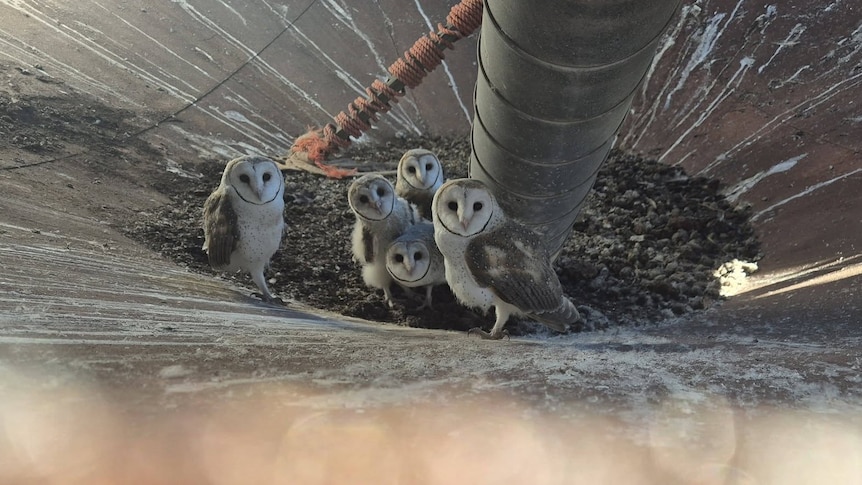
Barn owls are thriving in Western Australia's Midwest and Wheatbelt regions, according to recent reports from farmers and wildlife groups. The population boom is believed to be linked to a recent mouse plague and a reduction in the use of owl-killing rodenticide. Wildlife experts predict that as mouse numbers continue to decline, the barn owls will face increasing competition for food and habitat.
Farmers and wildlife groups have reported a surge in sightings of barn owls in the Midwest and Wheatbelt. Melanie Pugh, a hobby farmer in Chapman Valley, discovered seven baby barn owl chicks in a grain silo on her property last month. She noted that seven is an extremely rare number of chicks unless there is plentiful food available.
Pugh attributed the presence of the owls to a significant drop in the mouse population on her property, which had been plagued by an earlier mouse plague. The farmer used to trap about 150 mice daily in May, but this number had decreased to around 10 mice each day by late July.
In Moora, located in Western Australia's Wheatbelt, wildlife group Carnaby's Crusaders reported an "explosion" of barn owls breeding in artificial hollows. Dean Arthurell said that four clutches with three to five eggs or nestlings each were recorded during a recent visit, indicating a plentiful food source. The nesting boxes, originally installed to assist endangered Carnaby's cockatoos, have become welcome visitors for the barn owls.
Barn owls are the most widespread terrestrial bird, found on every continent except Antarctica. They are known to experience population booms and busts depending on food availability. The Department of Biodiversity, Conservation and Attractions stated that they do not have any programs tracking barn owl numbers and were unaware of any recent increase in activity.
However, wildlife groups in the Midwest and Wheatbelt reported increasing numbers of barn owls being brought to them and spotted in the environment, attributing the surge to the mouse plague.
Experts warn that the barn owl boom will eventually lead to intense competition for food and habitat. Janelle Ende, a raptor carer, expects a rise in starving and displaced juveniles, which may end up in the wrong place or facing harassment from other bird species. She noted that mice had stopped breeding as temperatures dropped during winter, and numbers would continue to decline.
Anyone who encounters a barn owl in an unusual location is advised not to disturb the bird and to alert a local wildlife carer for assessment. Those interested in encouraging owls to their property can install a homemade owl box.
Written by urgent.news from ABC News AU's reporting — not their text. Machine-written — may contain errors; check the original before relying on it.