Piece of SpaceX rocket believed to have crashed into the moon
A SpaceX rocket piece floating in space since last year was expected to have smashed into the moon at high speed early on Wednesday morning, though the impact was unlikely to be confirmed for at least several hours. The school-bus-size object is the second stage of a SpaceX Falcon 9 rocket that had launched a lunar lander from Firefly Aerospace toward the moon in January 2025. Weighing four…
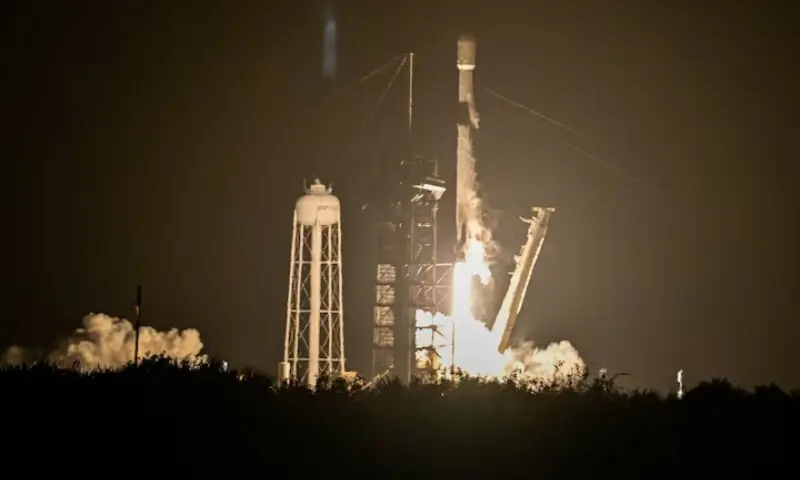
A sizable component of a SpaceX Falcon 9 rocket, believed to have crashed into the moon, was anticipated to strike the lunar surface early Wednesday morning. The school-bus-sized object, weighing four metric tons, was the second stage of a rocket that had launched a lunar lander from Firefly Aerospace towards the moon in January 2025.
Despite weighing four metric tons, the rocket body was projected to impact the moon at a speed of 5,400 miles per hour, with none of the spacecraft in lunar orbit able to capture images of the impact live. The space debris would have generated a plume of lunar dust that, while illuminated by sunlight, would be challenging to discern with the naked eye from Earth.
It would likely take several hours for scientists to confirm the crash via images from telescopes in the Americas. The impact was unintended, SpaceX confirmed, noting that the rocket piece was expected to collide with Einstein Crater on the moon's western limb, a region often difficult to observe from Earth. Astronomers only recently identified the rocket stage's trajectory, attributing its redirection to solar activity and gravity forces.
Space junk impacts on the moon are infrequent, with only one such event occurring in 2022 following a Chinese rocket stage's lunar test mission. In 2009, NASA intentionally crashed a rocket stage into the moon to study the ensuing plume of lunar material. Several lunar missions, including Russia's Luna-25, India's Chandrayaan-2, and Israel's Beresheet, have crashed since then, with some landers carrying microscopic organisms that might still be present on the lunar surface.
NASA and SpaceX are presently exploring methods to prevent future lunar impacts, with NASA planning to establish a lunar base and conduct routine astronaut missions to the lunar surface under its Artemis program.
Written by urgent.news from Dawn's reporting — not their text. Machine-written — may contain errors; check the original before relying on it.