NASA built the Roman Space Telescope to study dark matter, but it can also help protect Earth from killer asteroids
NASA's Roman Space Telescope wasn't designed for asteroid hunting, but its massive field of view makes it a powerful addition to Earth's planetary defense network.
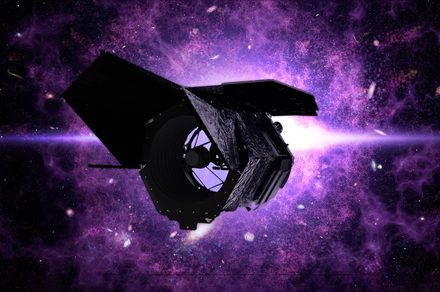
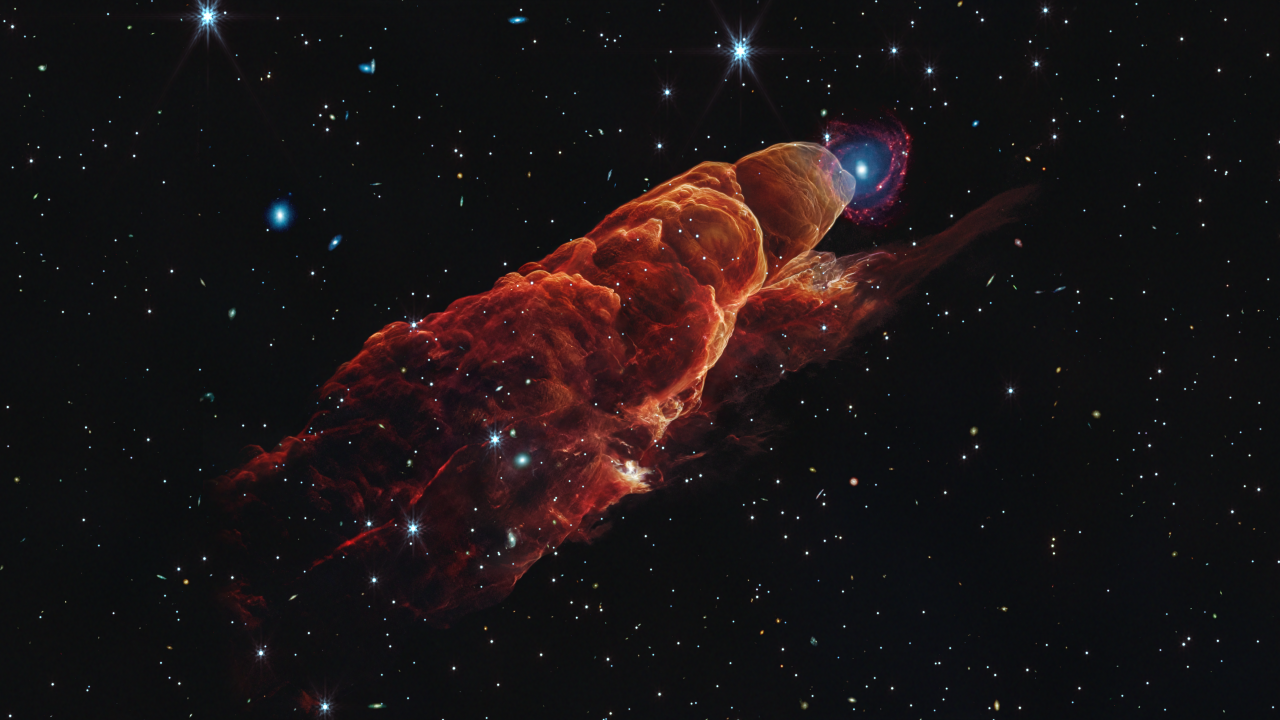
NASA has launched a telescope designed to unravel the universe's most profound secrets, and it seems this same design could also help shield Earth from potential asteroid impacts. The Nancy Grace Roman Space Telescope, set to launch from Kennedy Space Center on August 30, 2026, will primarily study dark matter and dark energy – enigmatic forces governing galaxies and the expansion of the cosmos.
However, its innovative design is proving unexpectedly useful in detecting dangerous asteroids on a collision course with our planet (via MIT Technology Review).
Roman is equipped with a super-wide-angle, 300 megapixel infrared camera, allowing it to observe a sky section roughly 100 times larger than what Hubble can capture in a single snapshot. This expansive field of view, initially designed to survey distant galaxies and stars, is now proving invaluable for scanning vast stretches of space for asteroids simultaneously.
Scientists believe Roman could identify asteroids as small as 60 feet across – similar in size to the asteroid that exploded over Chelyabinsk, Russia in 2013, releasing energy equivalent to 500,000 tons of TNT.
Currently, Roman's systems filter out streaks that could be misidentified as asteroids. However, with some software adjustments, the telescope will be well-equipped to support NASA's dedicated Near-Earth Object Surveyor, launching in 2027, alongside the James Webb Space Telescope and the Vera Rubin Observatory. When other telescopes flag risky asteroids with uncertain orbits, Roman's vast field of view will quickly narrow their trajectories, aiding scientists in determining which asteroids require closer scrutiny.
The significance of Roman's potential asteroid-hunting role comes as the telescope faced funding cut threats last year. By demonstrating its value in planetary defense, researchers hope to secure the telescope's future in the eyes of lawmakers. Moreover, with over half of the largest near-Earth asteroids still undiscovered, Roman's secondary mission may prove as crucial as its primary mission.
As private companies like SpaceX and Blue Origin explore the idea of establishing massive orbital data centers, environmental groups and former space officials warn of the potential disastrous impact on Earth's atmosphere and night sky. While astronomers have discovered over 6,000 planets outside our solar system, detecting moons around distant worlds remains a challenging task.
Recently, researchers using the European Southern Observatory's Very Large Telescope in Chile detected evidence of a moon-like object in the CD-35 2722 system, which, if confirmed, could be the first natural satellite outside our solar system confidently detected. However, this moon appears to be quite massive, challenging the typical definition of a "moon."
Interestingly, China recently tested a similar rocket booster recovery method, albeit with a different approach and landing site.
Written by urgent.news from Digital Trends's reporting — not their text. Machine-written — may contain errors; check the original before relying on it.