Michigan primary puts Democratic divide on the ballot
US Democrats are awaiting results from their marquee primary in Michigan on Wednesday morning, with the contest between a left-wing insurgent and an establishment-backed congresswoman becoming a proxy war over Israel, electability, and the future of the national party. Hours after polls closed, leftist Abdul El-Sayed held a narrow lead over centrist Haley Stevens, with the race too close to call.…
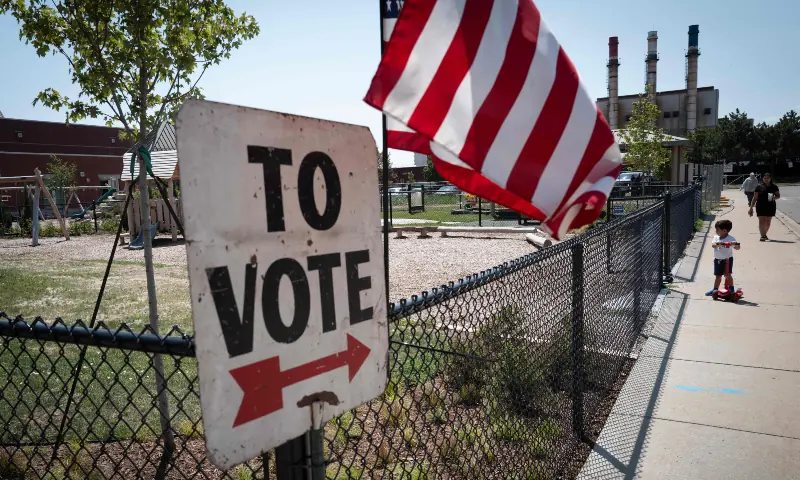
Democrats eagerly await the results of the primary election in Michigan on Wednesday, where a left-wing candidate and a centrist congresswoman are competing for a Senate seat set to be vacated by retiring Democratic Senator Gary Peters. The contest between Abdul El-Sayed and Haley Stevens has become a battleground over issues such as Israel, electability, and the future trajectory of the Democratic Party.
With 95% of the votes counted as of 6:50am (PKT), NBC was the first major U.S. media outlet to project El-Sayed's victory. The winner will face off against former Republican congressman Mike Rogers in November, a crucial race for Democrats as they aim to retake control of the Senate.
The primary election in Michigan carries significant implications for the party's efforts to win control of the upper chamber. Democrats must defend their strongholds in Michigan while simultaneously gaining four Republican-held seats to secure a majority in the Senate. Analysts believe the outcome will reveal whether the current surge of left-wing sentiment among Democrats can translate into success in competitive battlegrounds with broader national consequences or if the state's Democratic establishment can maintain its dominance.
El-Sayed, a former Wayne County health director supported by progressive leaders Bernie Sanders and Alexandria Ocasio-Cortez, portrays himself as a champion of the working class, willing to confront corporations, party leaders, and critics over pro-Israel donors. Stevens, a four-term lawmaker from the Detroit suburbs, emphasizes her experience, ties to manufacturing, and electability.
She enjoys backing from establishment figures such as Senate Democratic leader Chuck Schumer and Michigan Governor Gretchen Whitmer. Recent polls have consistently shown El-Sayed leading in the race, fueling expectations of a significant victory for the left wing.
The contentious issue of U.S. support for Israel has emerged as a key point of division between the two candidates. Stevens has expressed support for continued military backing for Israel and rejected accusations of genocide in Gaza. In contrast, El-Sayed has advocated for an end to unconditional U.S. aid to Israel, criticized the influence of the American Israel Public Affairs Committee (AIPAC) lobby group, and asserted that Israel should not exist specifically as a Jewish state.
The candidates have engaged in increasingly personal attacks, with El-Sayed labeling Stevens as "the least capable candidate in America," while Stevens has accused El-Sayed of blaming his difficulties on Jewish Americans.
Debbie Dingell, a neutral Democratic congresswoman, cautioned that the "brutality" and "ugliness" of this campaign could impede future Democratic unity. Michigan narrowly supported President Donald Trump in the 2024 election, despite Elissa Slotkin's narrow victory in that year's Senate race, highlighting the state's political volatility and the risks associated with a fractured Democratic Party.
Senior aide Dan Pfeiffer, a former aide in Barack Obama's White House and political analyst, commented on X that if El-Sayed wins this primary, the implications would extend well beyond Michigan, questioning the Obama administration's ability to connect with the Democratic base.
Written by urgent.news from Dawn's reporting — not their text. Machine-written — may contain errors; check the original before relying on it.