Is this why China finds it so hard to inflate producer prices?
This paper investigates why China’s recurrent credit expansions have coincided with persistently weak inflation. We argue that this pattern reflects the country’s production-oriented monetary regime. At the aggregate level, faster monetary-financial expansion temporarily raises PPI inflation but depresses it over longer horizons. At the sectoral level, liability growth among listed industrial…
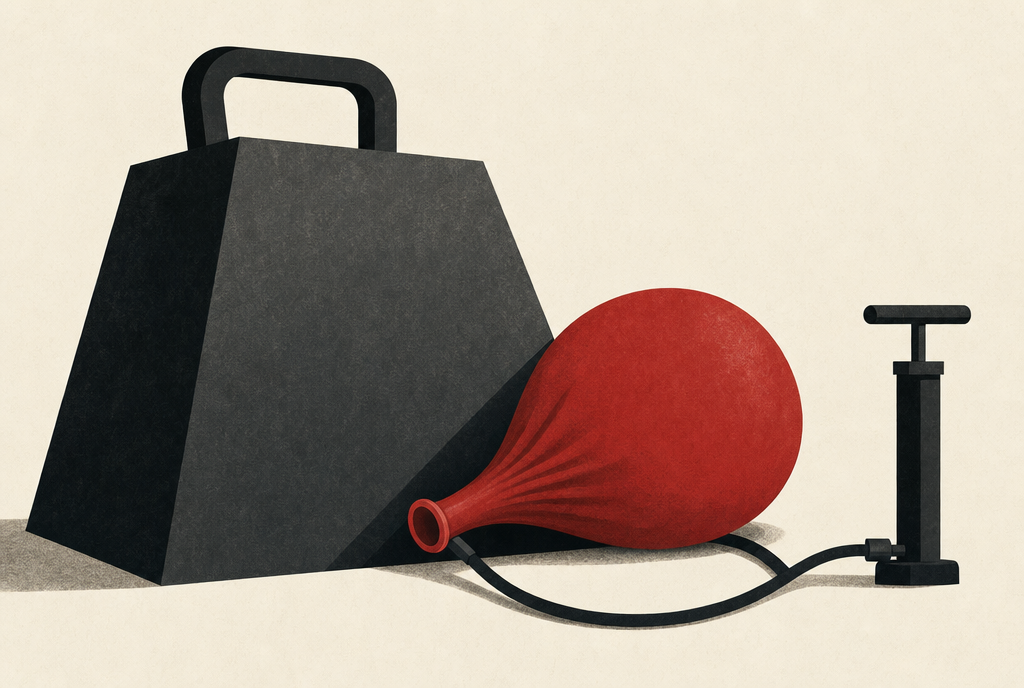
A recent paper by Jeffery (Jinfan) Chang and Wei Xiong explores the challenge China faces in increasing producer prices despite recurrent credit expansions. The researchers argue that this pattern can be attributed to China's production-oriented monetary regime. In the aggregate, short-term credit expansion leads to temporary increases in producer price inflation (PPI), but ultimately results in a decrease over the long term.
At the sectoral level, growing liabilities among listed industrial firms are followed by weaker producer prices, lower profitability, higher leverage, rising inventories, and reduced capacity utilization. The study also reveals asymmetric transmission of supply-chain dynamics: while downstream liability growth can boost upstream PPI inflation, upstream liability growth does not lead to a corresponding price response downstream.
These findings suggest that China's credit expansion primarily sustains production and balance sheets rather than stimulating final demand. Consequently, monetary policy in China operates more as a tool for preserving production capacity and supporting growth, rather than serving as a conventional demand management mechanism for durable reflation.
This insight echoes Milton Friedman's principle of focusing on the broader effects of monetary fluctuations, rather than solely focusing on the immediate consequences of an increased money supply.
Written by urgent.news from Marginal Revolution's reporting — not their text. Machine-written — may contain errors; check the original before relying on it.