How one Japanese couple made the 1920s and ’30s into a way of life
No refrigerator. No microwave. Just blocks of ice, records and a home built for another age.
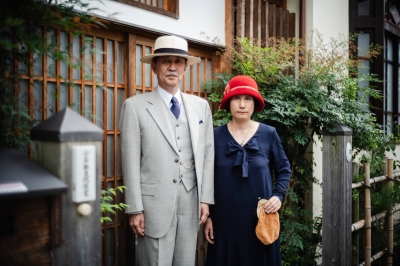
The Japanese couple, Kayo Asai and Haruhiko Kohri, have made the 1920s and 1930s the defining era of their lives. Their passion for Japan's past is evident in the way they communicate, as Asai responds to emails using prewar Japanese orthography. The couple's dedication extends to recreating the lifestyle of the Taisho Era (1912-1926) and the early Showa years (late 1920s to early 1930s).
This period was marked by a cosmopolitan energy, with cafes, jazz music, and department stores shaping a new urban culture. However, it was also a time of rapid social change that gave rise to the "mobo" (modern boy) and "moga" (modern girl) before Japan's shift towards nationalism and militarism.
Asai is a collector of original clothing from the period, and the couple's pursuit of authenticity permeates every aspect of their lives. They use a wooden refrigerator cooled with ice and an old-fashioned hand-cranked washing machine. Their home is modeled on the architecture of the Taisho Era, reflecting their commitment to living in the manner of that time.
The couple's dedication is part of a broader revival of interest in this period, which can be seen in retro fashion, architecture, and the use of Taisho Era settings in works such as the anime series "Demon Slayer."
Written by urgent.news from Japan Times's reporting — not their text. Machine-written — may contain errors; check the original before relying on it.