Global stocks get AI-boost, investors on tenterhooks over Middle East peace talks
Despite the upbeat mood, AMD fell 7% in premarket trading after failing to meet investors' lofty expectations, while SpaceX slid 10% on concerns that heavy capital spending was draining cash flow.
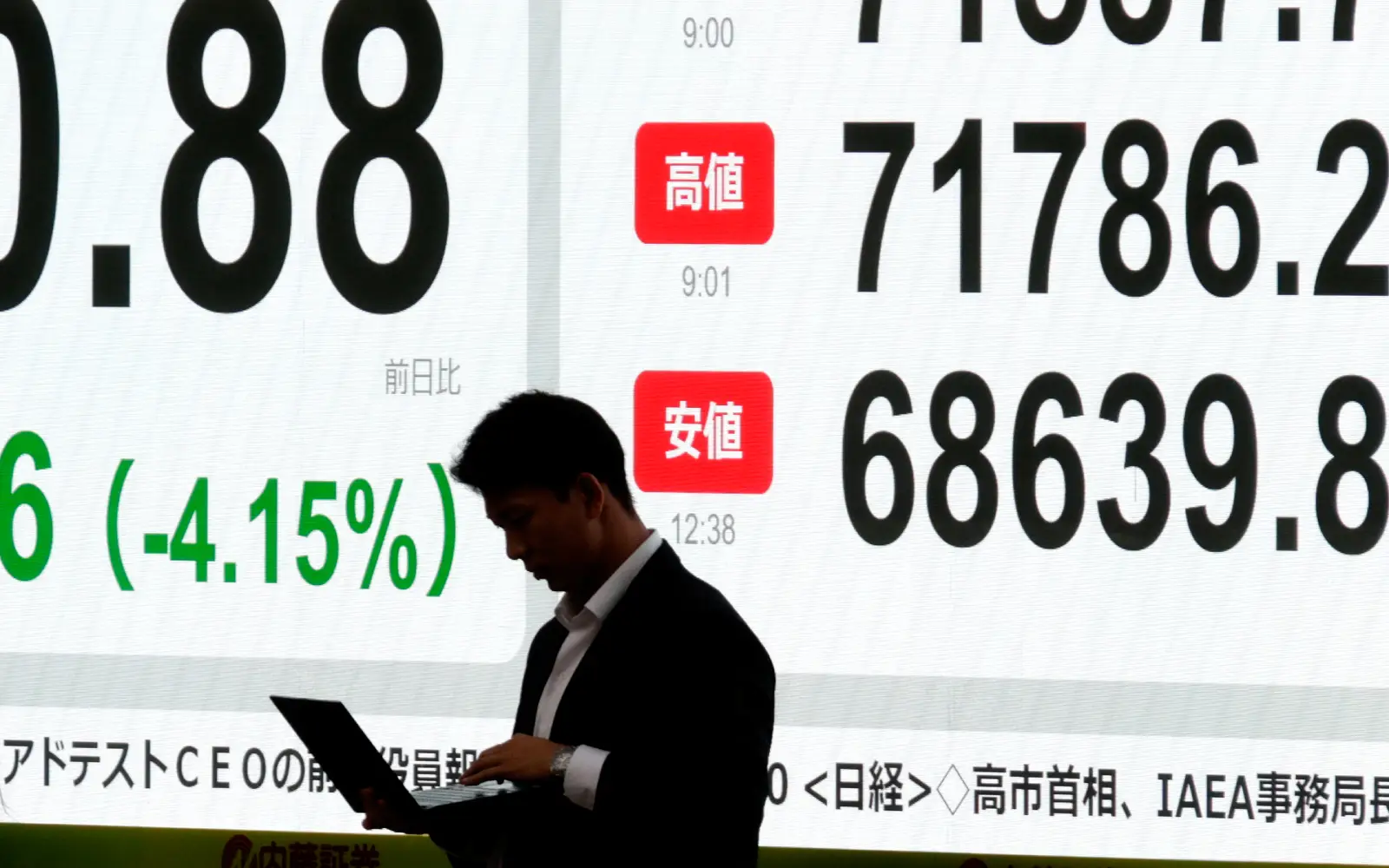
World stock markets experienced a rise on Wednesday, driven by strong earnings and increased interest in technology shares. Wall Street reached new record highs, while European markets saw modest gains, pending updates on the US-Iran negotiations. The pan-European STOXX 600 index rose by 0.1%. US President Donald Trump claimed his administration had "very good discussions" with Iran during comprehensive all-day talks, fueling optimism about a potential resolution to the five-month conflict.
However, drugmaker Novo Nordisk, a major European company by market value, saw its shares decline by 4.2% following disappointing sales of its weight-loss pill, Wegovy, which overshadowed strong second-quarter earnings. HSBC shares also fell nearly 3% after its results, as investors analyzed analysts' reactions to the figures.
Japan's Nikkei 225 index climbed 3.7%, reaching its highest level since July 23, thanks to substantial investments in AI infrastructure. South Korea's market exhibited volatility, closing 3.8% higher. The MSCI's broadest index of global shares increased by 0.4%. Despite the optimistic atmosphere, AMD, a semiconductor manufacturer, declined 7% in premarket trading due to a slump in after-hours trading, despite meeting analysts' earnings estimates.
SpaceX, an AI and satellite company, fell 10% in premarket trading due to concerns about its heavy capital spending and mounting cash flow challenges.
MSCN's broad index of global shares rose 0.4%. AI and satellite firm SpaceX saw a 10% drop in premarket trading due to apprehensions about excessive capital expenditure, which is depleting its cash reserves. "SpaceX continues to operate efficiently, but its ambitious investment program will almost certainly require more capital in the medium to longer term," stated Chris Weston, chief research officer at broker Pepperstone.
Nasdaq futures NQc1 were flat, while S&P 500 futures ESc1 increased by 0.3% after hitting all-time highs on Tuesday.
Sentiment was bolstered by falling oil prices, following Qatar's indication that mediators were making progress in the US-Iran conflict resolution efforts, although specifics remained unclear. Brent LCOc1 crude oil prices rose by 50 cents, or 0.7%, to $79.95 a barrel, significantly lower than its July peak of $102, while US crude CLc1 increased by 14 cents to $75.90 after reports of a Saudi Arabian vessel attack in the Red Sea.
Energy economist John Oh of CBA estimated that oil flows in the Strait of Hormuz were at 40% to 45% of pre-war levels, with traffic resuming between 50% to 60% of pre-war levels, potentially signaling oversupply in global oil markets. This factor contributed to the dip in oil prices, providing some relief from inflation concerns and boosting bond markets globally, with 10-year Treasury yields falling to 4.606% from last week's high of 4.747%.
The upcoming US economic data, including Friday's jobs report and next week's inflation readings, will be closely monitored by the Federal Reserve. Federal Reserve officials may respond strongly if there is a shift from maintaining rates to a tightening cycle, according to James Rossiter, head of global economics at TD Securities.
The probability of a September Fed interest rate hike was reduced to 57% from 67%. Fed Bank of Kansas City President Jeff Schmid called for tighter policy during a speech on Tuesday, aiming to bring inflation back to the central bank's 2% target. The euro remained relatively stable at $1.1540, just below its six-week high of $1.1559.
The dollar stabilized at 157.75 yen, with the possibility of intervention still looming over the market. US Treasury Secretary Scott Bessent expressed confidence in Bank of Japan Governor Kazuo Ueda's decision to act in the best interest of Japan's economy, prompting markets to consider further interest rate hikes. In commodity markets, gold gained 2.2% to $4,166 an ounce due to the decline in yields.
Written by urgent.news from Free Malaysia Today's reporting — not their text. Machine-written — may contain errors; check the original before relying on it.