Frore claims its LiquidJet can drop Nvidia Rubin GPU temperatures by 10°C — can also boost performance by 15% as hyperscalers eye using delidded GPUs in production environments
As cooling becomes a crucial element for economic efficiency of AI data centers, Frore claims that using is LiquidJet coldplate could increase efficiency of token generation by 15%.
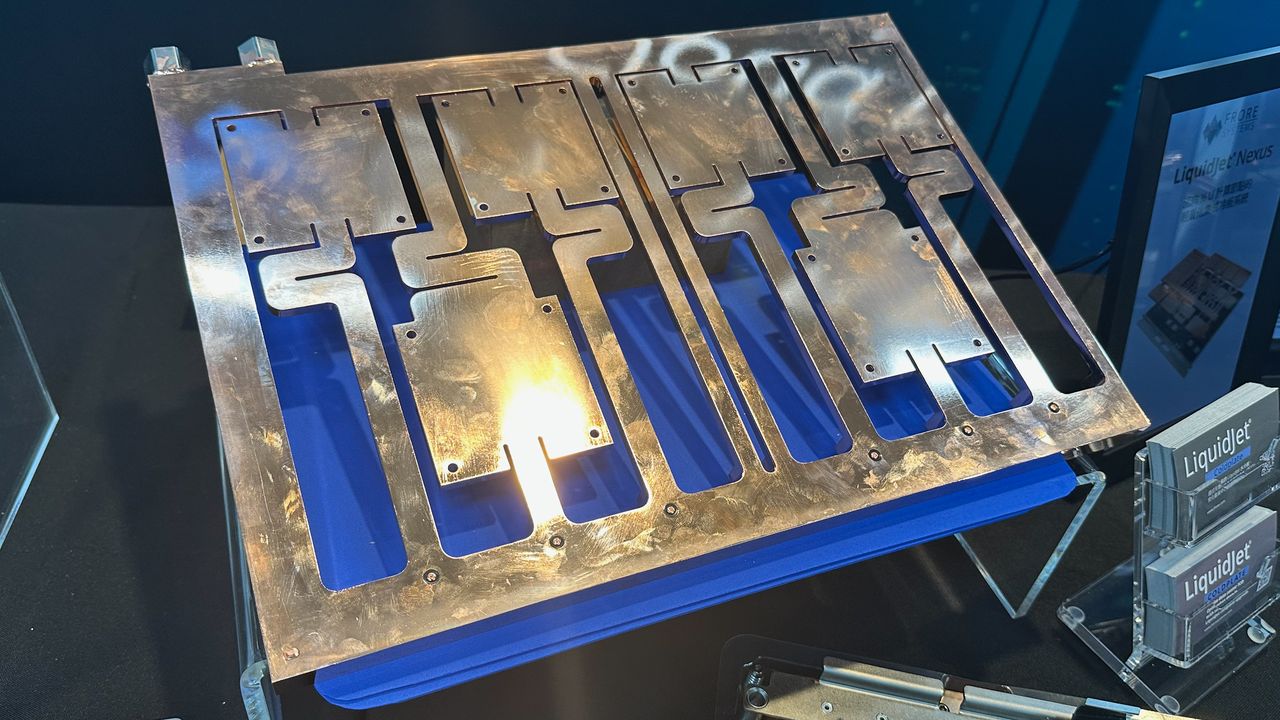
Frore Systems, a company known for its cooling solutions produced with semiconductor-grade tools, has developed a technology that can reduce the temperature of next-generation AI accelerators and boost their performance by 15%. Their LiquidJet coldplate technology claims to lower Nvidia Rubin GPU junction temperatures by up to 12°C, which could result in a 10% to 25% increase in token generation per watt.
This improvement is attributed to the fact that leakage current increases exponentially with temperature, doubling for every 10°C rise in maximum junction temperature. As leakage current grows, transistor switching becomes less efficient, causing hotter GPUs to require higher voltages to sustain clocks. This leads to Dynamic Voltage and Frequency Scaling (DVFS) reducing clocks to remain within thermal limits, ultimately resulting in decreased performance and token generation.
Nvidia designs its platforms around a maximum allowable junction temperature (Tj(max)), which is a fundamental design constraint for GPUs, packages, and cooling solutions. If the GPU can operate below this temperature, it can sustain higher clocks or lower voltage. Frore's analytical thermal model suggests that delidding the Rubin package can decrease junction temperature by up to 20°C, potentially improving tokens/Watt by up to 35%.
However, delidding GPUs may decrease mechanical reliability. Despite this, cloud system providers are exploring the use of delidded Rubin GPUs to increase token generation, despite the risks. Frore's coldplate technology utilizes manufacturing techniques from semiconductor fabrication, such as etching and bonding, to create intricate three-dimensional copper microstructures that address hotspots on the accelerator's silicon. These microstructures cannot be produced using traditional machining processes like skiving.
Written by urgent.news from Tom's Hardware's reporting — not their text. Machine-written — may contain errors; check the original before relying on it.
Also reported by 4 other outlets
- Nvidia sells RTX 50-series GPUs at MSRP during QuakeCon 2026 — graphics cards sold at launch prices more than a year after release are now considered an attraction tomshardware.com
- Nvidia turns RTX 5000 GPUs at MSRP into one of QuakeCon's biggest attractions techspot.com
- Redditor gets sick of waiting for Nvidia and makes a tool to protect RTX 5090 GPUs from melting their power cables techradar.com
- EA has fixed a niche Battlefield 6 issue where some Nvidia GPUs were crashing while changing attachments or 'playing on maps with large bodies of water' pcgamer.com