Chinese and Western firms are teaming up even as governments fight
In an era defined by escalating geopolitical tensions and the weaponisation of supply chains, a counterintuitive phenomenon is taking root in the industrial heartlands of China, the United States and Europe. While governments in Beijing, Washington and Brussels engage in high-stakes chess matches of tariffs, export controls, sanctions and investment screening mechanisms, a parallel universe of…
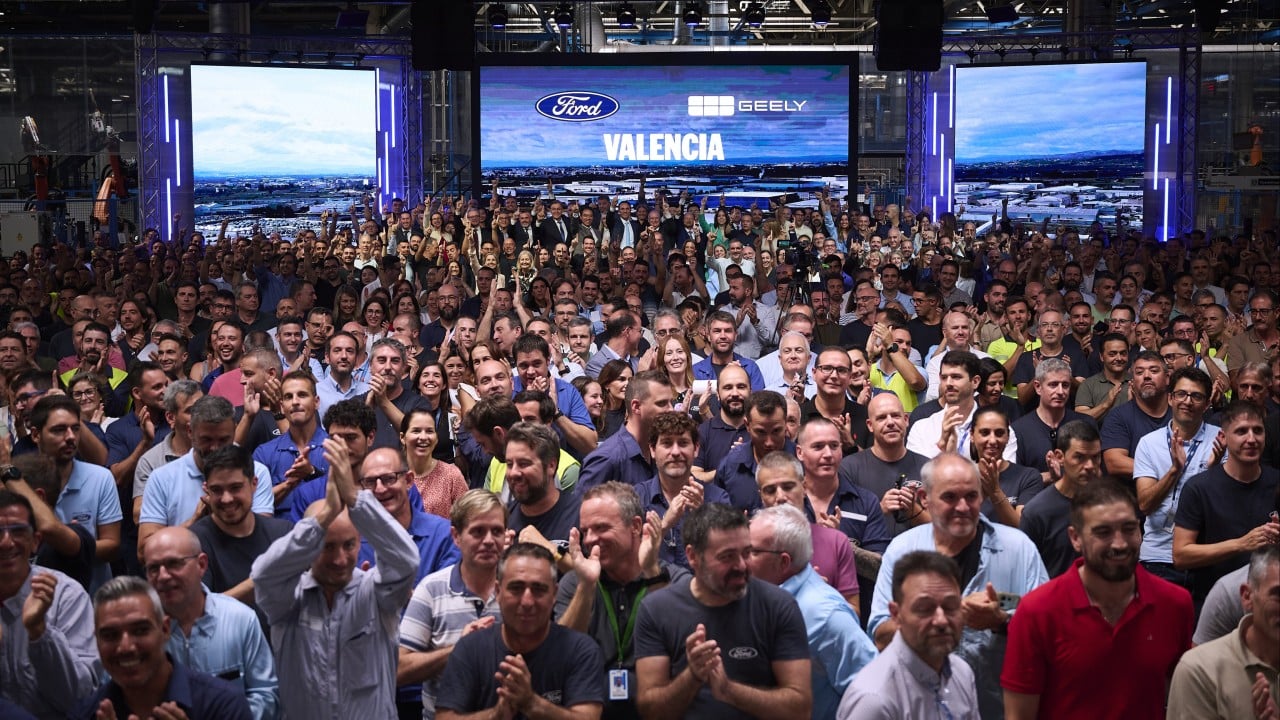
In an age of growing geopolitical tensions, a surprising trend emerges in the industrial sectors of China, the United States, and Europe. As governments conduct delicate negotiations through tariffs, export controls, sanctions, and investment screening methods, multinational corporations continue to forge partnerships. These corporate alliances transcend the constraints of government discord, as Chinese and Western firms work together in complex joint ventures and strategic production alliances.
This trend highlights how joint ventures may evolve from mere market access tools to robust risk-mitigation instruments designed to bypass trade barriers, localise supply chains, and secure a presence in multiple regulatory systems concurrently. The automotive sector serves as a prime example of this phenomenon, particularly in the new energy vehicle (NEV) market.
The recent collaboration between Geely Automobile Holdings and Ford Motor Company exemplifies this dynamic. By agreeing to produce NEVs for the European market at Ford's Valencia, Spain plant, both companies astutely leverage geopolitical opportunities. Geely gains the "Made in Europe" label, circumventing high tariffs and benefiting from the EU's interconnected supply chains without the delay of constructing a new facility.
Ford, meanwhile, gains access to Geely's advanced battery and modular electric vehicle architecture. This partnership benefits both parties - avoiding short-term competitive losses for long-term stability and minimizing the impact of their governments' tariff weapons. The battery industry also illustrates this trend. CATL, the leading EV battery manufacturer, has shifted from exporting cells to licensing its technology.
Its partnership with Ford's battery plant in Michigan, despite political controversy, represents a new paradigm. CATL supplies technical know-how and production methods without triggering US national security reviews, while Ford owns the facility. The chemical and pharmaceutical industries further demonstrate this alignment. Firms like WuXi AppTec and BASF are strengthening ties with Western biotech and petrochemical companies, respectively.
This partnership enables Western firms to tap into China's industrial capabilities and lower energy costs, while Chinese firms adopt global environmental, safety, and quality standards. The driving force behind this corporate alliance is the fragmentation of global governance. Governments establish a complex mosaic of regulations and barriers, including US Chips Act and tariffs, EU Critical Raw Materials Act, and China's domestic substitution policies.
These regulations penalize pure imports and incentivize local production, driving joint ventures as a means to navigate this intricate landscape. However, the stability of this alignment is contingent on the ability of joint ventures to maintain a separation from their respective governments. As investment screening intensifies with the EU's Foreign Subsidies Regulation and the US Committee on Foreign Investment in the United States, even seemingly innocuous collaborations face scrutiny.
Western partners may face domestic political backlash for supporting Chinese competitors, while Chinese partners risk regulatory disapproval for relinquishing technological advantages. This wave of Sino-Western manufacturing partnerships represents a strategic response to the limitations of the multilateral trading system. As governments diverge ideologically and regulate differently, corporations converge operationally to restore predictability in their investment prospects.
These joint ventures effectively create a third space of production: factories with Chinese technology, Western management, and local legal registration. This third space transcends the binary of national champions, providing a resilient framework for stability amidst geopolitical rivalry.
Written by urgent.news from SCMP Business's reporting — not their text. Machine-written — may contain errors; check the original before relying on it.
This story
This is one outlet's version. Read the fullest account.