Bundespräsidenten-Nachfolge: SPD pocht auf Frau als nächstes Staatsoberhaupt
Nach den Wahlen im September wollen Union und SPD klären, wen sie für die Nachfolge von Bundespräsident Steinmeier vorschlagen. Eine Frau oder keine Frau lautet eine jetzt schon diskutierte Frage.
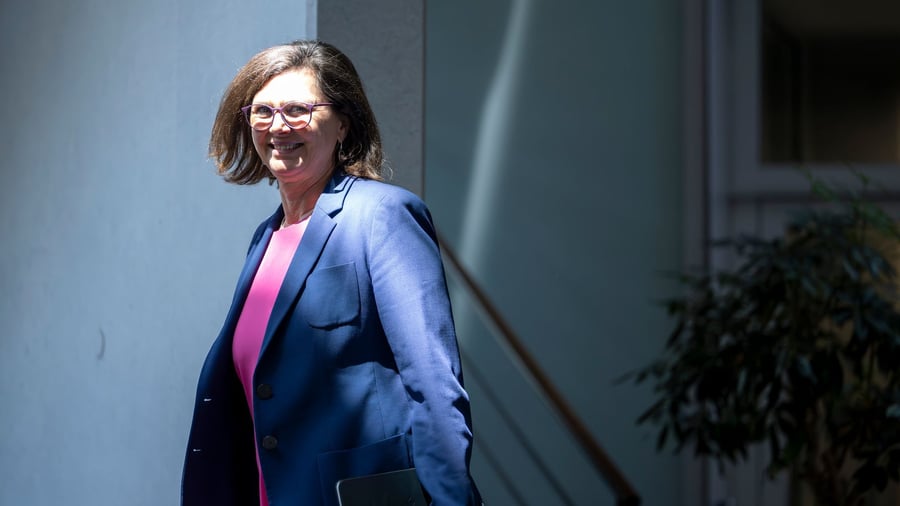
Leading SPD politicians insist a woman should succeed outgoing President Frank-Walter Steinmeier. "I believe it's time for a female president," stated SPD parliamentary bureau chief Dirk Wiese in Berlin. Alexander Schweitzer, deputy SPD chairman, nearly mirrored Wiese's sentiments. A political consensus seems almost unanimous, he told "Spiegel," adding, "It's bewildering that some from the Union are disrupting this consensus."
Both SPD officials reacted to Union faction chief Thorsten Frei (CDU), who previously said a man could also be acceptable. While there is much for a woman, it's not definitively necessary. "We should be open about it," Frei told Welt-TV. Schweitzer criticized the CDU for potentially reverting to behavior patterns the society has long overcome.
Frei also faced criticism from the CSU. "A woman as our head of state is a gain for the people in the country and the politics," said CSU Women's Union chair Ulrike Scharf to Bayerischer Rundfunk. "Women can give guidance and set a clear compass just as well. There is absolutely no reason to doubt that a woman can hold this position."
Union and SPD plan to jointly propose a successor The successor or successor of Steinmeier will be elected by the Federal Assembly on January 30 next year. Steinmeier himself cannot stand again after two terms. The right to propose a successor lies with the Union. They and the SPD have agreed to make a joint proposal, which is to happen after the state elections in September, when the federal majority situation will be clearly established.
It consists of 630 Bundestag members and the same number of representatives from the 16 federal states. Several women have so far been considered possible successors: Ilse Aigner (CSU): The Bavarian Landtag president was brought into the running months ago by Minister-President Markus Söder. Even Federal Chancellor Friedrich Merz (CDU) recently called the CSU politician a "respectable, thinkable federal president."
He wants to stick to the agreed timetable and only discuss the Steinmeier successor in the fall. However, SPD chief Lars Klingbeil has already said he highly values the 61-year-old Aigner. Karin Prien (CDU): The federal Minister of Education is seen as a career politician in the CDU. With her, Germany would get its first state president with Jewish roots.
The 61-year-old is currently fighting cuts to parental leave – which is not popular. Like all other women considered for Steinmeier's successor, Prien hasn't commented on possible ambitions. That she trusts the position is known. Julia Klöckner (CDU): The 53-year-old has already taken a career leap in this parliamentary term by rising to the post of Bundestag president.
So she is virtually the number 2 in the state. However, can she make the leap to number 1? With the rainbow flag not being hoisted on the Reichstag building during Christopher Street Day, she has also made some SPD members unhappy. At least not among Greens and leftists, who might be needed for a safe majority in the Federal Assembly.
Male candidates were hardly mentioned so far. Former Culture Minister Monika Grütters was briefly in the running. The CDU politician has ruled out a renewed candidacy for the 2025 Bundestag election and is not currently holding any political office. Male proposals for personal selections are hardly in the running. Recent reports in "Bild" say that names of Hessian Minister-President Boris Rhein (CDU) have become more frequent in government and Union circles.
Written by urgent.news from Handelsblatt's reporting — not their text. Machine-written — may contain errors; check the original before relying on it.