20 LEO satellites at higher collision risk due to crowding: Space min Jitendra Singh
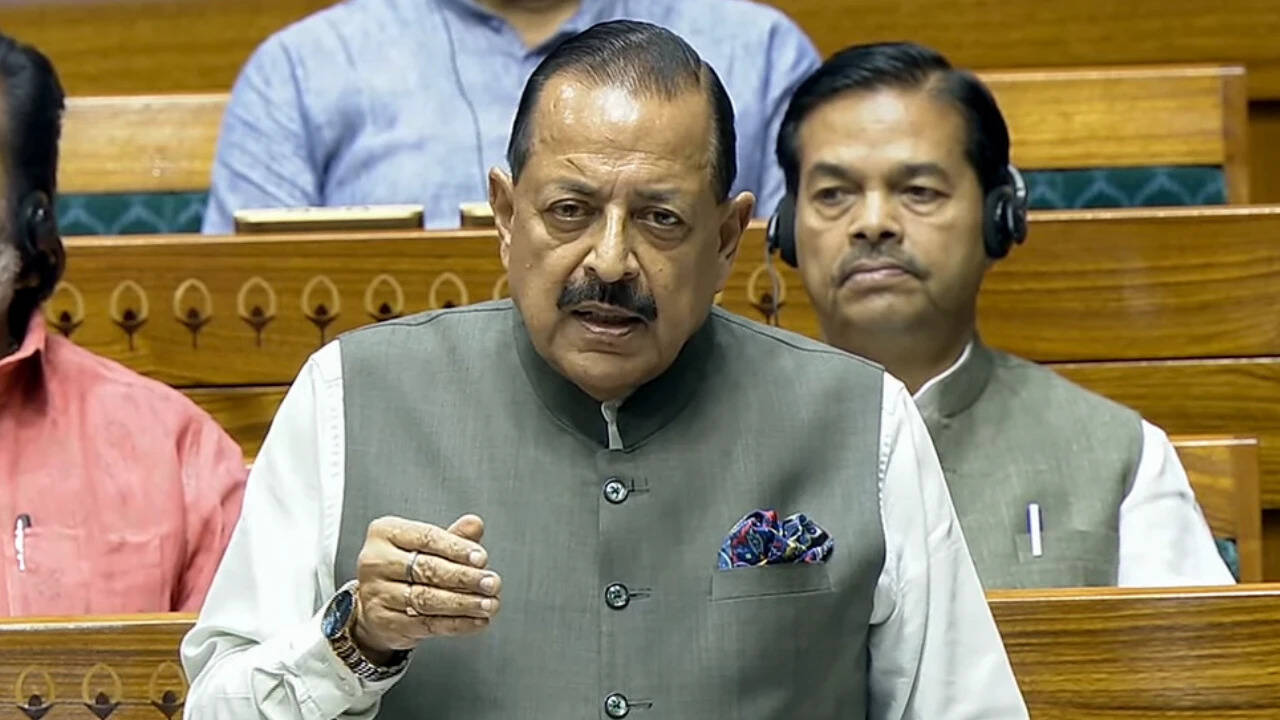
Space Minister Jitendra Singh informed Lok Sabha that twenty active Indian satellites in low Earth orbit are at higher risk of collision due to a denser population of space objects in this region. As of now, 20 collision avoidance maneuvers have been conducted in 2025 and nine in 2026. India actively participates in international cooperation frameworks addressing space debris management, including the Inter-Agency Debris Coordination Committee, UN Working Group on Long Term Sustainability, Expert Group of Space Situational Awareness, and International Astronautical Federation space debris Working Group.
Isro has contributed to the revised IADC space debris mitigation guidelines and has announced the India’s intent for debris-free space mission (DFSM) initiative. The multi-object tracking radar at Sriharikota and the upcoming optical telescope in Hanle, Ladakh will aid in tracking large space objects. The Gaganyaan Mission aims to send an uncrewed experimental mission in Q4 of 2026, followed by two uncrewed and one crewed mission by 2027.
The operationalization of Bharatiya Antariksh Station is targeted by 2035, with the first module already approved. Isro has collaborated with various space agencies, including the European Space Agency, Australian Space Agency, French National Space Agency, and Roscosmos, to enable network operations support, crew and crew module recovery, training, and joint activities in the Human Spaceflight Programme.
Written by urgent.news from Times of India's reporting — not their text. Machine-written — may contain errors; check the original before relying on it.