Second-quarter figures: Lufthansa's profit plummets – tickets to get even more expensive
Lufthansa is struggling with expensive kerosene and strikes. CEO Spohr now even considers a decline in profit for the entire year to be possible and continues to announce high ticket prices.
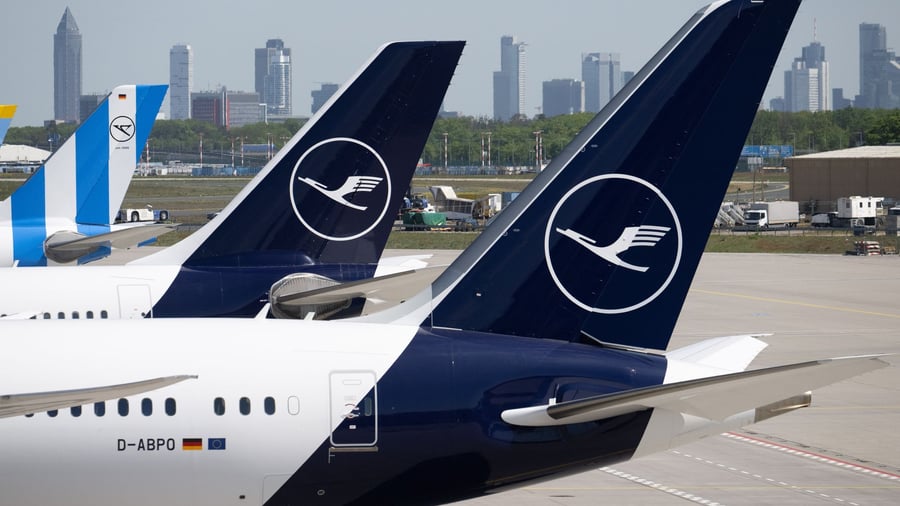
Expensive kerosene and strikes by its own crews have spoiled Lufthansa's early summer. Despite higher ticket prices, the adjusted operating profit fell by 56 percent to €383 million in the second quarter, as the company reports. Even for the second half of the year, passengers are unlikely to hope for cheaper tickets. For the full year, CEO Carsten Spohr now also considers a decline in profit to be possible.
The MDax group specifies a range of €1.7 billion to €2.2 billion for the operating profit adjusted for special effects in its completely revised forecast. Previously, it had been said that the company would "clearly" exceed the previous year's value of €1.96 billion. On the stock exchanges, the Lufthansa share price plummeted sharply after the figures.
Kerosene cost €750 million more The company estimates the additional expenses for more expensive kerosene as a result of the Iran war at €750 million in the second quarter, although it had secured more than 80 percent of its needs with financial products. The strikes by the sector unions around the 100th anniversary celebrations in April put a strain on the result with around €150 million.
Positive contributions to earnings were made, however, by the subsidiaries for technology and cargo. European competitors Air France-KLM and IAG with British Airways have reported lower profit losses. The higher kerosene costs could be compensated for by around 60 percent through higher ticket prices, said CFO Till Streichert. Even in the second half of the year, prices are expected to rise, although customers are booking more and more at short notice.
Travel is less price-sensitive than the entire industry may have thought, said CEO Spohr. "People want to fly, and they can afford it even at higher prices." Supply situation normalizes The tense supply situation with aviation fuel that had arisen after the start of the war normalized over the course of the past few weeks, said the Lufthansa CEO.
The refineries had increased their capacities, and new supply chains, for example from Nigeria, had been established. "The world has adapted and got the challenge under control," said Spohr. The risk of flight cancellations due to a lack of kerosene had decreased further. Despite ongoing fluctuations, the fuel costs are expected to rise to €8.7 billion for the full year, €200 million less than expected in May.
Gulf airlines are back On the other hand, Lufthansa has also benefited from the Iran war, as the Arab competitors such as Emirates or Qatar Airways had to temporarily close their hubs in the Persian Gulf during the fighting. Significantly higher ticket revenues on the Asia routes were the result for the Europeans. In the meantime, the Gulf airlines have "put everything back in the air" and are operating with fighting prices, said Spohr.
This primarily targets price-sensitive private customers, while business customers continue to prefer direct connections. Many companies also prohibit their managers from making intermediate landings in the Gulf. Growth on long-haul flights In the long term, the Lufthansa Group wants to grow primarily on long-haul flights. Currently, a further reduction of the European offering by one percent is being examined.
This year, the overall offering is expected to stagnate, after the management had originally announced growth of up to 4 percent. As a result of the strikes, the group had closed its regional subsidiary Lufthansa Cityline earlier than planned and thus canceled around 20,000 European flights in the summer flight schedule. The number of passengers fell by 4 percent to 35.6 million.
The quarterly turnover nevertheless climbed by 8 percent to €11.1 billion. Overall, the surplus collapsed by 88 percent to €123 million due to a positive tax effect from the previous year and current burdens.
Translated by urgent.news. Machine-written — may contain errors; check the original before relying on it.