When a total solar eclipse darkens the sky on Aug. 12, these citizen scientists will be watching
Meet the citizen scientist initiative bringing you closer to totality.
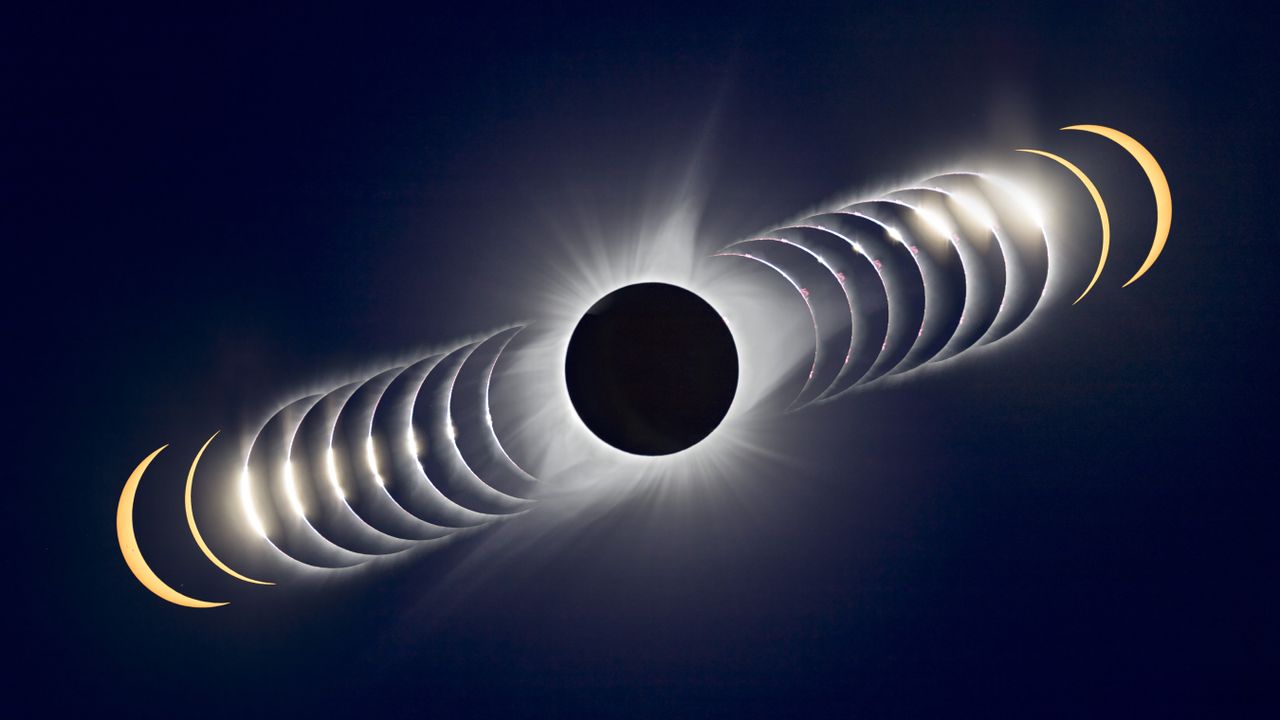
The Dynamic Eclipse Broadcast Initiative (DEB) is a citizen science project that aims to share the beauty of our parent star, the sun, while capturing valuable data. Coordinated by professional astronomers from Southern Illinois University Carbondale, the DEB relies on a network of volunteer solar observers. These volunteers, equipped with portable and relatively inexpensive telescopes, are tasked with monitoring the sun's corona during total solar eclipses.
During the 2024 American Eclipse, the DEB had over 80 teams in the path of totality, capturing telescope footage and uploading it in near-real time to livestreams for public viewing. The data collected by DEB volunteers has also been used to study the structure and dynamics of the sun's corona, as well as to track asteroids, solar vibrations, and powerful flares.
The project's success has been attributed to the network of telescopes involved, rather than just a single scope. Looking ahead to the 2026 eclipse, two DEB teams will be observing from Spain and the Castilian village of Valoria la Buena, respectively. The 2026 eclipse will have the longest totality of any eclipse in the 21st century, lasting up to 6 minutes and 23 seconds.
DEB is planning for an ambitious 2027 campaign, with 27 teams potentially observing from North Africa. The initiative is looking to recruit volunteers for the 2027 campaign in the fall of this year.
Written by urgent.news from Space.com's reporting — not their text. Machine-written — may contain errors; check the original before relying on it.