Webb Unravels Small Cosmic Details With Interferometry Observing Mode
One of the most recognizable features of NASA’s James Webb Space Telescope is its large, segmented, gold-coated mirror, which delivers images twice as sharp as pre-launch estimates. Aperture masking interferometry is an observational technique that allows for high-angular resolution imaging of celestial objects. The basic principle involves placing a specially designed mask with several small […]…
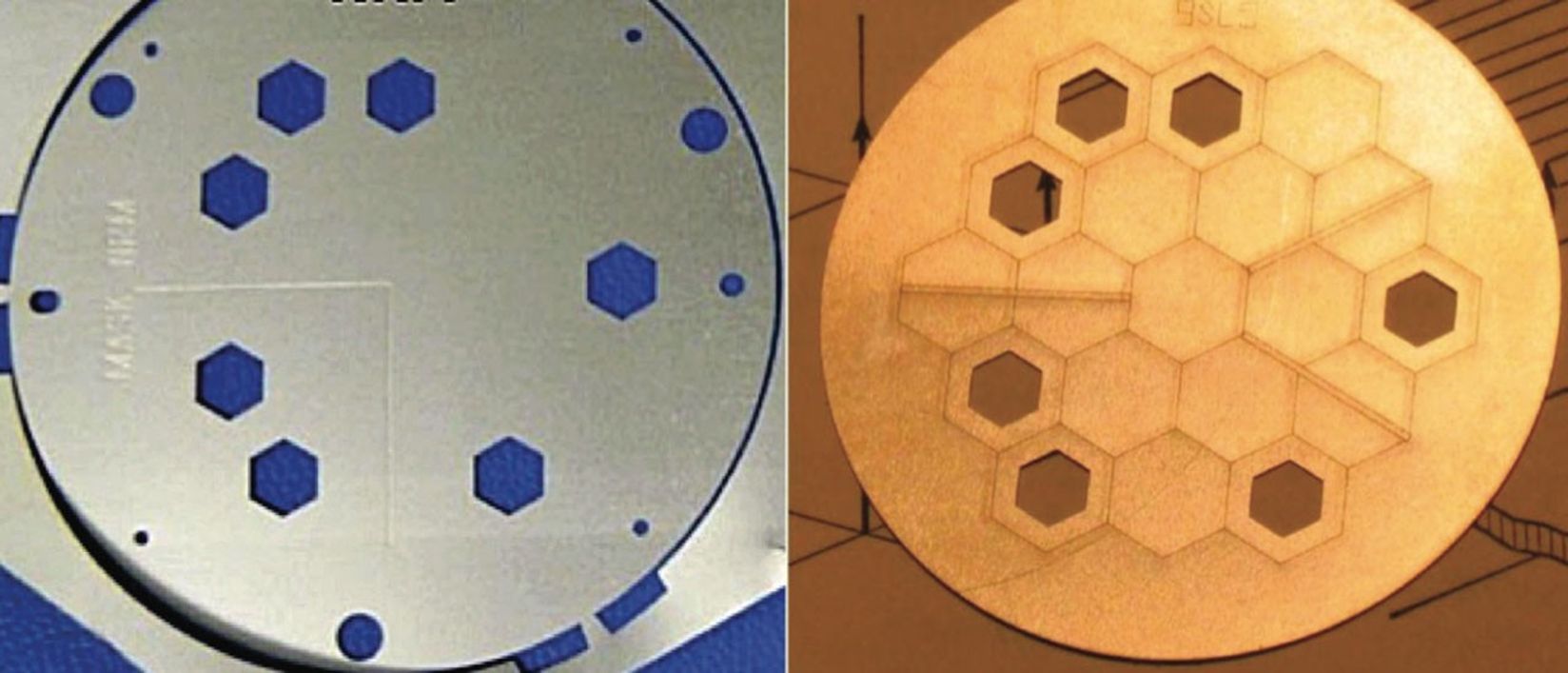
NASA's James Webb Space Telescope has revealed intricate details of cosmic objects through its interferometry observing mode. This technique, known as aperture masking interferometry (AMI), utilizes a specially designed mask with numerous small pinholes in the light path, effectively transforming the primary mirror into multiple smaller telescopes.
When light passes through these pinholes, it forms a pattern of overlapping waves that interfere constructively or destructively, generating a complex light-dark pattern known as fringes.
Three science teams showcased unique observations using this method, providing fresh insights into three cosmic objects. One such object is the massive binary star system Wolf-Rayet 137, studied by the DustERS team from the National Autonomous University of Mexico. In this system, one star is a massive Wolf-Rayet, 10 times the Sun's mass, with a companion star 17 times more massive.
The two stars orbit each other every 13.1 years. Using AMI on Webb, the team observed the faint dust formed in the colliding wind region surrounding the two stars, within 100-200 astronomical units. Initially expecting a pinwheel-shaped dust pattern, they were astonished to discover a linear, almost straight-line formation, which suggests unique interactions between the stars' winds and dust creation.
This image, spanning 940 milli-arcseconds, was reconstructed by comparing NIRISS AMI fringe observations to simulated models.
Written by urgent.news from NASA Science's reporting — not their text. Machine-written — may contain errors; check the original before relying on it.