The Dashboard Trap: How Product Teams Confuse Measurement With Decision-Making
Decision-Led Analytics starts with the product decision, then identifies the evidence needed to reduce uncertainty instead of tracking more metrics.
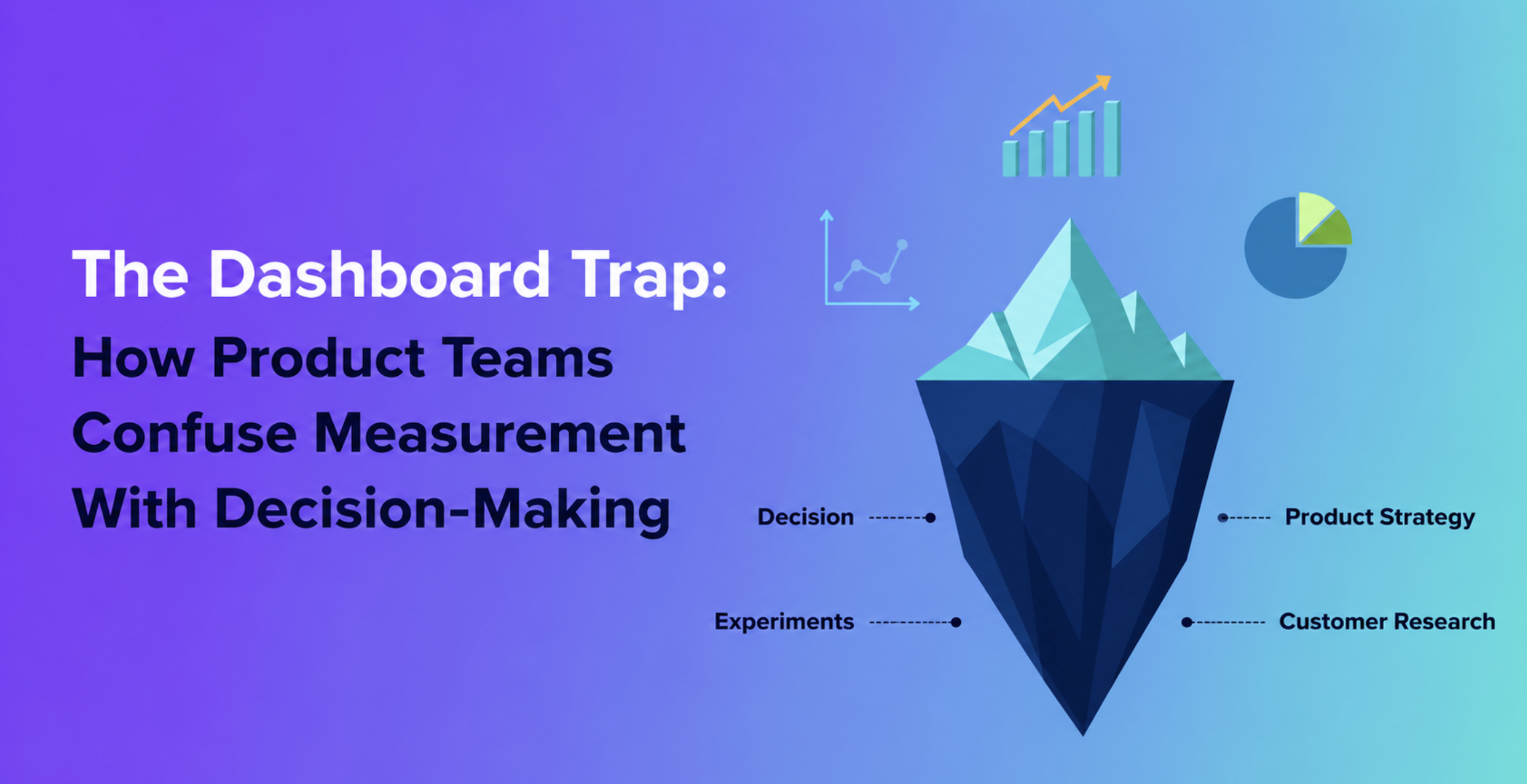
Product teams often confuse measurement with decision-making, setting themselves up for ineffective analytics. This pattern, known as the Dashboard Trap, occurs when teams build complex measurement systems without first establishing what decisions analytics should support. As a result, these teams end up with dashboards that describe the product well but fail to help teams make decisions.
A prime example is the struggle of companies scaling through paid acquisition. While they have extensive marketing metrics and dashboards, they often overlook that low user retention and weak onboarding are the real bottlenecks. These issues have little to do with marketing; instead, the product isn't ready to scale. More traffic simply highlights existing product problems faster.
The key issue is that product teams often lack a shared understanding of how metrics should support product decisions. This echoes Marty Cagan's advice that analytics should support product thinking, not replace it. While quantitative metrics can tell us what happened, they rarely explain why it happened or what action should follow. Successful product organizations combine dashboards with customer interviews, experiments, and qualitative research instead of treating metrics as objective answers.
To truly improve decision-making, product teams should start with the decision they want to make, not the metric to measure. This approach, dubbed Decision-Led Analytics, shifts the focus from collecting all possible data to collecting only the data that can change the decision. For example, instead of reviewing numerous onboarding metrics, a team could ask, "Should we redesign onboarding?" This reframe helps teams collect the right data and make informed decisions.
This approach aligns with Lean Analytics' principle of focusing on the One Metric That Matters at each growth stage rather than trying to optimize everything simultaneously. By defining the decision first, the appropriate metrics usually become clear. This shift is particularly important as the biggest constraint in software development has changed from building features to scaling them. With the right decision-led analytics, product teams can avoid the Dashboard Trap and make better, more informed decisions.
Written by urgent.news from HackerNoon's reporting — not their text. Machine-written — may contain errors; check the original before relying on it.