The Catholic Church’s New Schism
The Vatican excommunicated 700 arch-traditionalist bishops and priests—a rupture that touches on broader disputes in the Church today.
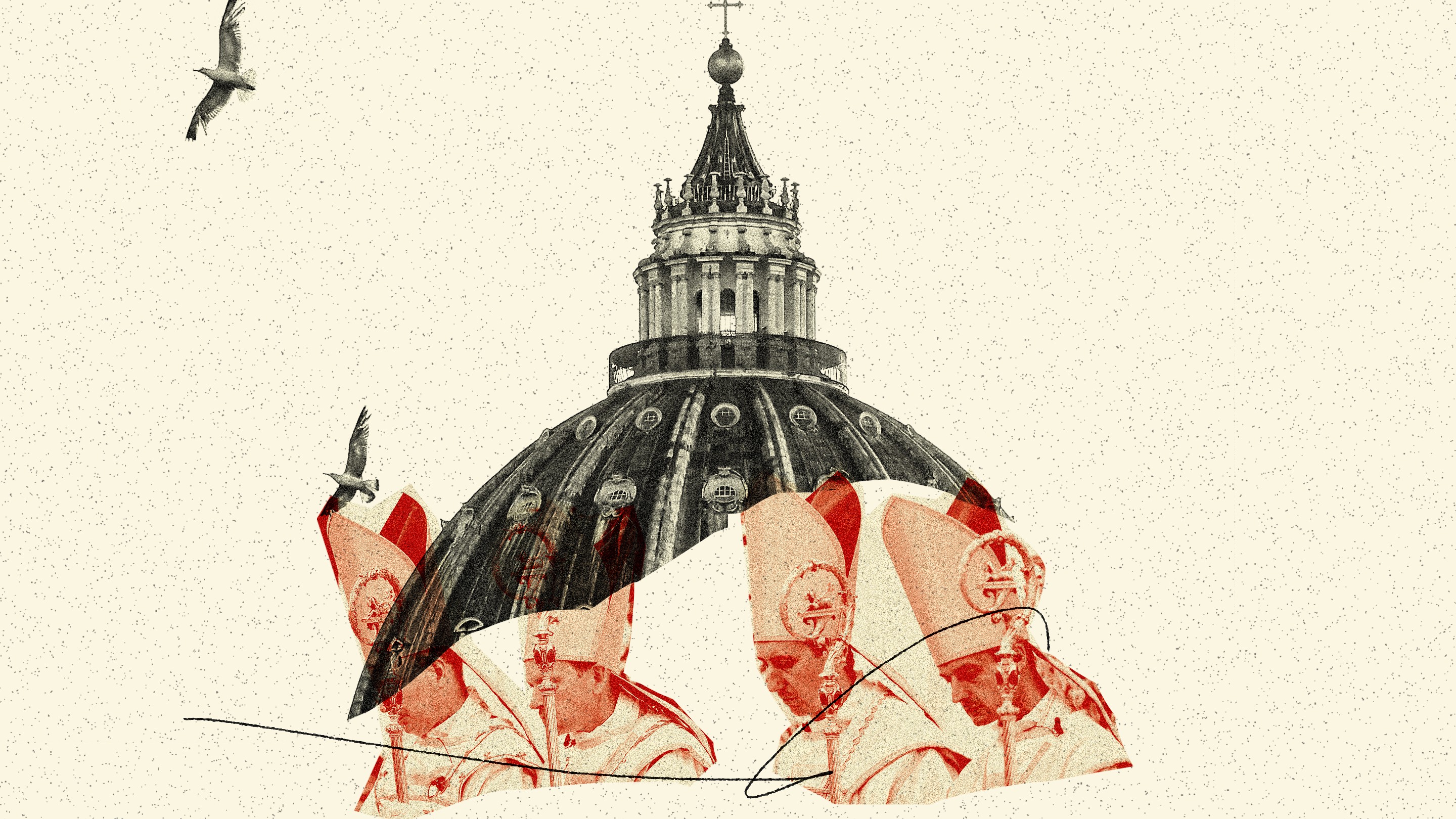
In Écône, Switzerland, a significant event unfolded last month when four priests from the Society of Saint Pius X (SSPX) became bishops without the necessary papal approval. This act, committed in full awareness of the lack of formal authorization, has led to a new schism within the Catholic Church. The four priests are part of SSPX, an arch-traditionalist group founded in 1970 by the French archbishop Marcel Lefebvre.
For decades, SSPX has clashed with the Vatican over its concerns that the Church is more aligned with contemporary times rather than serving as a guiding light for the world. The Vatican had warned SSPX prior to the Mass that consecrating bishops without papal consent would be deemed a "schismatic act," a formal separation from the Church.
Following the Mass, the Church announced that the new bishops, along with the two who ordained them, have automatically incurred excommunication, which prevents them from receiving communion, celebrating licit Masses, or performing valid marriages and confessions. If the 700 or so SSPX priests worldwide choose to remain in the society, they, too, will face excommunication and schism.
This schism marks one of the largest since the 19th century. While the impact may not be immediately apparent to many Catholics, it highlights broader disputes in the Church concerning reform, orthodoxy, and the consequences of the institutional changes over the past half-century. The schism revolves around the Society of Saint Pius X's battle with the Catholic Church, which traces its roots to the Second Vatican Council (Vatican II).
This pivotal event in 20th-century Catholic history occurred between 1962 and 1965, during which the Church implemented extensive reforms aimed at adapting the Church to a secular society. The Mass was reimagined, with priests facing the congregation, the use of local languages instead of Latin, and the introduction of guitars and non-traditional music.
Vatican II also redefined the doctrine of extra ecclesiam nulla salus, or "outside the Church, there is no salvation," clarifying that Catholics must remain open to divine grace beyond the Church's boundaries. This shift in doctrine and practices prompted the SSPX to reject ecumenical and interfaith dialogue, consider other faiths as false and heretical, and advocate for the traditional Latin Mass as the sole legitimate liturgy.
Founding member and French archbishop Marcel Lefebvre participated in Vatican II, signing the council's texts, but later denounced them, founding SSPX to preserve preconciliar beliefs and practices. In 1988, Lefebvre ordained four priests as bishops, defying Pope John Paul II's directives. The Pope subsequently excommunicated Lefebvre and the four bishops, but did not formally declare a schism.
Despite this, SSPX continued its unorthodox practices, and the Vatican maintained a limbo-like relationship with the society, lifting excommunications selectively over the years. However, the Church's attempts to reconcile with SSPX have been unsuccessful, as the society steadfastly refuses to accept Vatican II's reforms, viewing them as a betrayal of Catholic doctrine and a threat to the faith.
Written by urgent.news from The Atlantic's reporting — not their text. Machine-written — may contain errors; check the original before relying on it.