The AI race isn’t about models, it’s about infrastructure—and the U.S. is still far ahead
So long as the U.S. controls the underlying infrastructure that enables AI ecosystems, it will stay dominant.
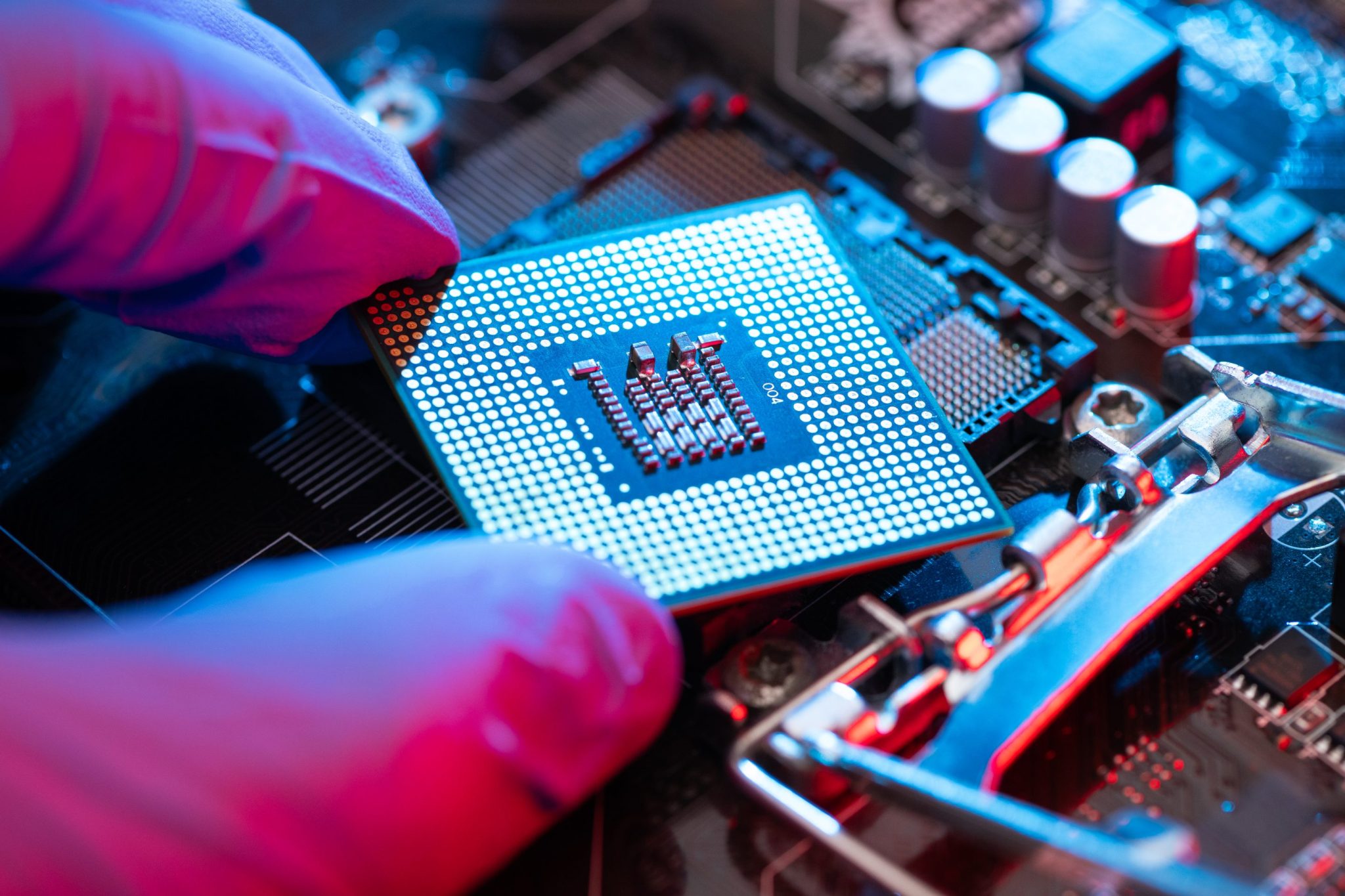
The global debate on artificial intelligence (AI) often centers around the models themselves: Which ones perform better, cost less, and can accomplish more. This fixation on models has made it easy to overlook a critical point: the U.S. maintains its dominance in AI largely due to its superior underlying infrastructure. As long as the United States controls the hyperscale data centers, cloud computing infrastructure, AI servers, and the telecommunications backbone that underpins AI ecosystems, it will likely stay ahead of the competition.
While it's easy to compare competing AI models like Anthropic’s Fable, OpenAI’s GPT, DeepSeek V4, or Moonshot’s Kimi K3, and to focus on the hardware powering them, the truth is that AI’s true strength lies in a complex web of enabling technologies. Hyperscale data centers, cloud computing infrastructure, AI servers, and the extensive underwater fiber-optic cables connecting them form the bedrock upon which frontier AI operates.
At the heart of this infrastructure-driven advantage is the American tech giant Nvidia. The company’s dominance in graphics processing units (GPUs) – the key hardware for training AI models – gives it roughly 85% of the global market. Nvidia’s ecosystem expands to include hardware manufacturers like Broadcom, and key players in cloud computing such as Amazon Web Services, Google Cloud, and Microsoft Azure.
These entities provide the essential infrastructure that supports the development of cutting-edge AI technologies by companies like Anthropic, OpenAI, Meta, and Alphabet. Nvidia's proprietary software, CUDA, has become the standard environment for AI development, creating high switching costs for any company that might try to migrate to a competitor's platform.
Together, these tech giants constitute a new U.S. AI industrial complex, tightly connected to the defense and intelligence sectors through multimillion-dollar contracts.
The Department of Defense, for instance, has entered into standard operational agreements with major AI providers – including Google, OpenAI, Microsoft, Amazon Web Services, Oracle, and Nvidia – to deploy their advanced AI tools on classified military networks. The Pentagon’s FY2027 budget allocates over $54 billion for autonomous warfare and drone systems, supporting a newly formed Defense Autonomous Warfare Group (DAWG).
Despite initial concerns about the ethical use of these technologies, OpenAI, xAI, and Google have all signed binding agreements with the Pentagon, granting them "all lawful use" rights for defense-related applications, which could include autonomous weapons and mass surveillance. Even Anthropic, which has challenged the U.S. government over its concerns about AI model usage, has reportedly embedded its engineers within the National Security Agency to adapt its Mythos model for offensive cyber operations, potentially targeting networks in China and Iran.
This commercial-military symbiosis between Washington and Silicon Valley is highly concentrated, with ten of the world's largest companies by market value representing this ecosystem, nearly all of which are American companies. Collectively, they represent a substantial commercial concentration in the trillions of dollars. The U.S. government is actively investing in AI, with a $90.7 billion increase in federal AI contracting in 2026 alone, as reported by the Brookings Institution.
While the U.S. enjoys a significant advantage in AI infrastructure, it is not without limitations. American cloud hyperscalers are expanding their capacity by building data centers worldwide, and some are establishing their own privately owned subsea fiber-optic networks. For example, Meta plans to construct a global fiber-optic cable covering 40,000 kilometers at a projected cost of $10 billion, while Google is investing over $1 billion in its Pacific Connect Initiative to connect Japan to the South Pacific.
These critical data pipelines, owned and operated by Silicon Valley tech giants, constitute around 70% of the functional undersea cables expected to be in use by 2026. However, U.S. regulations still retain the authority to restrict where these networks can be deployed and who can access them.
In 2020, U.S. regulators blocked the Hong Kong segment of the Pacific Light Cable Network – a project involving Google and Meta – due to concerns about Chinese espionage. As a result, the companies were forced to abandon a direct U.S.-Hong Kong link, leaving 13,000 kilometers of already laid cable unused on the ocean floor. Even China’s frontier AI labs, which train models on domestically-hosted infrastructure, remain reliant on American undersea cables when their models interact with the global internet, whether for data sourcing or serving users and running APIs outside China.
Consequently, China is investing heavily in its own digital infrastructure, including the construction of parallel undersea fiber-optic networks as part of its digital Silk Road, to reduce dependence on American dominance of the hardware layers supporting the global AI landscape.
It's important to note that while the U.S. dominates the AI stack, it is not invulnerable. American manufacturers produce the semiconductors, AI servers, and other essential components necessary for AI development. Any disruption in these supply chains could potentially impact the U.S. advantage, highlighting the need for diversification and strategic planning to maintain leadership in AI technology.
Written by urgent.news from Fortune's reporting — not their text. Machine-written — may contain errors; check the original before relying on it.