See the Perseid Meteors on a New Moon Year
You couldn’t ask for a better year for one of the top annual meteor showers. If skies are clear be sure to watch for one of the top skywatching draws of 2026: the August Perseid meteor shower. While the Perseids are a draw on any year, 2026 is special, and has a few things going for it in terms of the Moon phase, peak timing and prospects.
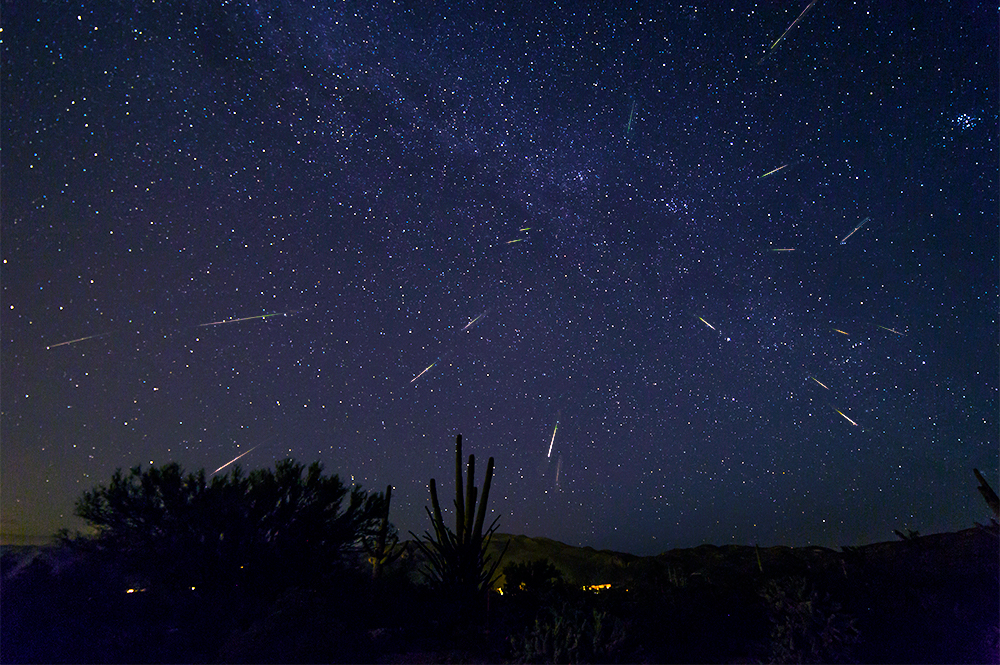
Next week, the sky will be graced by the spectacular August Perseid meteor shower. This year, 2026, is a particularly good one to observe, and for good reason. With the Moon absent during the shower, the night sky will be clear and dark, offering ideal viewing conditions.
The Perseids are known for their impressive quantities, with 2026 expected to reach a zenithal hourly rate of 100 meteors per hour at peak. This means that, assuming clear skies, observers could witness around 100 meteors streaking across the sky in an hour. The peak is anticipated to arrive on August 13th at 3:00 Universal Time, or 11:00 PM EDT on the 12th.
As the shower's radiant point rises in the east shortly after midnight, expect to see a flurry of meteors from both early and mid-night hours. Before midnight, meteors will move slower, leaving long trails as they strive to catch up to the Earth. After midnight, however, meteors will travel faster, piercing the sky with swift, bright streaks.
The Perseids are pieces of debris left behind by the periodic Comet 109P Swift-Tuttle, with the biggest ones being roughly the size of a pea, or even smaller. These meteors are not the result of bright comets, but rather tiny dust grains. The comet itself, however, is a remarkable sight to behold, with its steep 113-degree inclination retrograde orbit having brought it into contact with no other planets and ensuring its stability over centuries.
While the Perseids have been a consistent annual event for centuries, including observations dating back to 36 AD by Chinese observers, some scientists predict a possible outburst in 2028. This could potentially see rates of over 1,000 meteors per hour, though local moonlight from the nearby Last Quarter Moon may slightly reduce visibility. Regardless, the 2026 Perseids are truly a spectacle not to be missed.
Written by urgent.news from Universe Today's reporting — not their text. Machine-written — may contain errors; check the original before relying on it.