How one Ghanaian developer is redesigning assistive AI for African users
When Emmanuel Quartey temporarily lost hearing in one ear in February 2024, the impact was immediate. Everyday conversations became frustrating, and even simple interactions required more effort than he was used to. It was the first time he had experienced, even briefly, how losing one sense could reshape everyday life. Then a friend asked him […]
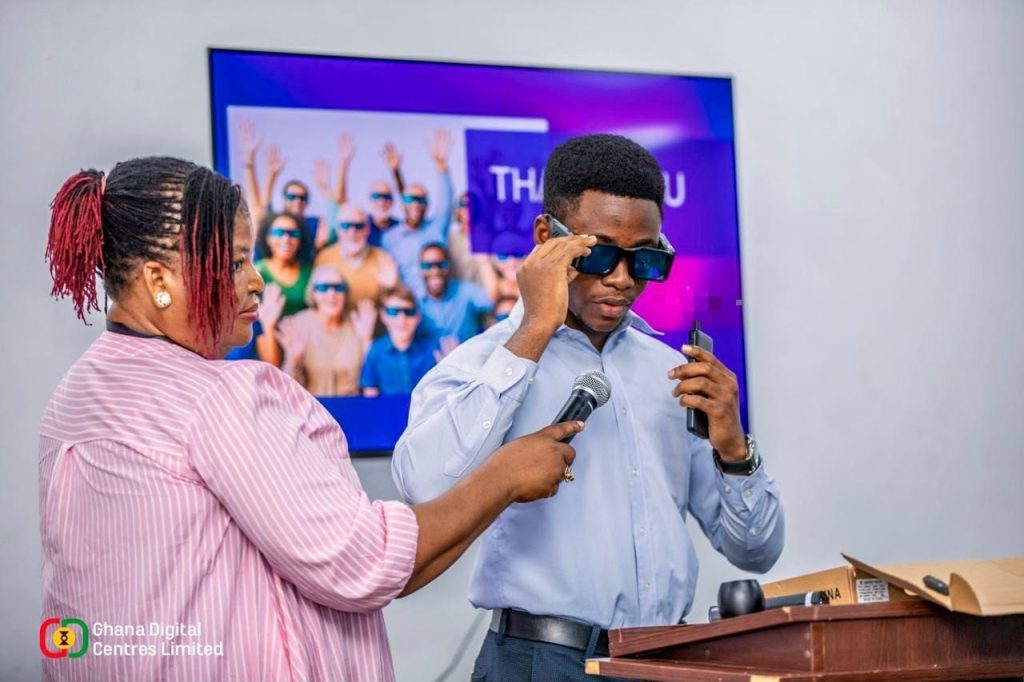
Emmanuel Quartey, a young Ghanaian engineer, experienced firsthand the challenges faced by individuals with partial loss of hearing when he temporarily lost hearing in one ear in February 2024. This prompted him to contemplate how assistive technology could be applied to address such issues. At the time, Quartey was pursuing studies in Information Technology at Pentecost University, experimenting with computer vision and artificial intelligence.
After witnessing a friend struggle with a visually impaired acquaintance, he realized the potential for creating a platform that could help blind and visually impaired users in their daily lives.
Two years later, Quartey's vision has culminated in Steward Vision Assistant, an AI-powered platform designed to assist individuals with visual impairments. This platform currently features two devices: AI-powered smart glasses and a handheld device. The smart glasses utilize computer vision and generative AI to recognize currency, identify objects, read printed text, and provide audio descriptions of unfamiliar environments.
Meanwhile, the handheld device employs ultrasonic sensors to detect obstacles above ground level, assisting users in navigating their surroundings more safely.
Quartey's motivation to develop Steward Vision Assistant stemmed from the disparities in assistive technology between developed and developing markets. He highlighted the high cost of importing advanced assistive devices such as Envision Glasses and WeWalk, which often fail to cater to the specific needs of African users. For example, currency detection features in existing smart glasses may not include local currencies like the Ghanaian cedi, rendering them ineffective for users in Ghana.
Moreover, voice models trained predominantly on American or British accents frequently struggle to understand African speech patterns, further hindering the accessibility of these devices.
Addressing these issues, Quartey's team has been working on adapting existing AI models to cater to the unique requirements of African users. They are training their models to recognize Ghanaian accents and to support regional languages like Hausa and Swahili. Additionally, the platform aims to incorporate Ghanaian languages such as Twi and Ga in the future.
This local focus, according to disability inclusion consultant Olamide Daniel, is crucial in promoting the development of affordable and culturally appropriate assistive technologies for African users.
At present, Steward consists of two devices that have the potential to significantly improve the lives of blind and visually impaired individuals across the continent. The smart glasses provide real-time audio descriptions of visual information, while the handheld device assists users in navigating their surroundings by detecting obstacles.
As Steward continues to evolve, it stands as a beacon of innovation, demonstrating the transformative power of AI in addressing the unique challenges faced by African users of assistive technology.
Written by urgent.news from TechCabal's reporting — not their text. Machine-written — may contain errors; check the original before relying on it.