GPs’ breast cancer guidelines ‘miss’ 95% of women who will develop disease
Findings prompt calls for review of National Institute for Health and Care Excellence criteria Young women in England who later develop breast cancer are not being referred for early tests or preventive treatment because current guidelines used by GPs miss 95% of patients, research suggests. The National Institute for Health and Care Excellence (Nice) criteria used to decide who should be…
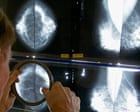
A study by the University of Cambridge and the Institute of Cancer Research has found that the National Institute for Health and Care Excellence (Nice) breast cancer criteria used by GPs in England fail to identify 95% of women under 50 who will develop the disease within a decade. The guidelines, which consider family history, are not effective in spotting high-risk women under 50 because almost 75% of women who develop breast cancer within 10 years have no family history of the disease.
The alternative Boadicea risk assessment system, developed by Cambridge and funded by Cancer Research UK, identified eight times as many at-risk women in the age group. Experts say early identification of high-risk women could lead to earlier screening and preventive treatment, potentially preventing or detecting breast cancer earlier when it's more treatable.
However, a Nice spokesperson said the current evidence does not warrant a change to the current familial breast cancer guideline at this time, and they remain committed to reviewing new evidence for future updates.
Written by urgent.news from Guardian Health's reporting — not their text. Machine-written — may contain errors; check the original before relying on it.