Government to formalise tricycle waste collectors, expand waste transfer stations
The Ministry of Local Government, Chieftaincy and Religious Affairs has announced plans to formalise the operations of tricycle waste collectors and integrate them into Ghana’s long-term sanitation framework. The move is part of government’s efforts to improve waste collection and management, particularly in densely populated communities where conventional refuse trucks have limited access.
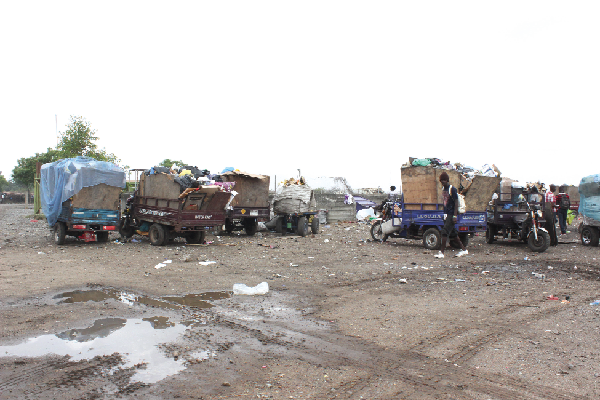
The Ministry of Local Government, Chieftaincy, and Religious Affairs plans to formalize tricycle waste collectors and expand waste transfer stations in Ghana. This move aims to improve waste collection and management in densely populated areas where conventional refuse trucks have limited access. During a visit to Zoomlion’s Integrated Recycling and Compost Plant (IRECOP) in Jamestown, sector Minister Ahmed Ibrahim stated that five of the six designated waste transfer stations in Greater Accra are fully operational.
The intervention follows nationwide sanitation exercises that generated high volumes of waste, posing a potential public health crisis. The Malam waste transfer station remains inactive due to the lack of an accessible road network, and the Ghana Armed Forces is working to fix this issue. The Jamestown facility handles waste from around 800 of the 4,000 waste-collecting tricycles operating in Greater Accra daily.
To address congestion and ensure emergency services can access Korle Bu Teaching Hospital, the government introduced a 24-hour operational system where tricycle operators discharge waste during the day, and articulated trucks transport compacted waste at night to landfill and recycling facilities in the Eastern Region. The Minister defended the Public-Private Partnership (PPP) model for sanitation management, emphasizing that it requires significant investment in infrastructure, equipment, fuel, logistics, and technical expertise.
He also announced plans to formally integrate informal tricycle waste collectors into the country's official sanitation structure, recognizing their vital role, especially in communities where traditional waste trucks cannot operate. The Ministry is developing a sustainable business model to regulate, improve service delivery, and enhance working conditions for tricycle operators, with government support from the Council of State’s Sub-committee on Sanitation and the Ministry of Finance.
Citizens, local authorities, and sanitation stakeholders are urged to sustain the national clean-up campaign momentum and support sanitation improvement efforts across the country.
Written by urgent.news from MyJoyOnline Ghana's reporting — not their text. Machine-written — may contain errors; check the original before relying on it.