From apps to 'intent': How AI agents will rewrite the way we use next‑gen phones
Smartphones are set to abandon their traditional app icon grids in favor of AI-driven interfaces. Instead of manually opening apps, users will communicate their intentions via voice or text to smart agents that handle tasks seamlessly. This groundbreaking shift heralds a new age of technology, where app stores could evolve into dynamic service registries for these advanced AI agents.
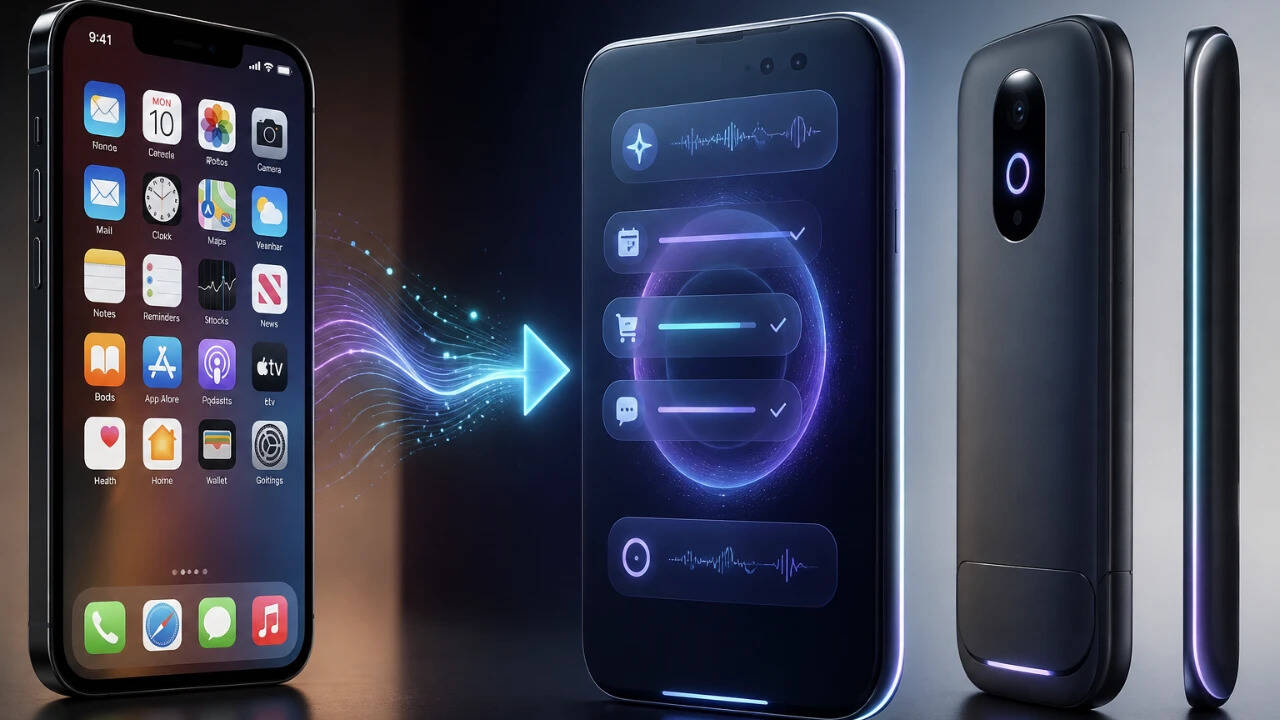
For over two decades, mobile technology has been centered around app icons on grid layouts. Apple's App Store in 2008 solidified this design where users accessed various services through dedicated apps. This resulted in a multitude of tiny software silos requiring individual logins, interfaces, permissions, subscriptions, and updates. The App Store and Google Play became the gatekeepers of this digital universe, generating immense revenue for tech giants.
However, this model is set to change. The future of smartphones lies in the rise of AI-first devices. Unlike traditional apps, these phones will run small language models (SLMs) and multimodal AI agents locally for swift, privacy-preserving tasks, while delegating more complex reasoning to edge or cloud computing. The operating system architecture will be replaced with an Intent Engine - a persistent, real-time AI agent.
Interactions with AI agents will be expressed through intents rather than apps. A user's goal, whether verbal, written, or context-inferred, will be broken down into logical steps, assigned to underlying services, and rendered into a personalized, dynamic interface. The home screen will function as a goal launcher instead of an app grid.
Hardware design will favor contextual inputs like cameras, sensors, and ambient displays over touchscreens, which primarily serve rich visual consumption. The AI-first phone's performance will be optimized as storage constraints shift from gigabytes of cached app binaries to localised neural networks.
In a practical sense, planning a weekend getaway would entail speaking a single command to an AI agent, which would simultaneously query multiple services for flight options, hotels, dietary preferences, and schedule conflicts. The agent would then present a unified solution for approval. The same streamlined process would apply to health and financial matters, making them proactive and automated.
This radical transformation marks a significant shift from the current app-driven smartphone landscape to an AI-first ecosystem, where users engage with their devices more intuitively and seamlessly.
Written by urgent.news from Times of India's reporting — not their text. Machine-written — may contain errors; check the original before relying on it.