Firefighters hope to contain blaze on outskirts of Athens
Firefighters in Greece are hoping to contain a wildfire on the outskirts of Athens burning for a fifth day, with easing winds enabling the use of vital aircraft.
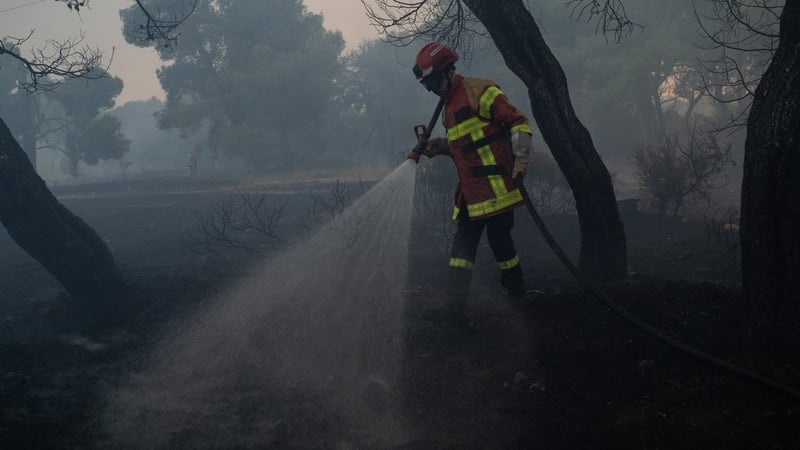
Firefighters in Greece are striving to contain a wildfire on the outskirts of Athens that has been raging for five days, aided by a slight easing of winds that have allowed the deployment of 30 aircraft to reach difficult mountain terrain. Over 500 firefighters have been deployed in villages surrounding Mount Kithairon, situated approximately 60 kilometers northwest of the capital, according to the fire service.
Deputy fire department spokesman Yiannis Artopios emphasized the goal of maintaining the fire in a controlled state, as active or smoldering hotspots continue to pose risks due to the expansive affected area. The greater Athens region and neighboring Evia island remain under high fire risk according to the civil protection ministry.
Since last week, five firefighters have lost their lives in the wildfires, including two Bell helicopter pilots who collided during operations near Athens on Sunday and three additional firefighters who perished in Crete and the Peloponnese last week. While fires on the Ionian island of Cephalonia have largely been contained, the Greek fire service reported extensive damage, with more than 13,000 hectares of forest and agricultural land affected by the Athens fire, which began on Friday.
Prime Minister Kyriakos Mitsotakis warned that Greece faces "extremely difficult" days ahead as high temperatures and dry conditions persist, contributing to the ongoing wildfire crisis. The European heatwave, which scientists attribute to climate change, has been characterized by longer, more intense, and frequent occurrences due to greenhouse gas emissions, according to John Kennedy, Head of Climate Information at the World Meteorological Organization.
He emphasized the role of high pressure systems in exacerbating wildfires and droughts across Europe. Extreme heat is anticipated to re-emerge across parts of western Europe this week, prompting governments to address the consequences of prolonged periods of very high temperatures. In Greece, firefighters face a major wildfire threatening the capital while Italy places most of its major cities under the highest "red" alert for extreme heat.
Nations like Hungary and Romania have expressed significant concerns for their energy infrastructure due to the Danube River reaching a record low level. Kennedy noted that heatwaves initiated in spring have continued into June and July, breaking records in countries such as France, Germany, and Spain. He explained that these heatwaves are characterized by high pressure systems that can persist for days or even weeks, leading to both elevated temperatures and low rainfall.
This combination fosters extreme conditions such as wildfires and droughts. Kennedy also highlighted the occurrence of intense rainfall following some heatwaves, which can mitigate the impacts of prolonged droughts. He stressed that the World Meteorological Organization provides data and forecasts to enable European governments to make informed decisions on infrastructure preparedness.
Written by urgent.news from RTE News's reporting — not their text. Machine-written — may contain errors; check the original before relying on it.