Darwin proved right about gnat-trapping carnivorous plant
Botanists have finally proved what Charles Darwin was unable to nail down – that a genus of plants known to catch insects also digests them, suggesting the extent of plant carnivory has been underestimated
Nearly 150 years after Charles Darwin posited that certain plants, specifically in the genus Saxifraga, practiced carnivory, researchers have gathered substantial evidence confirming his theory. Doug Soltis, a researcher at the University of Florida, expresses his excitement about confirming Darwin's prediction, stating, "To have the opportunity to confirm a prediction of Darwin is both humbling and very exciting.
I would like to think Darwin would be pleased—again." Advertisement The study, published in Nature Communications, delves into the genus Saxifraga, which houses approximately 450 species and thrives in Arctic, alpine regions of the northern hemisphere, as well as the South American Andes. Although Darwin examined two species within this genus in 1875, he was unable to substantiate his hypothesis regarding their insect-catching and digestion abilities.
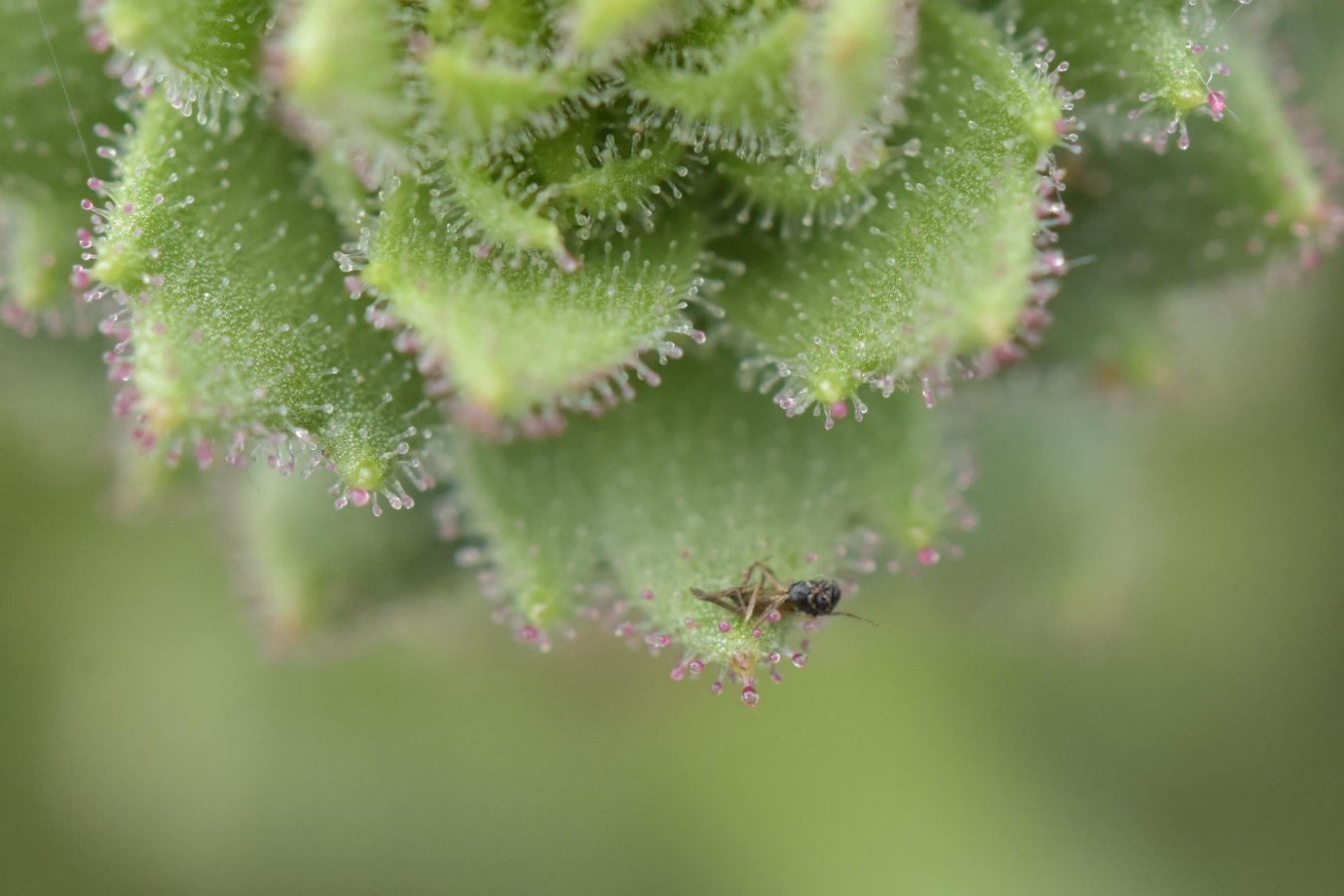
To address this, Soltis and his team scrutinized specimens of Saxifraga candelabrum from Wufeng Mountain in Yunnan province, China, a species different from those previously studied by Darwin, yet belonging to the same genus. Observations revealed that these plants effectively trap small insects using sticky glandular hairs. However, larger insects, more beneficial for pollination, are not captured.
Mature plants accumulated an average of over 70 insects, predominantly gnat species, suggesting a potential carnivorous trait. The researchers tested whether the secretions from the hair-like structures contained digestive enzymes capable of breaking down prey, finding they did. By introducing insect prey with a nitrogen isotope, they demonstrated that nutrients from the digested insects were absorbed by the plant.
Moreover, genetic studies unveiled that Saxifraga shares common genes with other carnivorous plants, such as the sundew (Drosera spatulata) and flycatcher bush (Roridula gorgonias), which control prey attraction, digestion, and nutrient uptake. These genomic data collectively provide independent evidence that Saxifraga candelabrum is indeed a true carnivorous plant.
Soltis anticipates that this research will prompt a re-evaluation of other Saxifraga species, including those studied by Darwin, and the broader Saxifraga family. He posits that many members of the family possess these hair-like structures, and it would not be surprising if others are also carnivorous.
Written by urgent.news from New Scientist's reporting — not their text. Machine-written — may contain errors; check the original before relying on it.
Also reported by 3 other outlets
- Sticky alpine flower confirms Darwin's 150-year-old carnivorous plant prediction phys.org
- 'Darwin’s hypothesis provided an important inspiration': Scientists bolster 150-year-old Darwinian theory with a carnivorous plant in China livescience.com
- 'Darwin’s hypothesis provided an important inspiration': Scientists bolster 150-year-old Darwinian theory with a carnivorous plant in China r.smartbrief.com