Check Out Rare Images of Borneo’s “Ghosts of the Forest”
The Sunda clouded leopard proves elusive even when there are camera traps aimed at finding them The post Check Out Rare Images of Borneo’s “Ghosts of the Forest” appeared first on Nautilus .
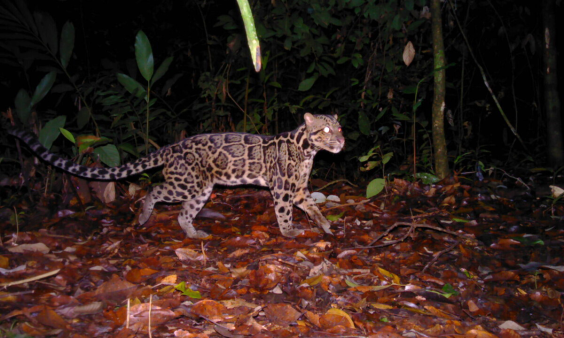
The elusive Sunda clouded leopard, often referred to as the "ghosts of the forest," remains seldom seen in the wild. These elusive creatures are primarily active at night, hunting primates, birds, and mammals as they traverse the rainforests of Sumatra and Borneo. Their larger-than-average canine teeth bear resemblance to those of saber-toothed cats, contributing to their fearsome reputation.
However, their numbers are dwindling, largely due to deforestation for palm oil plantations and urban expansion, coupled with the threat of the illegal wildlife trade. Consequently, understanding these creatures is crucial for their preservation. For instance, determining their maximum lifespan assists researchers in gauging the overall health of the population and spotting potential issues, which is the primary objective of a recent study led by ecologists from Germany's Leibniz Institute for Zoo and Wildlife Research.
In collaboration with Malaysian experts from the Sabah Forestry Department on Borneo, including Indigenous wildlife rangers, researchers utilized camera traps across three forest reserves for nearly 16 years. This extensive effort yielded sightings of 52 adult clouded leopards on multiple occasions. Analysis of these repeated records of individual leopards revealed that these elusive creatures can live for at least 6.5 years, with their lifespans potentially even longer.
However, due to their vast roaming territories—some individuals have been observed traveling up to 22 miles between camera traps—it's possible that their lifespan could be even longer. The study also found that females were considerably harder to spot than males, with males being seen in 354 separate instances compared to females' 83.
This discrepancy is likely due to males' boldness in venturing near roads, trails, and ridgelines, where camera traps are more easily placed. Females, on the other hand, may spend more time in trees, a behavior facilitated by their lighter bodies. Despite these long-term data representing some of the most comprehensive ever gathered for clouded leopards, they still managed to be captured on camera very rarely.
Written by urgent.news from Nautilus's reporting — not their text. Machine-written — may contain errors; check the original before relying on it.