A little-used Fed backstop is being put to a use it was never designed for—bankrolling Japan’s defense of the yen—and Treasury Secretary Scott Bessent wants it to be expanded
The Treasury secretary wants the central bank to help by raising its $60 billion borrowing limit on an obscure lending program.
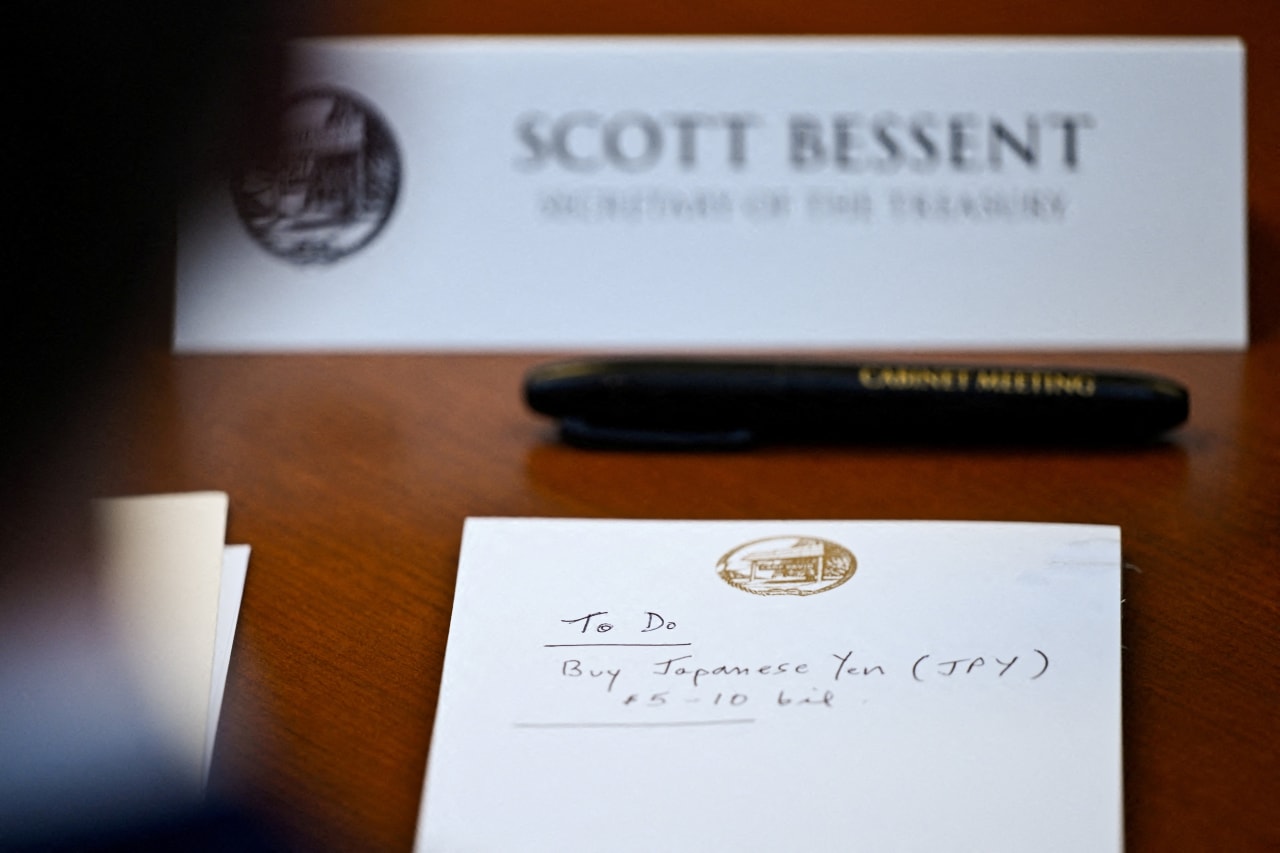
The Federal Reserve risks being entangled in Treasury Secretary Scott Bessent's attempt to bolster Japan's weakened yen. Bessent seeks the Fed to expand a lending facility that would allow Japan to stabilize its currency without destabilizing U.S. Treasurys. This move arises as the new Fed Chairman, Kevin Warsh, attempts to redefine the bond between the Treasury and the Fed, potentially influencing the $29 trillion Treasurys market and possibly giving the Fed a new role in U.S. financial diplomacy.
The exact extent of Warsh's support for such policy changes remains unclear, with the Fed declining to comment and the Treasury not providing a response to a request for information on their plans. Bessent tweeted on Sunday that the U.S. had previously intervened in foreign exchange markets to support the Japanese yen, a rare occurrence given Japan's frequent interventions on its own.
This intervention, however, is unprecedented for the U.S. Since 2011, when Japan experienced a devastating earthquake and tsunami, the yen has plummeted, particularly since 2022 when the U.S. and Japan had differing interest rates. Economists attribute the yen's decline to factors such as Japan's massive government debt, aging population, and expensive energy imports.
A weak currency can lead to inflation by increasing the cost of imports, a concern Japan's government has often voiced. Early last week, one U.S. dollar exchanged for about 164 Japanese yen, the weakest yen-dollar pair since 1986. In response, Bessent claimed that the U.S. joined the Japanese effort to stabilize the currency, selling euros from its Exchange Stabilization Fund to support the yen purchase.
This action has lowered the yen's value by around 3.5% to just under 157 dollars. This move may also have impacted the U.S. Treasury market, as the difference in interest rates between Japan and the U.S. has fueled a long-standing "carry trade" where investors borrow cheaply in yen and invest in higher-yielding Treasurys or the U.S. stock market.
However, the future of this trade is uncertain, with President Trump's tariffs and other policies causing global investors to hedge their dollar trades. The intervention aimed to maintain interest in Treasurys and does suggest a concern for the U.S. Treasury market. Bessent's intervention also indicated he had U.S. Treasury markets in mind, as he sold euros rather than dollars to purchase yen.
He also proposed that Japan utilize the Foreign and International Monetary Authorities (FIMA) Repo Facility, which allows foreign central banks to lend Treasurys to the Fed for short periods, thereby avoiding political and economic issues that could arise from rising Treasury yields. The FIMA Facility has a per-counterpart daily limit of $60 billion.
Despite Japan's access to a Fed swap line, allowing it to trade yen for dollars, it chose not to use it this time. Brad Setser, a former Treasury official now with the Council on Foreign Relations, noted that the current norm is that central bank swaps are used to fund dollar lender of last resort activities, not currency interventions.
Bessent suggested upsizing the FIMA facility, which could ease fiscal pressures in the U.S. by making the Treasury market more attractive. However, expanding FIMA would require a vote of the Federal Open Market Committee, a process that may not necessarily align with the Fed's mandate. Warsh has expressed interest in rewriting the Treasury-Fed Accord, suggesting that the Fed might be more amenable to working more closely with the Treasury on issues affecting international finance.
This renewed collaboration could potentially extend to other areas, such as the UAE's request for a swap line, a matter typically handled by the Fed. Warsh's approach, which emphasizes working more closely with the Treasury, suggests he may be open to extending swap lines to new countries.
Written by urgent.news from CNBC's reporting — not their text. Machine-written — may contain errors; check the original before relying on it.
This story
This is one outlet's version. Read the fullest account.
- Bessent joins Japan to help reverse months of yen losses fortune.com
- Analysis: Federal Reserve may be pulled into Bessent’s effort to support Japan’s yen cnbc.com
- Bessent’s yen rescue to boost U.S. pressure on Japan trade, rates japantimes.co.jp
- A little-used Fed backstop is being put to a use it was never designed for—bankrolling Japan’s defense of the yen—and Treasury Secretary Scott Bessent wants it to be expanded wsj.com