(2nd LD) Bessent cites volatility in Korean won while stressing stable yen's importance
WASHINGTON, Aug. 4 (Yonhap) -- U.S. Treasury Secretary Scott Bessent said Tuesda...
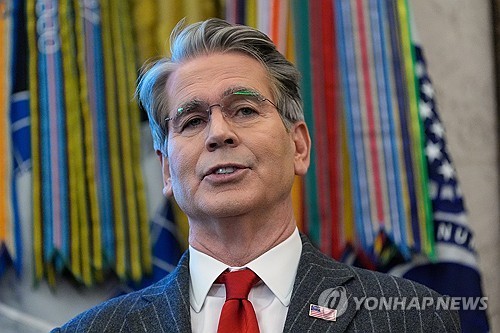
U.S. Treasury Secretary Scott Bessent highlighted the volatility of the South Korean won during an interview on Tuesday, stressing the significance of a stable yen for the entire region. Following a recent intervention by the United States and Japan to stabilize the Japanese currency, Bessent made these remarks in a CNBC interview.
He emphasized that a stable yen is crucial not only for the U.S. but also for the rest of the region, as a sharp depreciation of the yen could trigger a chain reaction of weakening in other currencies.
Bessent, drawing from his experience as an economic historian, attributed part of the Asian financial crisis in the 1990s to an excessively weak yen. He noted that the South Korean won's recent depreciation seemed inconsistent with Korea's robust economic fundamentals, implying that currency instability could hinder Seoul's plans for US$350 billion in U.S. investments under the previous trade deal.
The secretary expressed hope that Japan's policies would lead to a more balanced yen. He also underscored the importance of Japan's trade flows, economy size, and contribution to the global savings market, stating that it is vital to maintain a stable yen. Bessent praised Japan's government for its understanding of this issue and its willingness to implement policies to stabilize the region.
When asked about the potential for further currency intervention, Bessent mentioned that Washington maintains close and constant communication with Tokyo. He stated that the U.S. is prepared to take whatever measures are necessary to support Japan, benefiting the American economy, taxpayers, and the global economy. Lastly, he touched upon the carry trade, predicting that while the strategy would not disappear entirely, Japan's substantial foreign assets could pose challenges, potentially triggering competitive devaluations, which are detrimental to the global economy.
Written by urgent.news from Yonhap News's reporting — not their text. Machine-written — may contain errors; check the original before relying on it.