Will AI healthcare be China’s new global growth engine?
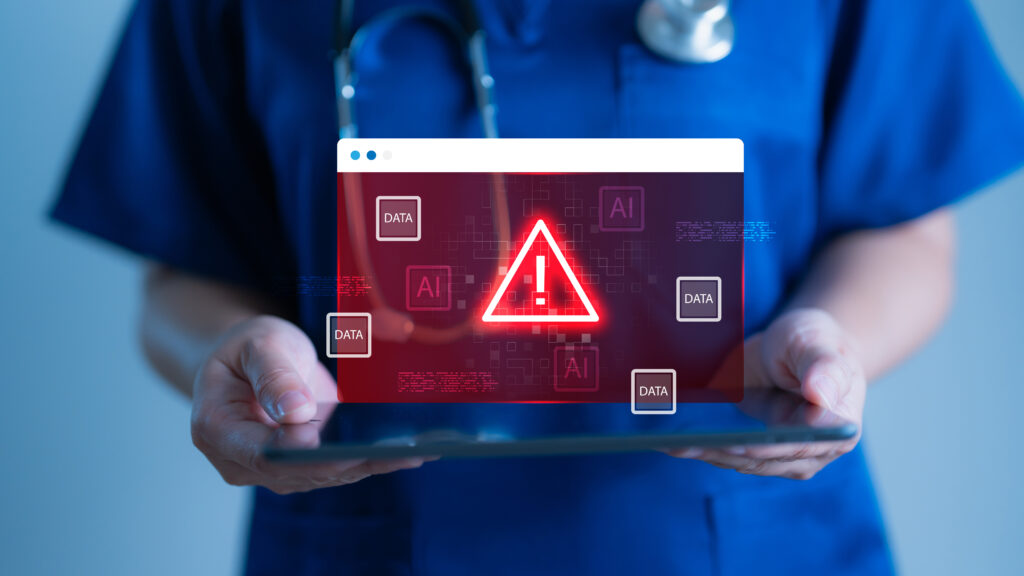
Artificial intelligence (AI) has transformed healthcare for hundreds of millions of people in China. AI-powered apps help them manage their health and seek care, while others help doctors better diagnose and treat their patients. AI analysis of routine scans detects cancers and other conditions physicians might have missed. Personalised cancer vaccines built on AI analysis will soon begin rolling…
Inside an AI research institute in Shanghai, a sprawling ink-wash map dominated the walls. The map depicted AI elements like mountains and algorithms, with ethical questions and machine consciousness depicted as uncharted islands. The institute's approach blended art with practicality, evident in their entrance featuring a glowing silicon chip.
The China-US AI rivalry has expanded beyond a race for technology and benchmarks. It now centers on soft power, with the ultimate goal being the ability to dictate rules, ethics, and global influence. President Xi Jinping launched the World Artificial Intelligence Cooperation Organisation (WAICO) in July, targeting the Global South with promises of openness and parity.
Meanwhile, Beijing-based Moonshot AI unveiled Kimi K3, a 2.8-trillion-parameter open-weight model, sparking debates on open-source security risks in Washington. Researchers grapple with the nuances of AI risk. Dai Jiarun, an assistant professor at Fudan University, stressed that openness isn't the core of AI risk, but rather the model's capabilities, deployment costs, and accessibility.
Large open-weight models still necessitate expensive computing systems, while malicious actors could exploit closed models through APIs. As cross-border data controls tighten, collaboration decreases, causing serious consequences. This fracturing erodes shared standards, benchmarks, and empirical evidence needed for safe AI governance.
The impact on top talent is evident as well. A renowned professor who previously worked abroad returned to China due to increasing visa denials for his Chinese PhD candidates in the West. Academic exchanges between American and Chinese scholars have become "tricky and sensitive". High-level AI dialogues between Washington and Beijing remain sporadic.
Despite expectations, China's foreign ministry claimed readiness to collaborate with Washington on AI, referencing a consensus reached by the two presidents. Internally, China is swiftly establishing its regulatory framework. Academia, industry, and state authorities collaborate closely, adapting as fast as the technology evolves.
Yao Xu, secretary-general of the Global AI Innovation Governance Centre, noted that policymakers consult industry experts before drafting rules, bridging the gap between academia and governance. At Ant Group's Hangzhou campus, where the fintech giant applies AI to payments and healthcare, this pragmatic approach is evident. Wang Weiqiang, head of Ant's model safety team, emphasized that China governs through development and develops through governance, with strict risk controls in place for the financial and medical sectors.
Written by urgent.news from SCMP Tech's reporting — not their text. Machine-written — may contain errors; check the original before relying on it.
This story
This is one outlet's version. Read the fullest account.