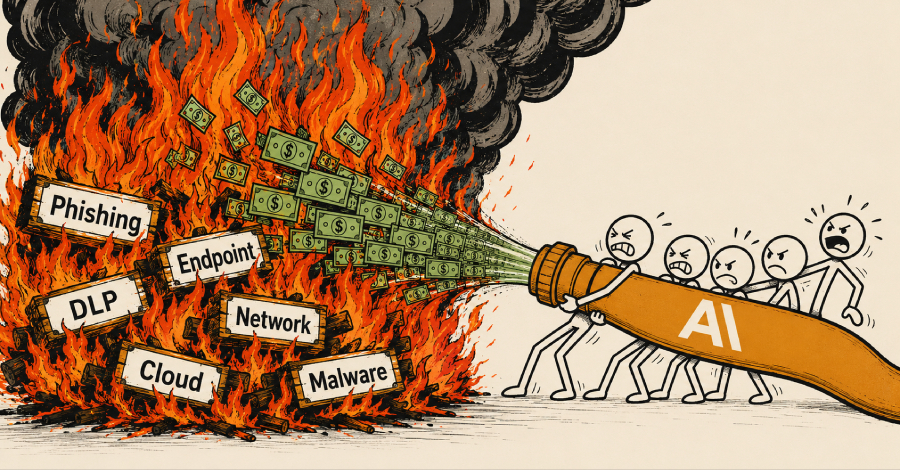
When AI starts pretending to be your PR team, it's a problem
The comms, PR, and journo world is a small one. Over the weekend, I had half a dozen people send me the same Futurism article via WhatsApp. It detailed UK-based PR firm Movchan Agency, which journalis...
The comms, PR, and journalism world is a tight-knit network. Recently, several individuals forwarded the same Futurism article to me, highlighting UK-based PR firm Movchan Agency's creation of numerous fake PR representatives. These entities included fabricated names, email addresses, biographies, and even AI-generated or stock-photo headshots, all employed to pitch stories to journalists.
Initially, this practice disappointed me as a journalist, given that trust and relationships form the foundation of the profession. However, I was also perplexed by the agency's history of legitimate pitches that led to interviews and coverage, including those with Zing coach CEO Anton Marchanka, Gradient Labs CEO Dimitri Masin, Anatolii Kasianov, co-founder and co-CEO of HOLYWATER, and Natalia Shahmetova from nove8, the developer of Woofz.
Upon receiving questions from Futurism, Movchan Agency founder Nadya Movchan explained that they had a major issue with their domain reputation, likely due to Gmail's deliverability updates. As a temporary solution, they purchased pre-warmed domains with pre-warmed mailboxes, complete with set names and pictures from the vendor.
Despite this explanation, journalists found press pitches in their inbox from 2025, indicating that the practice had been ongoing for some time. Freelance journalist Ellen Chang revealed that she had caught one of their pitches in October 2023, claiming to want to meet a founder who attended a conference in Las Vegas when the event was held in Nevada.
Upon further investigation, journalist Harrison Dupré learned that the agency's clients were unaware of this practice, which the company will discontinue after being caught. In response to the news, Gradient Labs CEO Dimitri Masin expressed surprise, stating that he was not aware of such practices and suspected that AI-generated outreach from fake identities is becoming an epidemic.
He cited Artisan, whose AI sales employee product and "Stop Hiring Humans" billboard campaign, as examples of how quickly synthetic outreach is becoming normalized.
While I appreciate the work of PR professionals and have even started a group for women in communications, PR, journalism, and related roles, I believe startups and venture capitalists do not have to utilize PR agencies. I receive numerous press pitches via email or LinkedIn messaging weekly, many of which result in interviews and articles.
However, it is crucial to remember that good journalism is not about rejecting information because it came from a PR; it is about verifying, questioning, adding context, and determining whether it is genuinely newsworthy. The challenge lies in the fact that good PRs often remain invisible to most media consumers. Most people do not understand the difference between PR and journalists, and this lack of awareness does not concern them.
Nevertheless, the relationship between journalists and PR professionals has historically been strong. PRs play a vital role in providing quotes for breaking news, sourcing technical experts, and arranging interviews with founders across multiple time zones. Additionally, PR teams organize countless events, such as product launches, press attendance at conferences, and managing groups of journalists in unfamiliar cities.
These efforts are often unnoticed by the general public but are essential to the industry. Julija "JJ" Jegorova, founder of Black Unicorn PR, echoed this sentiment on LinkedIn, emphasizing that the issue extends beyond a single agency, as trust is the foundation of the relationship between PRs and journalists. In today's fast-paced journalism environment, trust is even more critical.
If there is no one behind an email or if a pitch contains false or misleading claims, the real person behind the identity cannot be held responsible. This situation is not the first time I have encountered fabricated identities or fictional narratives in tech PR. In 2023, I exposed a hedge fund, Hedonova, for announcing funding rounds in non-existent startups, a pattern reminiscent of crypto startup whitepapers that often feature stock images of nonexistent staff or advisors.
Despite the company's dissolution, Movchan Agency has shown accountability by discontinuing the practice.
Written by urgent.news from Tech.eu's reporting — not their text. Machine-written — may contain errors; check the original before relying on it.