What role does a MotoGP rider really play in bike development?
It's common to see fans credit a manufacturer's progress - or struggles - to the quality of its riders. Some are considered exceptional development riders, while others are accused of leading engineers in the wrong direction. But how much influence does a MotoGP rider actually have over the technical evolution of a bike? Joan Mir has experienced both ends of the spectrum, winning the 2020 world…
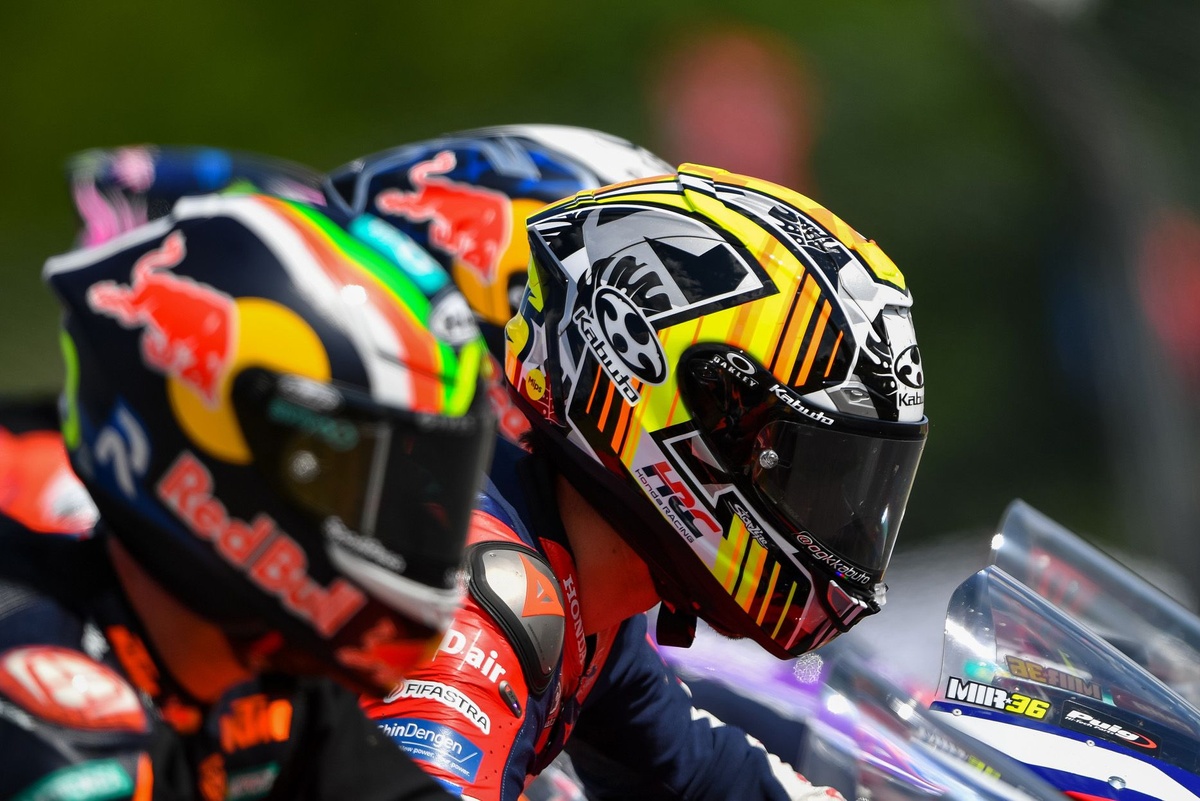
MotoGP riders play a crucial role in the development of their bikes, although the extent of their influence is often debated. According to Joan Mir, a former MotoGP world champion, a rider's job is to provide accurate feedback to engineers, rather than suggesting specific technical solutions. "We can explain what we feel on the bike, but we're not engineers," Mir told Motorsport.com.
"Finding a way to make the bike faster isn't in our hands." Team manager Nicolas Goyon, who previously worked as a crew chief, agrees that while riders play a vital role, the ideas themselves come from engineers. "The engineers create the upgrades and develop the bike," Goyon explained. "The rider's role is fundamental because, in the end, he's the one who chooses which parts to use and which package to race with.
But it's the creativity of the engineers and the factory teams that determines whether a bike becomes competitive or not." Despite this, riders do provide input on what characteristics they would like improved, such as more rear rotation or better front-end feeling. However, they cannot prescribe specific technical solutions, such as requesting a shorter swingarm or a different chassis.
The MotoGP rider's influence is best illustrated by the case of Valentino Rossi's move from Honda to Yamaha in 2004. While Rossi's riding talent and set-up knowledge undoubtedly contributed to Yamaha's return to winning ways, he did not single-handedly develop the M1 into a championship-winning bike. Similarly, Goyon points to the decline of Yamaha and the rise of Ducati as evidence that development is always the product of engineering expertise rather than a single rider.
With MotoGP's upcoming 2027 technical regulations, rider feedback will be invaluable alongside simulation tools. "When you have a very good rider, especially one who has never ridden with the new tyres before, he needs to be extremely clear about what he feels, what he wants and what he likes," Aprilia's head of vehicle dynamics, Marco De Luca, said.
"I expect much more detailed and complex feedback because they'll be riding a completely new motorcycle, especially with the tyres. But simulations remain fundamental, we simply can't do without them."
Written by urgent.news from Motorsport.com's reporting — not their text. Machine-written — may contain errors; check the original before relying on it.