This 400-Year-Old Impenetrable Japanese Castle That Survived a Samurai Siege Just Crumbled in an Earthquake
In 1877, a force rebelling against Emperor Meiji attacked Kumamoto Castle on Japan's southern Kyushu island
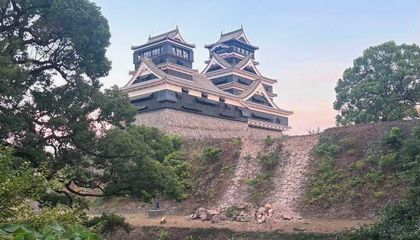
A massive 7.1-magnitude earthquake struck southern Japan’s Kyushu island last week, causing widespread destruction and claiming nearly three dozen lives. The force of the quake not only toppled a factory chimney and damaged homes but also dealt a severe blow to the historic Kumamoto Castle. This 400-year-old fortress, built in 1607 by Katō Kiyomasa, a Japanese general who served under Toyotomi Hideyoshi, has withstood numerous challenges throughout history, including a formidable siege by rebellious samurai in the 19th century.
During the castle’s siege in 1877, it held off an army of 20,000 men for two months, showcasing its formidable defensive capabilities. However, the recent earthquake proved too much for the castle’s stone walls, causing them to partially collapse. A bystander captured the dramatic moment on video, describing the collapse as a sudden, all-at-once event that left many shocked.
The castle, originally constructed to defend against power struggles among samurai lords in Kyushu, played a crucial role in the region’s history. Despite its extensive restoration efforts following a devastating 7.3-magnitude quake in 2016, the castle’s future remains uncertain as restoration work is still underway.
Written by urgent.news from Smithsonian's reporting — not their text. Machine-written — may contain errors; check the original before relying on it.