The System That Turned Paper Charts Into Digital Medical Records
Most hospitals and health care providers use electronic health records instead of paper charts to note patient vaccinations, diagnoses, and procedures. AthenaOne , Epic , and Oracle Health are some of the systems employed around the world. Many patients can access their electronic medical records from home. The platforms exist thanks to pioneering efforts such as the Medical Information System…
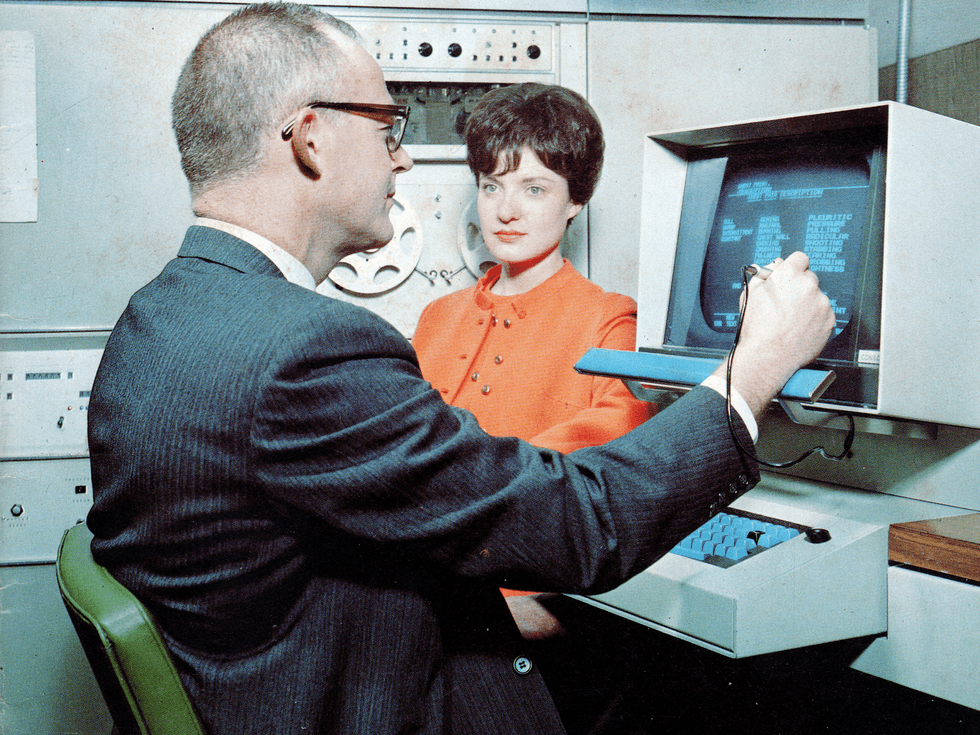
The Medical Information System (MIS-I), a pioneering hospital-wide computer system developed in the 1960s, revolutionized the healthcare industry by transitioning from paper charts to digital medical records. Initially created by Lockheed Martin and El Camino Hospital in Mountain View, California, MIS-I served as the first comprehensive system to manage patient admissions, laboratory work, imaging, follow-ups, and billing.
Implemented before the widespread adoption of keyboards, the system incorporated a light pen—a stylus-like device that functioned similarly to today's touchscreens.
MIS-I displayed patient information on a 14-inch television, alongside a keyboard and a printer. Users accessed the system by swiping their ID badge, after which they could input data or request services for pharmacies and laboratories. Despite the widespread use of computers in other sectors, doctors and nurses initially struggled with typing, rendering the traditional mouse impractical.
Consequently, Lockheed Martin ingeniously employed the light pen, a technology originally developed for satellite programs, to replace traditional typing. This innovation transformed the MIS-I from a mere technological breakthrough into a practical, effective tool.
Although rejected by the U.S. Department of Health, Education, and Welfare, Lockheed Martin funded the commercial development of MIS-I. When the original contract with the Mayo Clinic concluded, the team relocated to Sunnyvale, California, to further refine, test, and deploy the system at El Camino Hospital. Dan Woods, CEO of El Camino Health, acknowledged the system's significance, stating that its groundwork laid the foundation for the modern medical informatics industry.
Written by urgent.news from IEEE Spectrum's reporting — not their text. Machine-written — may contain errors; check the original before relying on it.