The 1965 Selma photograph with no faces in it: why James Karales' camera turned away from the hero shot and focused on the sky
This shot from the Presence touring show proves that the most powerful documentary image isn't always the closest
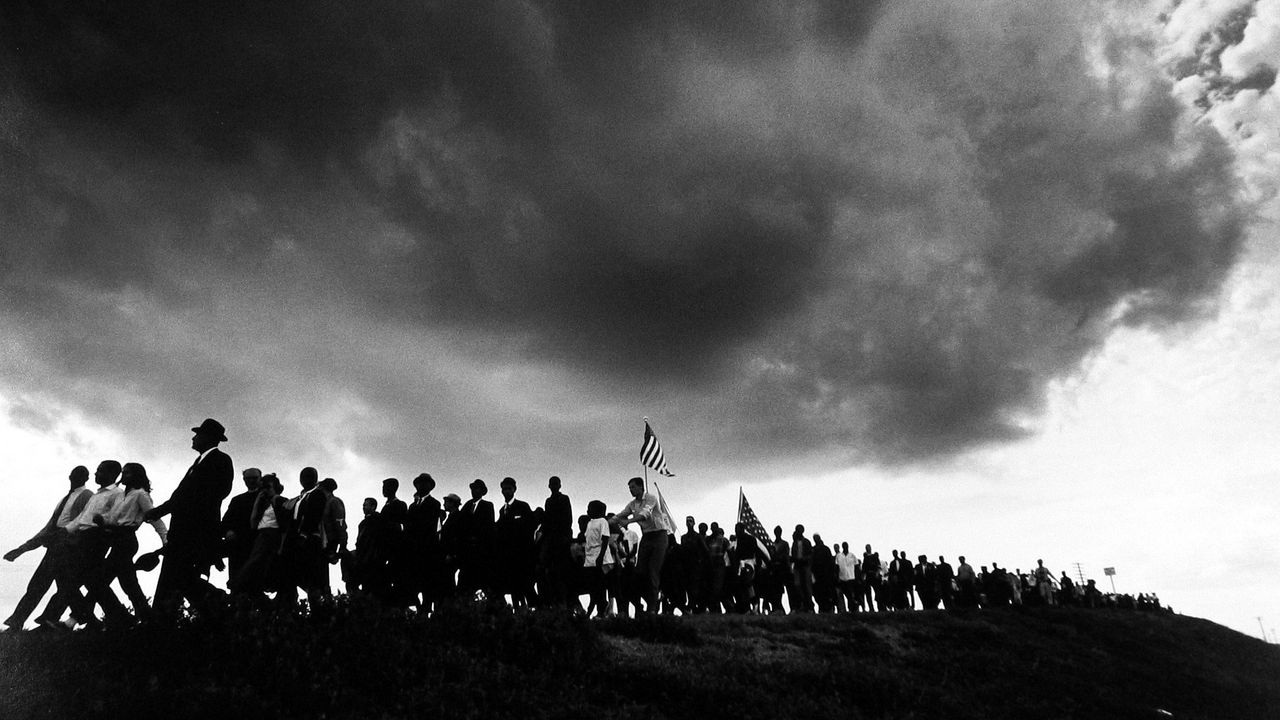
In the historical 1965 Selma to Montgomery civil rights march, James Karales' photograph stands out for its unique approach. Rather than capturing close-up, urgent images of the marchers, Karales took a different route. He stepped back, lowered his camera, and allowed a massive, dark cloud to occupy two-thirds of the frame. The marchers transformed into a line of silhouettes against the sky, their identities merged with the movement.
This decision, made by a photographer trained under W. Eugene Smith at Magnum, proved to be a brilliant stroke of restraint. By focusing on the sky instead of individual faces, Karales allowed the viewers to absorb the immense pressure the marchers were facing. The low-angle shot, with the horizon line roughly a fifth of the way up, amplified the size of the looming cloud, making it a visual metaphor for the obstacles the marchers were confronting.
This composition, devoid of any hero shot or identifiable protagonist, was a counterpoint to the obvious drama often sought in news photography. The essence of Karales' work lies in its structure. By choosing to let the atmosphere carry the weight of the image, he created a powerful statement that resonated far beyond the immediate context of the Selma march.
This technique, where the emotional impact is derived from the environment rather than the subjects, continues to influence documentary photography. Today, Karales' Selma photograph is a testament to the power of restraint and the ability to convey a complex narrative through thoughtful composition.
Written by urgent.news from Digital Camera World's reporting — not their text. Machine-written — may contain errors; check the original before relying on it.