Silver price falls as stronger US PMI reinforces hawkish Fed expectations
Silver (XAG/USD) trades around $57.20 at the time of writing on Monday, down 0.73% on the day, after a strong US manufacturing report reinforced expectations that the Federal Reserve (Fed) will maintain a restrictive monetary policy.
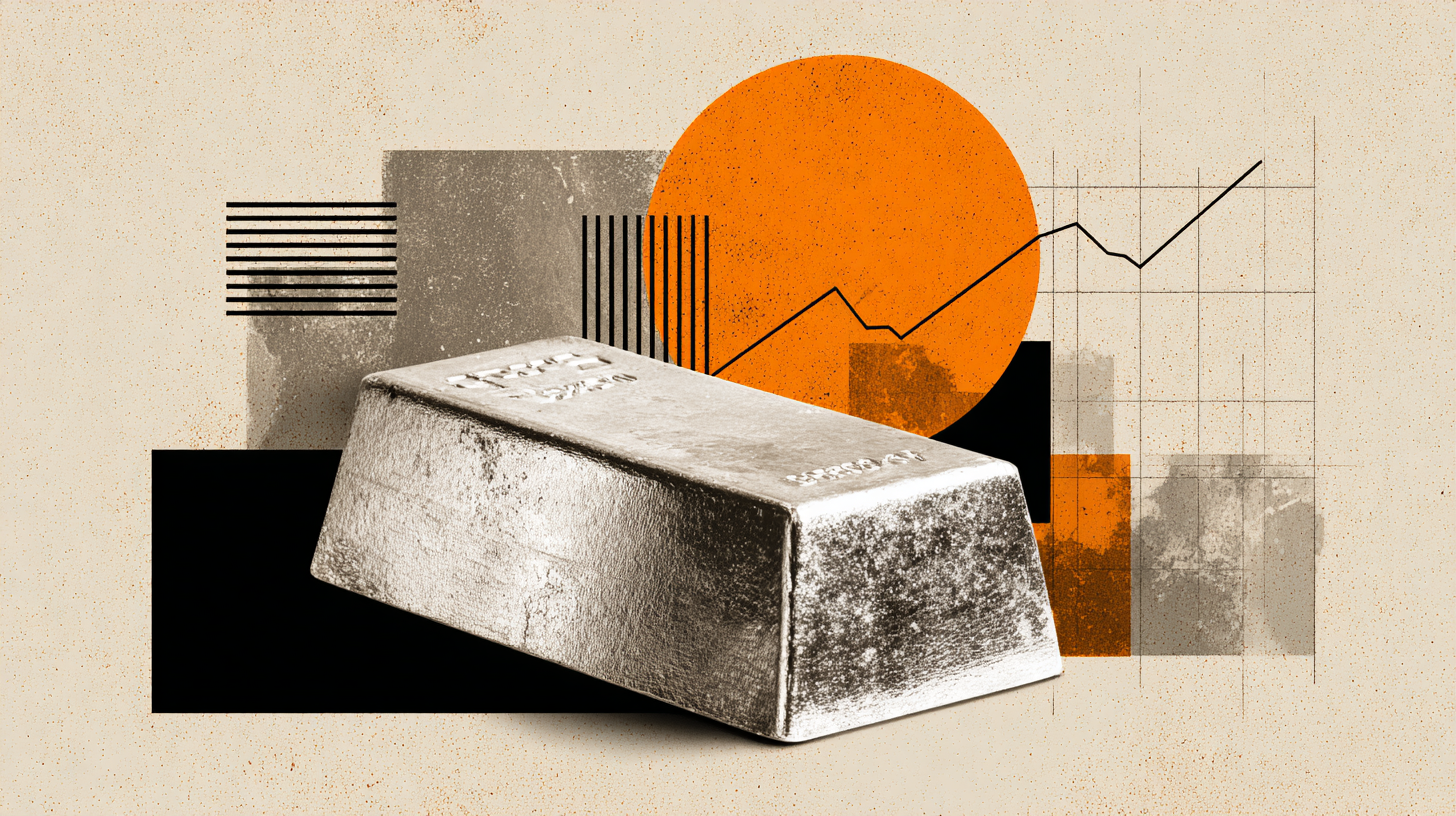
Silver (XAG/USD) prices fell on Monday, slipping 0.73% to around $57.20, following a robust US manufacturing report that reinforced expectations of a hawkish Federal Reserve (Fed). The Institute for Supply Management (ISM) revealed that the Manufacturing Purchasing Managers Index (PMI) climbed to 55.6 in July, surpassing market forecasts of 54.
This showed a surge in US manufacturing activity, the fastest pace in over four years. The report's underlying components also suggested a robust sector. The Employment Index increased to 52.8 from 49.7, indicating a return to payroll growth, while the Prices Paid Index eased slightly to 71.1 from 73, still above the forecast of 70.3, signaling persisting inflationary pressures.
Susan Spence, Chair of the ISM Manufacturing Business Survey Committee, noted that four of the five PMI sub-indices accelerated compared to June, indicating strengthened momentum in the manufacturing sector. These positive economic indicators give the Fed greater flexibility to maintain restrictive monetary policy, raising the opportunity cost of holding non-yielding assets such as Silver, thus limiting its upside potential despite the recent alleviation from geopolitical tensions in the Middle East.
Silver is a precious metal frequently traded by investors, historically used as a store of value and medium of exchange. Although less popular than Gold, Silver may be used by traders to diversify their portfolio due to its intrinsic value or as a potential hedge during high-inflation periods. Silver prices can be influenced by various factors, including geopolitical instability or recession fears, which may increase its price as a safe-haven asset, though less significantly than Gold.
As a yieldless asset, Silver typically rises when interest rates are low, and its price movements depend on the US Dollar (USD) since it is priced in dollars (XAG/USD). A stronger Dollar generally keeps Silver prices stable, while a weaker Dollar could boost prices. Other factors like investment demand, mining supply, and recycling rates also affect Silver prices.
Silver has multiple industrial uses, particularly in electronics or solar energy, due to its high electrical conductivity. A surge in demand can raise prices, while a decrease could lower them. The US, China, and Indian economies also impact Silver's price, as their industrial sectors use Silver in various processes, and consumer demand in India for jewelry also plays a significant role in determining prices.
Silver prices often follow Gold's movements, as both are considered safe-haven assets. The Gold/Silver ratio shows how many ounces of Silver are needed to match the value of one ounce of Gold, which can help determine their relative valuation. Some investors may view a high ratio as an indicator that Silver is undervalued or Gold is overvalued, while a low ratio might suggest that Gold is undervalued relative to Silver.
Written by urgent.news from FXStreet's reporting — not their text. Machine-written — may contain errors; check the original before relying on it.