Market Insight: One of the world's most expensive stocks is getting cheaper
The stock of the Swiss cult chocolate brand Lindt & Sprüngli is experiencing an unusual phase of weakness. This makes the valuation of the quality stock increasingly tempting, says Jakob Blume.
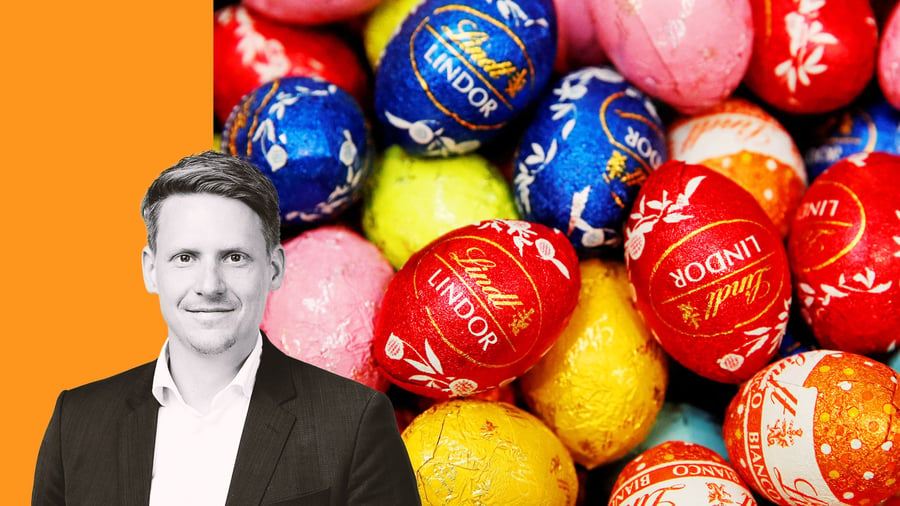
In a surprising turn for shareholders of Swiss chocolate manufacturer Lindt & Sprüngli, the company's stock has entered a phase of significant weakness. Over a twelve-month period, the company's stock has dropped by around ten percent, equating to an 18 percent decline when expressed in euros. Since reaching its all-time high in July 2025, the stock has lost nearly 35 percent of its value.
This makes Lindt & Sprüngli one of the priciest stocks in the world, becoming increasingly affordable: In the past five years, a share seldom fell below 100,000 Swiss francs. Currently, the price hovers around 95,000 Swiss francs, just shy of the five-year low of 90,800 Swiss francs. The stock decline affects an asset once considered a quality title, promising stable growth over decades.
However, Lindt & Sprüngli is paying the price for a strategy that has already caused problems for other premium confectionery brands. It's worth noting that Lindt & Sprüngli's chocolate creations, such as the Lindor truffles and Christmas men, are globally recognized. The company's common stock also holds a cultural status in Switzerland, with shareholders enjoying the legendary Lindt-&-Sprüngli box containing approximately four kilograms of fine Swiss chocolate each year.
Whether a box of chocolate will be enough to pacify shareholders at the next annual meeting in April remains to be seen. Currently, Lindt & Sprüngli is struggling with rising production costs, which it cannot easily pass on to consumers, unlike before. Since 2024, the prices for raw cocoa have almost tripled due to crop failures.
In the first half of 2026, Lindt & Sprüngli's revenue growth slowed to a mere 4.3 percent, the weakest in recent memory. What particularly caught analysts' eye was the revenue increase, which was solely due to an 11.8 percent price hike, while sales fell by 7.5 percent. The strategy of raising prices in the context of globally rising living costs is now facing its limits, a situation that has also affected food giant Nestlé.
Consequently, analysts are becoming increasingly skeptical. While Swiss private bank Vontobel still recommends buying the stock, it has repeatedly lowered its price target. Analyst Jean-Philippe Bertschy wrote in a July-end study that "the management shows no doubt about its priorities: It wants to stabilize sales volumes and protect margins."
However, growth in the coming year remains a great question mark - this uncertainty is reflected in the stock price. Additionally, the ongoing heatwave in Europe is expected to dampen chocolate demand in the region. For some analysts, the stock's downward trend presents an entry opportunity: The price-to-earnings ratio based on the expected profit for 2027 stands at 28, significantly lower than the long-term average of 35 according to UBS.
This valuation seems as enticing as a Lindor truffle. More: The Swiss market breaks its most important investor promise.
Written by urgent.news from Handelsblatt's reporting — not their text. Machine-written — may contain errors; check the original before relying on it.