Jupiter's moon Europa may have signs of life in its buried ocean — but can we get to them?
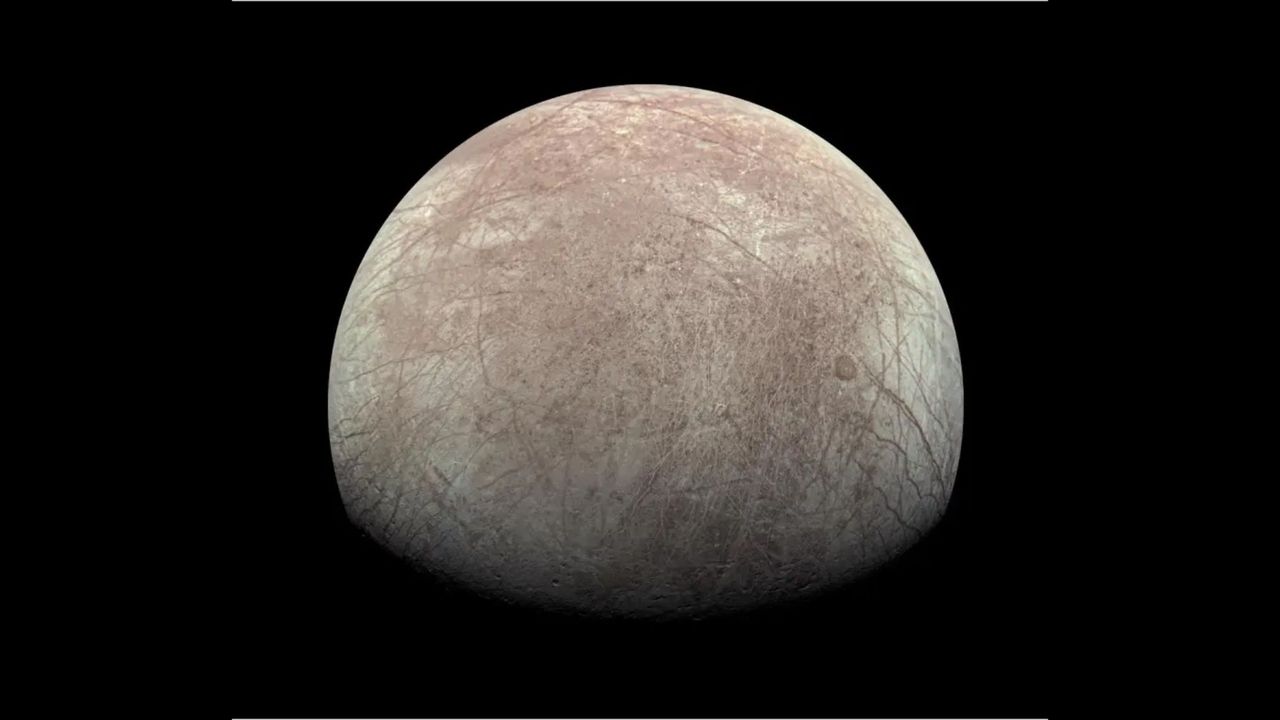
NASA's Europa Clipper spacecraft is currently on an 1.8-billion-mile journey to Jupiter, with the goal of determining if the moon Europa could potentially harbor life. Scientists have long known that Europa harbors a global ocean beneath its icy crust, with water reserves surpassing the combined volume of Earth's oceans. During its planned 49 close flybys of Europa, the clipper aims to detect signs of this hidden ocean, such as water plumes or warm surface pockets, allowing for the study of its chemistry from orbit.
However, a recent study led by Rutgers University planetary scientist Lujendra Ojha suggests that the icy shell surrounding Europa may be a more significant barrier to detecting signs of life than previously thought. Computer simulations modeling water transport through fractures in the ice reveal that rising liquid from the ocean would move chaotically, rapidly lose heat, and freeze shut within hours, preventing it from reaching shallow depths.
Ojha's team built these simulations to assess whether ocean water could rise through fractures in the crust and accumulate in shallow reservoirs nearer the surface. If such reservoirs were directly fed by the ocean, they would be more accessible for spacecraft to analyze than an ocean buried miles below. However, the new study indicates that real-world physics creates a far more turbulent journey for rising water, with the water churning against the icy walls of the fractures, losing heat quickly and forming slushy ice crystals called frazil ice that quickly clog the pathways.
While wider fractures could theoretically carry more water, the results suggest that these channels would need to be unrealistically long or numerous to prevent complete freezing. If future missions like Europa Clipper or the European Space Agency's Jupiter Icy Moons Explorer (JUICE) detect shallow liquid pools or similar surface features on Europa, Ojha's study suggests these may be created by localized melting within the ice shell, rather than direct upwellings from the deep ocean.
This finding could help future missions better interpret their data and identify potential habitable regions on Europa.
Written by urgent.news from Space.com's reporting — not their text. Machine-written — may contain errors; check the original before relying on it.