Easiest Way to Deploy Open-Source Models to Production in 2026
You picked the open-source models. Now comes the hard part: production. Compare DIY inference, managed APIs, and SIE for scaling AI agents.
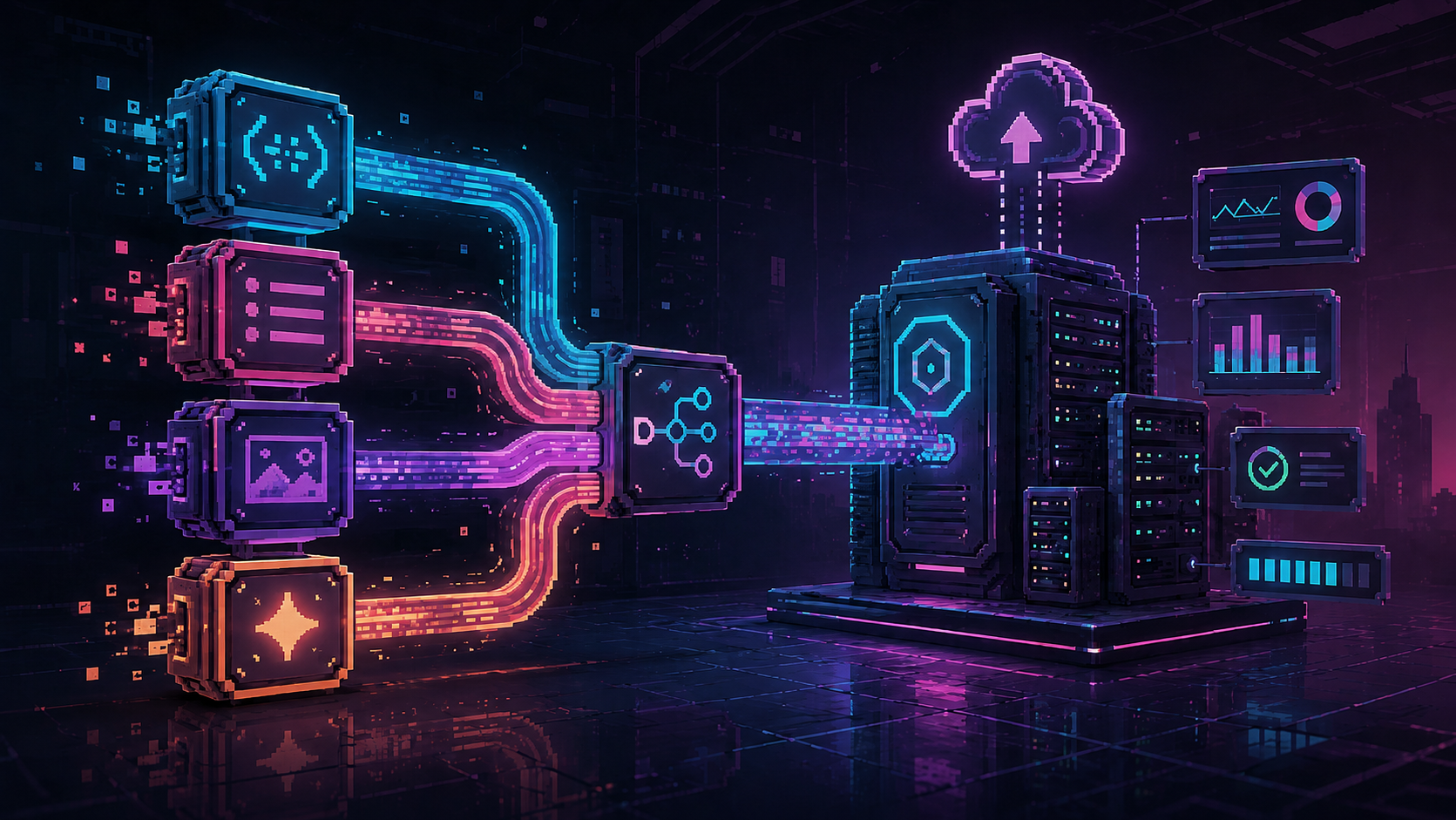
In 2026, shipping open-source models to production doesn't necessarily require running a separate server for each model. Instead, a multi-model inference server that comes with its own production stack is recommended. This approach, called SIE (Superlinked Inference Engine), simplifies the process of deploying a fleet of small models used by an agent.
There are three different paths to production, ranging from the most to least hands-on:
1. Classic DIY (do-it-yourself): Utilize raw vLLM, TEI, or SGLang serving stacks, and wire them together yourself. This approach provides maximum control but requires significant effort in terms of infrastructure setup and maintenance.
2. Managed APIs: Leverage third-party services that host the model for you and charge per-token usage. This option is the easiest to implement, as the infrastructure is managed by the service provider. However, it may incur higher costs due to per-token usage fees.
3. SIE (Superlinked Inference Engine): This is a self-hosted multi-model server with a production stack. It simplifies the deployment process and handles autoscaling, monitoring, and cloud deployment requirements. While it requires less effort compared to the DIY approach, it still demands some technical expertise to set up and maintain.
Before comparing these options, it's essential to understand what "production" means for agentic deployments. Unlike a simple demo with one model and one GPU, production deployments handle multiple concurrent agents with real traffic, necessitating robust infrastructure to support the system under load.
Key aspects of production-ready deployments include autoscaling, multi-model support, no per-model GPU tuning, observability, and reproducibility. The "easy" approach of running a separate server for each model is not recommended, as it can lead to increased costs and operational complexity. Instead, the sweet spot lies in a system that is easy to operate and can still withstand the demands of real traffic.
Using open-source models can be an attractive alternative to hosted APIs, as open models often achieve similar performance to closed models at launch. However, the per-token API costs associated with open models do not scale with agent usage, making them potentially more expensive in the long run. Additionally, self-hosting open models may require significant upfront investment in infrastructure, staff, and uptime engineering, which can range from $125,000 to $190,000 per year.
Written by urgent.news from HackerNoon's reporting — not their text. Machine-written — may contain errors; check the original before relying on it.