Common Risks of Outsourcing Software Development, and How to Tackle Them
Both SMBs and large enterprises often choose software development outsourcing over developing software in-house. It is no surprise, as partnering with external developers enables companies to bridge IT talent gaps that cannot be filled internally, avoid time-consuming recruiting and training processes, and eliminate expenses associated with salaries and benefits, eventually accelerating software…
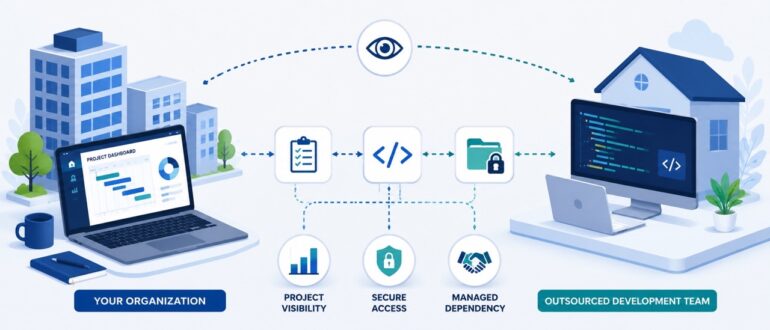
Outsourcing software development can bring about numerous benefits such as accessing specialized talent, reducing costs, and accelerating delivery. However, it also poses certain risks that businesses need to address to ensure smooth project execution. These risks include diminished project control, security and privacy concerns, and provider lock-in.
To manage these risks, it's crucial to establish strong oversight and control mechanisms right from the onset. This can be achieved by assigning a dedicated point of contact (SPOC) for the outsourcing partner and setting up strict communication cadences. Additionally, implementing visibility dashboards that pull data from the partner's toolchain can help monitor project progress and milestones without requiring manual updates.
Regarding security and privacy concerns, granting third-party access to corporate systems can introduce cybersecurity risks like data breaches, credential exposure, or intellectual property theft. Mitigating these risks involves adding external-facing roles to the existing role-based access control framework, implementing just-in-time (JIT) provisioning mechanisms for permissions, and enforcing multi-factor authentication when accessing internal systems.
Finally, to avoid provider lock-in, businesses should ensure the contract with the outsourcing partner clearly defines ownership rights for all intellectual property. Establishing a centralized internal knowledge base and conducting regular knowledge transfer sessions between in-house teams and outsourced developers can also help avoid a deficit of internal knowledge and skills.
Furthermore, negotiating transition support services for a set period after contract termination can ensure business continuity and a seamless handover to a new agency, should the company decide to switch outsourcing providers.
Written by urgent.news from DevOps.com's reporting — not their text. Machine-written — may contain errors; check the original before relying on it.