China’s tech giants race to put AI on delivery riders’ heads
Chinese e-commerce giant JD.com has launched an smart helmet for food couriers with features enabled by artificial intelligence technology, following similar roll-outs by rivals Alibaba Group Holding and Meituan as they seek to improve rider safety and boost delivery efficiency. The helmet integrates an AI-driven voice assistant with a camera that can “see” the surrounding environment, JD.com’s…
Chinese e-commerce behemoth JD.com has unveiled a smart helmet engineered for food couriers, leveraging artificial intelligence capabilities, as rival corporations Alibaba Group Holding and Meituan follow suit in their quest to enhance rider safety and streamline delivery processes. The helmet incorporates an AI-driven voice assistant coupled with a camera capable of perceiving the rider's surroundings.
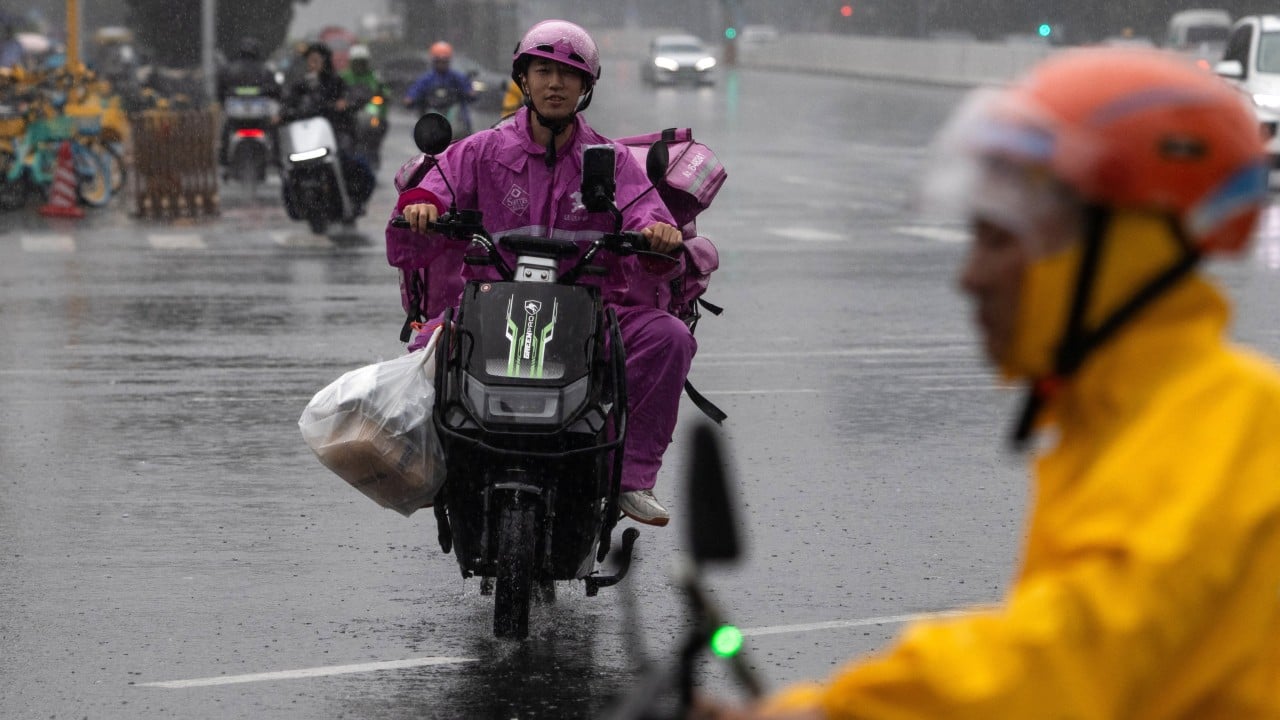
JD.com announced the device on Monday, stating that its purpose is to reduce distractions during adverse weather conditions, as delivery riders frequently operating electric bikes often grapple with using smartphones with wet hands or reduced visibility. Instead of halting to interact with a screen in heavy rain, couriers can utilize voice commands to handle new orders, converse with customers, and carry out other imperative tasks while in motion, according to the company's announcement.
In addition to relying on digital maps, the system delivers turn-by-turn voice guidance based on standard routes employed by seasoned riders, aiding newcomers in navigating unfamiliar territories and preventing delays. Other AI-enhanced functionalities encompass automatically interpreting customer delivery instructions, such as contactless drop-off requests, and aiding in quality assurance assessments when couriers procure orders.
For example, the helmet could automatically identify potential sanitation concerns at a restaurant, as indicated by the company. The device will initially be provided at no cost to JD.com's permanent couriers, subsequently being progressively distributed to all food delivery personnel on the platform, as per a statement published on the company's official WeChat account.
The launch underscores a wider industry trend of domestic food delivery platforms incorporating AI-driven hardware to meet worker safety protocols and optimize routes amidst fierce market rivalry. Competitors Alibaba and Meituan have also released analogous devices. By June 2025, Beijing-based Meituan had distributed over 1 million smart helmets featuring voice communication functions, fall-detection sensors, and an automated emergency-response mechanism.
Alibaba's food delivery division, originally known as Ele.me but rebranded as Taobao Shangou, launched a smart helmet in late 2022 with comparable voice-interaction features. China reportedly hosts more than 10 million food delivery couriers as of early 2025, according to a prior report by state-run news agency Xinhua. With a significant portion of personnel operating under stringent deadlines and in challenging weather conditions, safety has emerged as a mounting concern for regulators.
Written by urgent.news from SCMP Business's reporting — not their text. Machine-written — may contain errors; check the original before relying on it.