Organic production: Higher demand for organic products again in the second quarter
Consumers are still watching their money closely. Nevertheless, they are increasingly buying food produced organically. The markets are benefiting from this to a very varying extent.
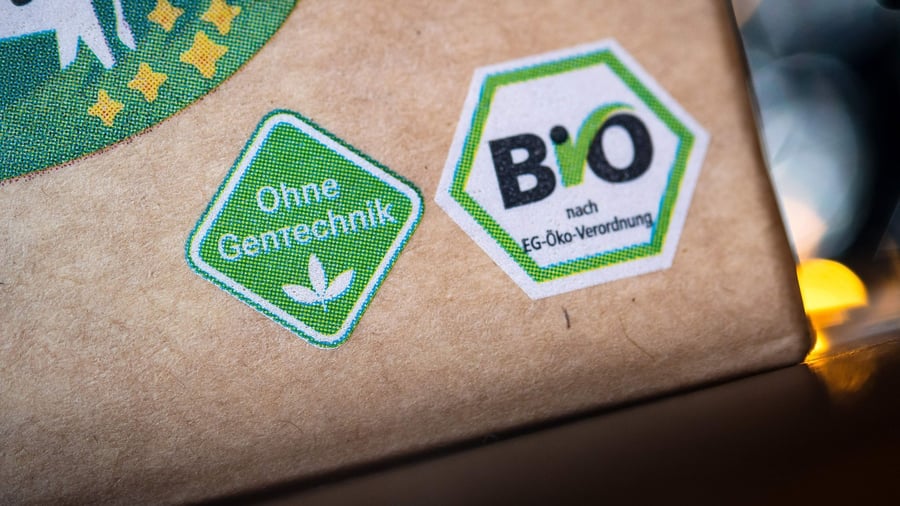
Berlin. Demand for organic food continued to rise in the second quarter. Retailers made sales of 4.75 billion euros with organic products between April and July, the German Federation of Organic Food and Farming Associations (BÖLW) announced. This was 3.8 percent more than in the same quarter of the previous year. In the first half of the year as a whole, sales amounted to more than 9.6 billion euros.
Although, according to BÖLW, the sales growth is not adjusted for price increases in the food retail trade, it significantly exceeds them. “Organic food is at the top of the Germans' shopping list, even in times of crisis: and that's where it belongs,” said BÖLW head Tina Andres. The drugstore chains such as dm or Rossmann are driving demand, it was said.
These had significantly expanded their organic range in recent years, for example in snacks, vegan products, baby food or tea. Sales of organic products rose by almost 20 percent at these stores. However, their share of the entire organic food trade remains at around 12.5 percent and thus still has room for improvement. In contrast, demand in the organic specialist trade stagnated at a turnover of 0.82 billion euros.
“In addition to the overall subdued consumer sentiment, this is likely to increasingly reflect the structural change in the market,” the BÖLW gave as a reason. In other words, consumers are buying organic food more and more frequently in conventional supermarkets or drugstores. The so-called full-range retailers, i.e. supermarket chains such as Rewe or Edeka, recorded a 5 percent increase in sales of organic products in the second quarter, according to BÖLW.
The expansion of their own organic brands has paid off here, the association said. The figures were collected in cooperation with the Agricultural Market Information Society (AIG), among other things based on data from the market research institutes Yougov and NIQ Nielsen.
Translated by urgent.news. Machine-written — may contain errors; check the original before relying on it.