Bangladesh plans to plant 250 million trees. Keeping them alive will be harder
Founder’s Briefs: An occasional series where Mongabay founder Rhett Ayers Butler shares analysis, perspectives and story summaries. Bangladesh plans to plant 250 million trees over the next five years to expand green cover, restore damaged ecosystems, and support its climate and biodiversity commitments, reports Mongabay’s Abu Siddique. The government expects ministries, the army, local…
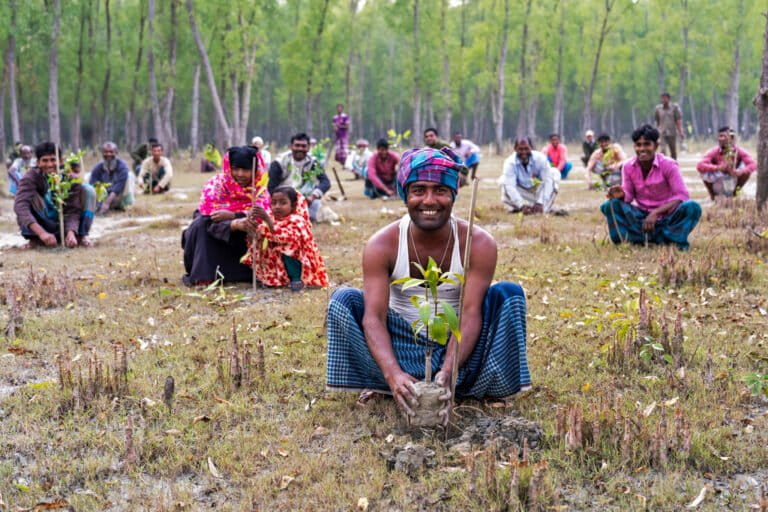
Bangladesh has announced ambitious plans to plant 250 million trees over the course of the next five years, as part of its efforts to enhance green cover, restore ecosystems, and fulfill its climate and biodiversity commitments. The government intends to engage a variety of stakeholders, including ministries, the military, local authorities, schools, and development organizations, in executing the plan using their existing budgets.
A significant portion of the saplings, 100 million, will be distributed across 17 coastal districts, where officials anticipate that the new mangrove cover will mitigate erosion and bolster resilience against cyclones and tidal surges.
Another 50 million trees are earmarked for the restoration of degraded forests in the Chittagong Hill Tracts, Sylhet, and the central sal belt. Urban areas are set to receive 12.5 million trees, with the remainder allocated to riverbanks, wetlands, roadside locations, government buildings, and educational institutions. The species of trees to be planted will be determined based on the specific environmental conditions of each area.
Coastal regions may receive Keora (Sonneratia apetala), while hill forests could be populated with garjan (Dipterocarpus turbinatus) and other locally adapted species. Fruit trees might be strategically placed in regions where they can offer a quicker financial return for local communities.
However, the implementation of this initiative poses challenges. Government nurseries are currently producing around 7.5 million saplings per year, which is far below the program's projected annual requirement of 50 million. Consequently, private nurseries will play a crucial role in supplying the necessary stock. Despite these hurdles, the government is determined to make significant strides toward achieving its environmental goals.
Written by urgent.news from Mongabay's reporting — not their text. Machine-written — may contain errors; check the original before relying on it.