Aktien: Dax knackt Marke von 26.000 Punkten – Leitindex profitiert von seiner Ausnahmestellung
Der deutsche Leitindex hat am Montag ein neues Rekordhoch erreicht. Geholfen haben dabei zwei zuletzt schwächelnde Branchen – und die Skepsis der Anleger gegenüber Tech-Werten.
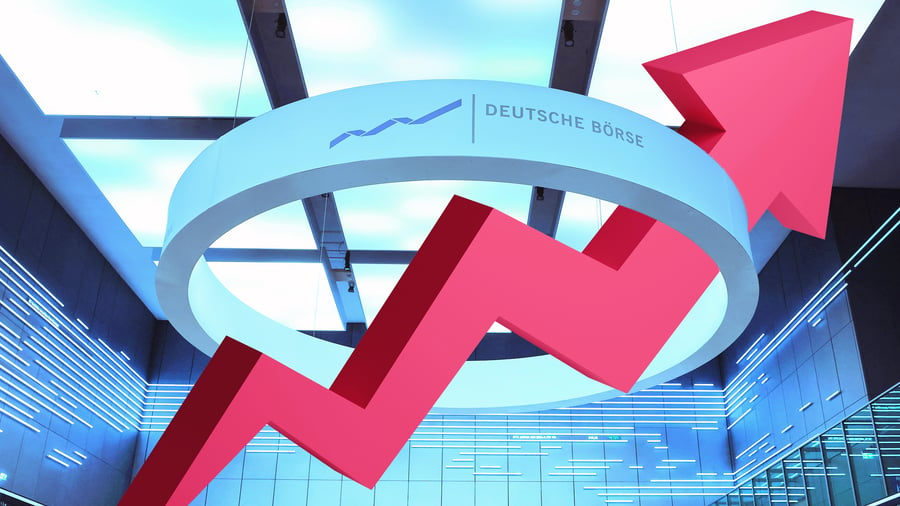
Germany's leading index, the Dax, achieved a record high at the start of the week, soaring by over 1.3 percent to reach a peak of 25,984 points on Monday morning. This surpassed the previous record of 25,900 points set in early July and brought the Dax close to the 26,000 mark. The Dax's record-breaking performance sets it apart from other major stock markets worldwide, which are often far below their all-time highs.
German stocks are benefiting from this exceptional position, as global investors are increasingly showing skepticism towards technology stocks. A recent sell-off in tech companies, particularly those with rapidly rising shares, preceded a turnaround in market sentiment towards the end of last week. The US-based Nasdaq index lost more than three percent in July, while the broader S&P 500 index declined by just 0.1 percent.
Japan's Nikkei index saw losses of around eight percent, and Korea's Kospi index declined by approximately twenty percent, despite a rebound on Friday. In contrast, the Dax gained 2.5 percent in July. European stocks also experienced price gains, rising by about one percent on the Stoxx Europe 600 index. German stocks are particularly popular right now because the Dax is less dependent on technology stocks compared to the US market.
The IT sector makes up about 14 percent of a major Dax ETF, compared to less than half of that in an S&P 500 ETF. Joachim Schallmayer, head of capital markets at Sparkassen Wertpapiertochter Dekabank, attributes the Dax's performance to its relatively low exposure to semiconductor stocks, which saw significant corrections in July.
Andreas Hürkamp, an equity strategist at Commerzbank, credits the Dax's recent rise to its low exposure to semiconductor stocks and the weakening performance of the software sector. SAP, Europe's largest software company and the second-largest component of the Dax, posted nearly an 18 percent gain in July. This gain came after SAP released its quarterly results, which investors found reassuring.
Additionally, auto companies such as Mercedes and VW also saw gains of over six and three percent, respectively. The declining oil price also contributed to the Dax's record-high status on Monday. US President Donald Trump had earlier canceled a plan for a new attack on Iran, causing the price of a barrel of Brent oil to drop by five percent to below $84.
Analyst Jochen Stanzl of Consorsbank noted that the absence of an Iranian attack caused oil prices to fall, thereby boosting the Dax. Stanzl explains that a downward trend in oil prices benefits cyclic and energy-dependent industries in the Dax. Despite the Dax's strong performance, its composition explains its comparatively weak performance compared to international markets this year.
Since early 2026, the Dax has underperformed relative to the S&P 500, gaining about six percent compared to the S&P 500's nine percent rise. In the first half of the year, many tech and semiconductor stocks boosted international stock markets to varying degrees. However, when measured purely by price gains, the Dax has only gained around three percent so far this year and still lags slightly behind its record high of 9,449 points at the start of the Iran war.
Commerzbank strategist Hürkamp still sees a chance for the Dax to surpass the MSCI World index in the coming months, provided market sentiment remains cautious regarding semiconductors and the software and automotive sectors continue to stabilize.
Written by urgent.news from Handelsblatt's reporting — not their text. Machine-written — may contain errors; check the original before relying on it.
This story
This is one outlet's version. Read the fullest account.