The Russian Gerbera Drone Is Evolving Beyond Being A Simple Decoy
Originally a decoy, Russia's Gerbera drone is now being used for reconnaissance, communications relay, and strike missions as its role continues to expand.
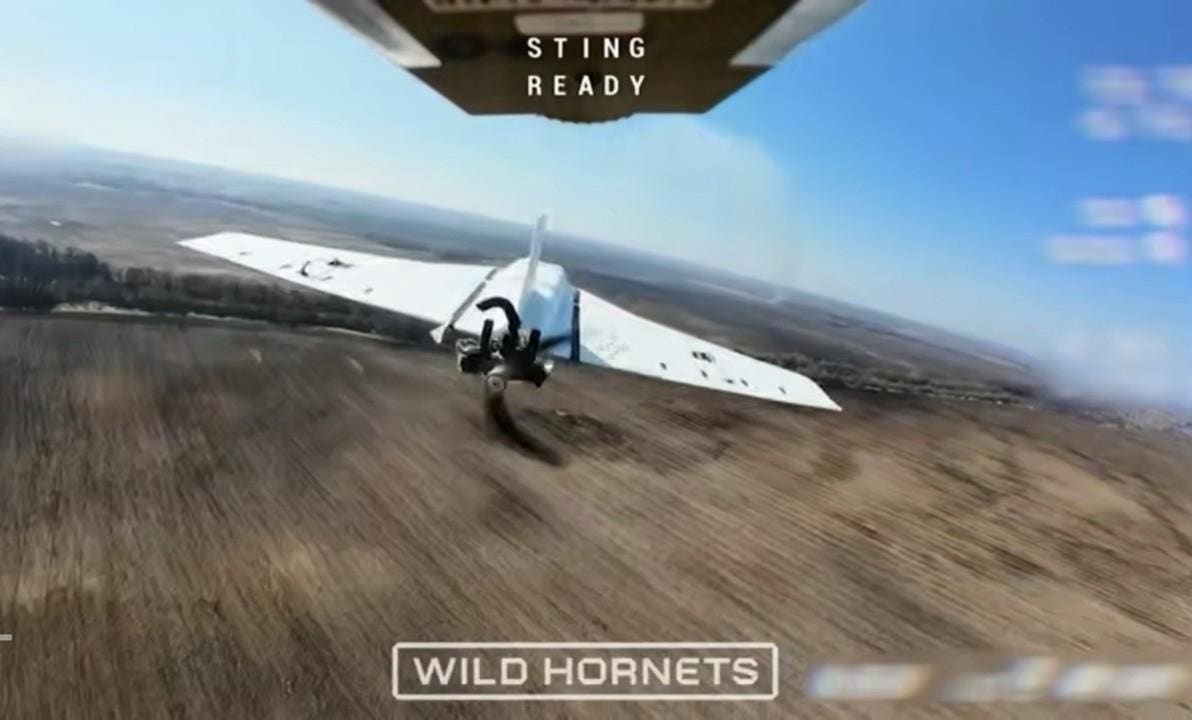
The Gerbera drone, initially designed as a cost-effective decoy for Russian strikes, has evolved into a versatile system. Introduced in July 2024, it quickly gained prominence amid Ukraine's air defenses due to its low cost and resemblance to the Geran-2 system. Recent upgrades, such as enhanced anti-jamming GPS and mesh networking, have significantly expanded its capabilities.
As of 2026, the Gerbera is utilized for reconnaissance, communications relay, and direct strike missions against infrastructure. It even operates as a "mother" drone for FPV drones and offers tactical support during frontline assaults. This transformation, likely due to Geran demand and the drone's modular design, underscores the swift evolution of warfare in Ukraine.
The Russian military boasts a diverse fleet of aerial drones, from reconnaissance systems like the Orlan-10 to long-range loitering munitions in the Geran series. Among these, the Gerbera drone stands out as a lesser-known entity, initially developed as an inexpensive decoy. Since its introduction in July 2024, the Gerbera has undergone several upgrades, broadening its role far beyond a mere decoy.
It now engages in reconnaissance, communications relay, and limited strike missions, with its usage becoming increasingly common over the past month. This evolution underscores the rapid adaptability of unmanned systems in the Russia-Ukraine War. First introduced in July 2024, the Gerbera is a small, fixed-wing aircraft approximately 2 meters long with a 2.5-meter wingspan.
Weighing just 18 kg and carrying a payload of 5 kg, it is powered by a two-stroke piston engine, achieving a maximum speed of around 160 km/h. The drone covers a range of up to 600 km, launched via an elastic or pneumatic catapult for a runway-free takeoff. Its airframe is primarily constructed from plywood, foam plastic, and commercially available components, keeping production costs around $10,000.
Originally developed as a decoy, the Gerbera's modular design supports additional aerial missions. Russian sources describe its configurations as a reconnaissance drone, communications relay, and lightweight loitering munition. Over the past year, Russia has steadily expanded these capabilities. Notably, the drone received an upgrade with the 12-element Kometa-M controlled reception pattern antenna, which significantly improves resistance to GPS jamming and spoofing compared to earlier systems.
Some Gerberas have also been equipped with mesh networking radios, enabling them to relay encrypted communications and extend control ranges in contested electromagnetic environments. While extensively used as a decoy since its introduction, recent reports highlight the Gerbera's increasing use for various missions. In February 2026, the drone gained attention for carrying FPV drones to forward positions, a capability Ukrainian analysts identified after inspecting a downed Gerbera.
Later that month, footage emerged of a Gerbera launching FPV drones in flight, significantly extending their range to strike targets deep behind Ukrainian lines. In July 2026, Ukrainian reports indicated Gerberas carrying external fuel tanks, briefly entering Ukrainian airspace to maneuver and return to Russia, suggesting potential signals intelligence missions.
Additionally, the Gerbera has been employed in direct strike missions, enabled by integrated seeker systems. Ukrainian sources have reported Gerberas striking civilian and industrial infrastructure in Chernihiv Oblast, such as gas stations, grain elevators, energy facilities, and residential buildings. The Russian Ministry of Defense has also reported Gerbera strikes against cargo ships, power facilities, and Ukrainian drone launch sites, demonstrating the drone's ability to cause substantial damage despite its limited payload.
The Gerbera has become a more frequent presence in tactical operations near the frontlines, especially during Russia's July 22 mechanized assault in Donetsk Oblast.
Written by urgent.news from Forbes's reporting — not their text. Machine-written — may contain errors; check the original before relying on it.