Punjab’s Dalits power politics with the purse
For generations, caste hierarchy in rural Punjab was written into society’s architecture, much like in other parts of India. Guru Ghar in Chak Hakim village of Phagwara is seen as a symbol of rising social, economic, religious, and political assertiveness of the Dalits, finds Vikas Vasudeva. With Punjab’s Assembly election early next year, all the political parties in the fray are wooing this…
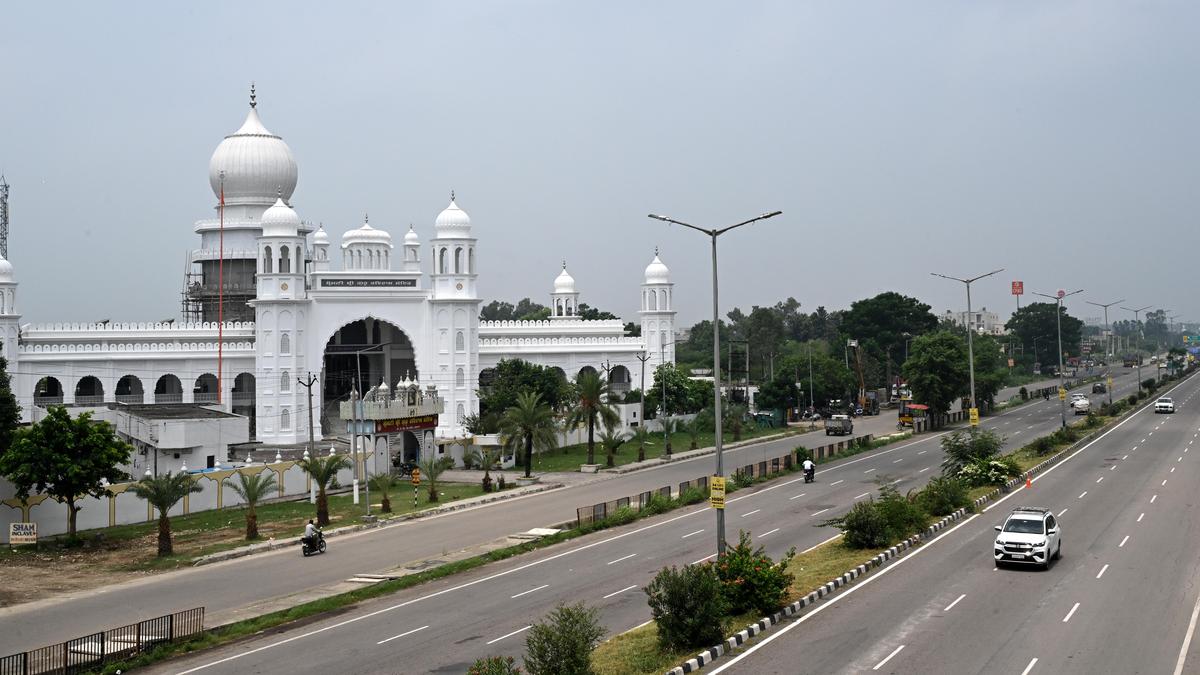
Monsoon clouds loom over the Shiromani Shri Guru Ravidass Mandir, a religious complex situated along the Grand Trunk Road in Chak Hakim village, Phagwara, in Punjab’s Kapurthala district. This gurdwara, known as the Guru Ghar among its followers, stands as a testament to the Dalit community’s growing economic, religious, and political influence.
Once marginalized, Dalits now make up nearly 32% of Punjab’s population, according to the 2011 Census. Historically, land ownership has been dominated by the Jat Sikh community, which has wielded considerable political influence over the years.
Traditionally, Dalits, who were landless and socially marginalized, constructed smaller places of worship near their homes, which were usually located on the outskirts of villages. However, the rise of small landholdings and the migration of Dalit communities to countries like Dubai, the U.K., the U.S., and Canada has helped improve their socio-economic status.
These overseas contributions have been instrumental in shaping the current state of the Guru Ghar at Chak Hakim, with nearly 70% of its funding coming from Dalit NRIs.
Davinder Kultham, president of the Shiromani Shri Guru Ravidass Mandir Prabandhak Committee, explains that small landholdings prompted many Dalits to migrate in search of better livelihoods. Today, the Guru Ghar, which took shape over several decades, serves as a place of worship and includes a school for underprivileged children, a charitable dispensary, a community kitchen, and accommodation for travelers.
The construction of a sarovar (sacred pool) is currently underway, signifying the complex’s evolving role in the community.
While migration and remittances have contributed to the socio-economic empowerment of Dalits, Gian Sheel, a 45-year-old social activist, believes that government welfare programs, both at the Centre and in Punjab, have largely fallen short in achieving the same objective. These programs, which include party-specific policies and constitutional obligations like reservations, have not been effectively communicated or implemented among SC communities.
Sheel emphasizes that genuine sincerity is lacking regardless of which party is in power. The Dalit community continues to strive for greater representation and the implementation of reservations in education, employment, and politics, particularly under the 85th Constitutional Amendment, which remains unresolved.
Written by urgent.news from The Hindu's reporting — not their text. Machine-written — may contain errors; check the original before relying on it.